Test Sales Messaging Before the Enterprise Call, Not During It
Practice against a colleague proves nothing about a buyer
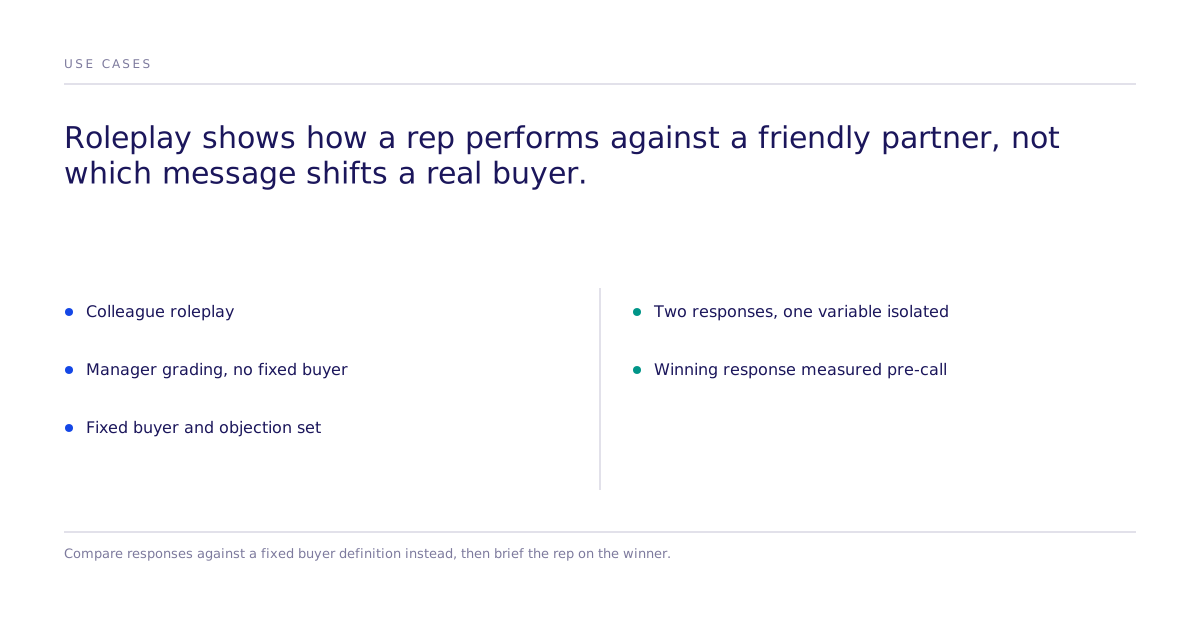
A colleague roleplaying a buyer knows the product, understands the pitch, and makes the conversation easier. A manager grading a roleplay puts the rep in evaluation mode instead of learning mode. Neither behaves like the enterprise buyer who will sit across the table next quarter.
The cost shows up later, not in the roleplay. A rep walks into a long, unrepeatable sales cycle having rehearsed against someone who never challenges them. If the deal stalls on an objection nobody prepared for, the team learns which response failed only after the pipeline value is gone.
Which message actually changes the buyer's mind?
Head of Sales Enablement and RevOps teams face a narrower question than "how do we practice more." It is: which specific messaging or objection response shifts a defined buyer's stated intent, before that response gets used on a deal that matters.
Answering that requires comparing responses against each other under the same buyer definition, not judging one script in isolation and hoping it lands.
Define the buyer and the objection set before testing anything
A vague buyer definition produces a vague test. Before comparing messaging approaches, fix:
- The role, seniority, and company profile of the buyer, for example a VP of Operations at a mid-market logistics company evaluating a tool their team already tried once.
- The objection set specific to that deal stage: price, a prior failed implementation, competing priorities, or stakeholder buy-in.
- The buying stage, since an early-discovery buyer and a late-stage buyer weigh the same objection differently.
This is the same information a rep would want before a real call, but here it becomes the fixed condition for a controlled comparison instead of a mental checklist.
Run the comparison as a causal test, not a guess
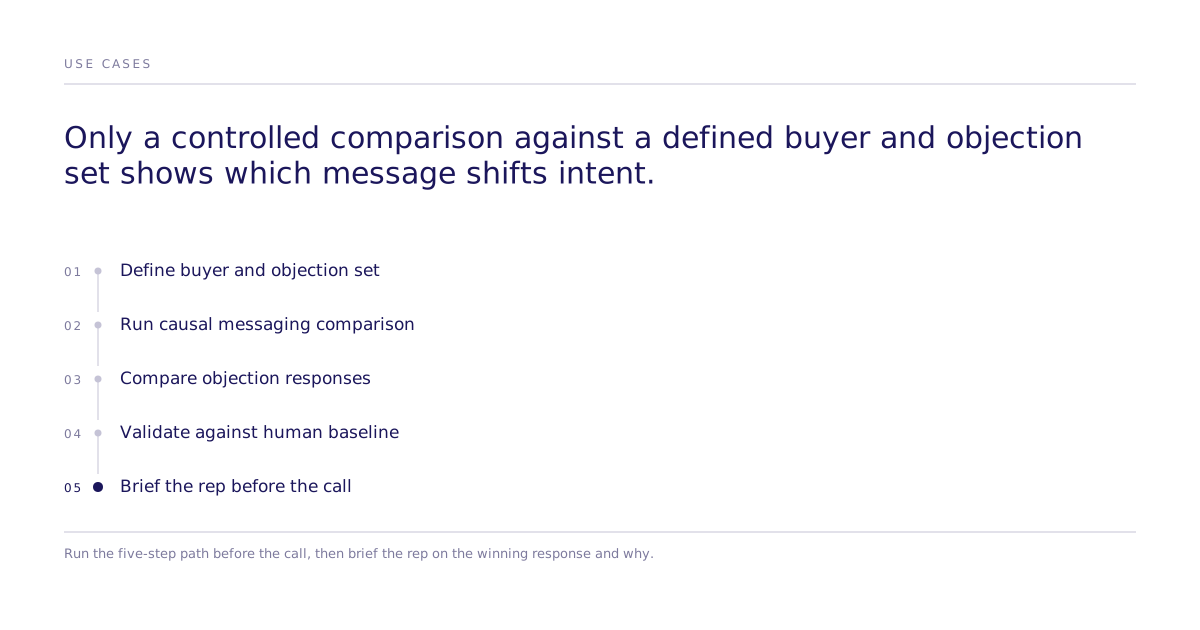
With the buyer segment and objection set defined, a discrete-choice-style comparison puts two or more messaging or objection-handling approaches in front of that buyer definition and measures which one shifts stated preference. The question stays narrow (does leading with ROI beat leading with implementation risk for this buyer, on this objection), and the comparison isolates that one variable rather than judging a whole pitch at once.
"Our findings reveal that proprietary LLMs can generate valid and behaviourally sound utility specifications, particularly when guided by structured prompts (CoT)."
Sfeir, Nova, Hess, and van Cranenburgh, Journal of Choice Modelling (source)
Research on using large language models for choice modeling finds that prompting strategy materially changes how closely a model's outputs track real preference structure, which is why this comparison needs a defined method, not an open-ended conversation with a simulated buyer (arXiv, 2507.21790).
How do you move from a simulated comparison to a human check?
Subconscious can test or validate studies with real human participants, so a team that wants a check beyond the simulated ranking does not have to redesign the study to get one. This step matters most on deals large enough that a wrong assumption is expensive; it is not required for every message comparison.
Where this fits into deal preparation
A team preparing for an enterprise call can use this ahead of a specific deal:
- Define the buyer and the two or three objections most likely to surface.
- Compare two or three response framings against that buyer definition.
- Brief the rep on the response that performed better, and why, before the call.
What does this not replace?
A messaging comparison does not rehearse tone, pacing, reading a room, or building rapport with a real person. It is only as good as the buyer definition and objection set built into it.
Subconscious does not offer a turn-by-turn conversational rehearsal tool. The research methodology behind a messaging comparison is built for testing which action changes a defined buyer's decision.
Before the next high-stakes call
Reps still need to rehearse delivery. But the messaging and objection responses they rehearse can be chosen with evidence instead of instinct. Teams that want to see how a comparison like this is structured for their own buyer segment can review how Subconscious runs a study or look at comparable studies before setting up a session around an upcoming deal.