Testing Ad Creative Before You Commit Media Budget
A performance or brand marketing lead has three creative directions ready for a campaign. The standard playbook is to launch all three, watch the results, and cut the losers once the data comes in. That spends the losing directions' budget before anyone knows they're losing. The question worth asking earlier is which direction to fund, not which one merely got clicks after the fact.
A brief or mockup leaves actual campaign outcomes unobserved. Google’s Brand Lift documentation distinguishes survey measures such as recall and awareness from clicks, impressions, and views. Specify which endpoint the pretest measures and which needs people or a live campaign.
Where the decision gets made too late
In the conventional workflow, creative direction gets tested by running it. A variant either converts once it is live, or it does not, and the team finds out after the media budget behind it is spent. The campaign spends against its own answer before it has one.
Moving the test earlier changes what "finding out" costs. A controlled comparison of creative directions against a defined target audience, run before any variant reaches a live auction, turns "which one performed" into "which one to fund." The decision arrives before the spend, not after it.
What a pre-spend test actually checks
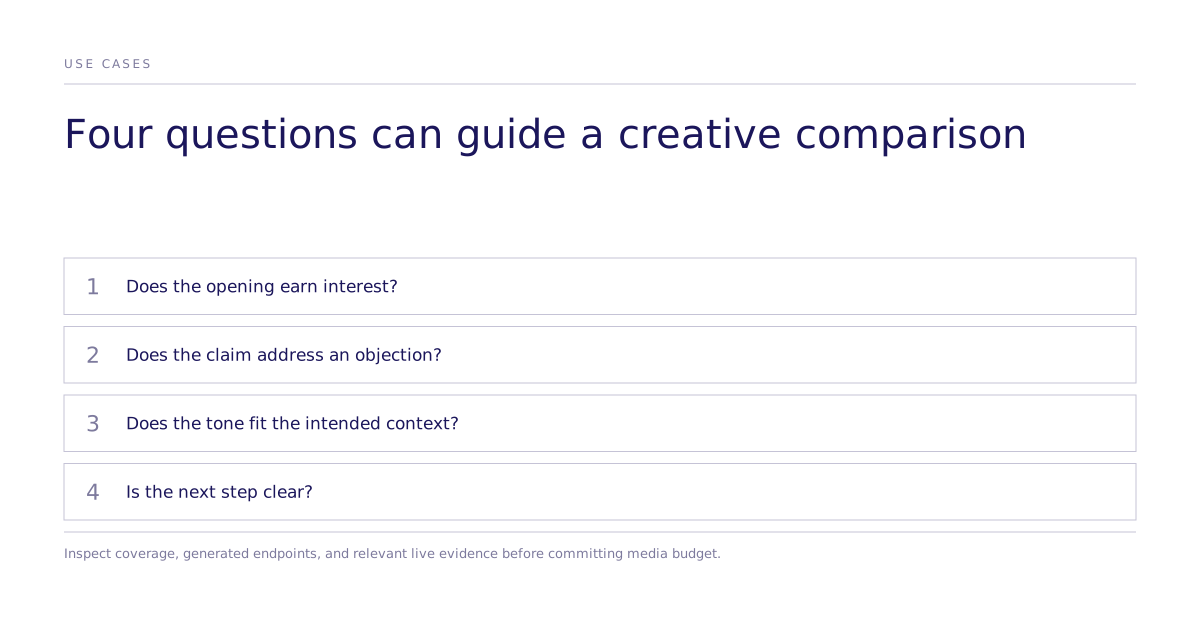
Four questions can guide the creative comparison; other failures may concern delivery, targeting, product fit, or execution.
Does it earn the first look?
Compare the opening headline or frame on a specified attention or interest measure. Generated explanations suggest possible reasons to check; they do not identify why real viewers continue watching.
Does it survive the obvious objection?
Attention alone does not convert. The ad also has to preempt the reason the audience would talk itself out of acting: price sensitivity, skepticism about the category, or doubt that the product does what it claims. Test whether the direction addresses the relevant objection. Confirm its effect on the campaign endpoint with live evidence.
Does it land the intended feeling
Tone is a design choice, not an accident, and it is testable. A direction meant to convey urgency can read as anxious; one meant to convey authority can read as cold. Checking the emotional register against the target audience catches that gap.
Is the next step unambiguous
An ad can capture attention, handle the objection, and land the right tone, and still fail to tell the viewer what to do next or why to do it now. This checkpoint is the simplest to test and the easiest to skip.
Running the comparison
The workflow has a consistent shape regardless of channel:
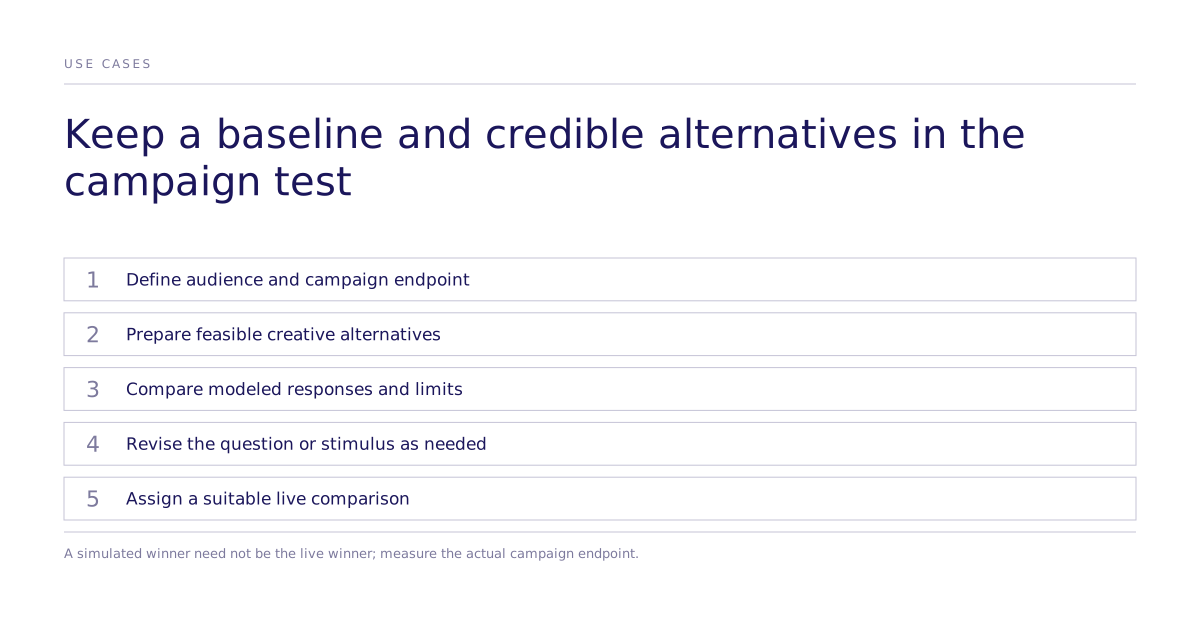
- Define the audience. Build a specific, decision-relevant description of who the campaign is actually trying to reach. A vague audience produces vague feedback.
- Draft distinct directions, not minor variants. Test strategically different approaches, such as one leading with price, one with speed, and one with proof, rather than small copy tweaks.
- Run the controlled comparison. Evaluate each direction against the defined audience across the same checkpoints, so the result is a like-for-like comparison rather than a set of one-off impressions.
- Revise, don't restart. Use the result to identify what specifically needs to change in the weaker directions rather than discarding them outright.
- Confirm with a suitable live test. Retain the baseline and credible challengers when screening error would be costly. Randomly assign the feasible directions and measure the actual campaign endpoint before the larger commitment.
When the stakes justify it, this comparison can move from a simulated experiment to real-human validation without changing the underlying question, checked against recruited respondents before the largest commitments are made.
Where is this worth doing?
Scope limits belong up front, where a buyer can check them before committing budget. Pre-spend testing pays off most clearly under specific conditions, not universally:
- A test that can't move the metric that matters should say so before a team runs it. Creative is the actual constraint. If a campaign's ceiling is set by targeting or bid strategy rather than the ad itself, testing creative direction won't move the number that matters.
- The audience is already defined. A well-specified audience gives a controlled test something concrete to compare against. An audience still being discovered is better served by live testing built for exploration.
- Several directions are genuinely in play. Compare the value of screening with the design, study cost, and risk of discarding a useful alternative. More options do not automatically make a pretest worthwhile.
- The product needs explaining. Complex or considered purchases, including many B2B products and multi-stakeholder services, put more weight on the creative's ability to communicate, which is exactly what these checkpoints test.
Beyond paid social
The same logic holds outside Facebook and LinkedIn feeds: search ads, programmatic display, out-of-home, print, and broadcast all commit a media budget to an unproven creative direction unless something checks that direction first. The channel changes; the underlying question of which direction is worth funding does not.
What this doesn't replace
A method that claims to replace live testing hides its own limits. Publishing what this comparison does not do lets a buyer check it against results. A pre-spend comparison narrows which direction is worth funding. It does not replace live campaign measurement, media buying, or creative production, and it does not guarantee how any single variant performs once it reaches a real market. Teams that want to see the comparison method applied to real campaigns or that want to walk through how the controlled comparison is built can start there, or talk through a specific creative decision before the next campaign locks its budget.