Use Causal Experiments to Improve B2B Marketing
A controlled B2B comparison can estimate the tested action’s effect on its measured endpoint. For a generated audience, that endpoint is modeled response; check the relevant human or campaign outcome separately. Define the buyer roles and pending headline, offer, or channel decision before choosing the study.
Mind the Gap studies differences between language models’ stated values and choices in AI-risk dilemmas under different elicitation protocols. It illustrates sensitivity to how questions are asked; it does not validate B2B purchasing behavior. Define the decision, alternatives, audience, and response endpoint, then check the result against relevant buyer evidence.
Start with the buying group
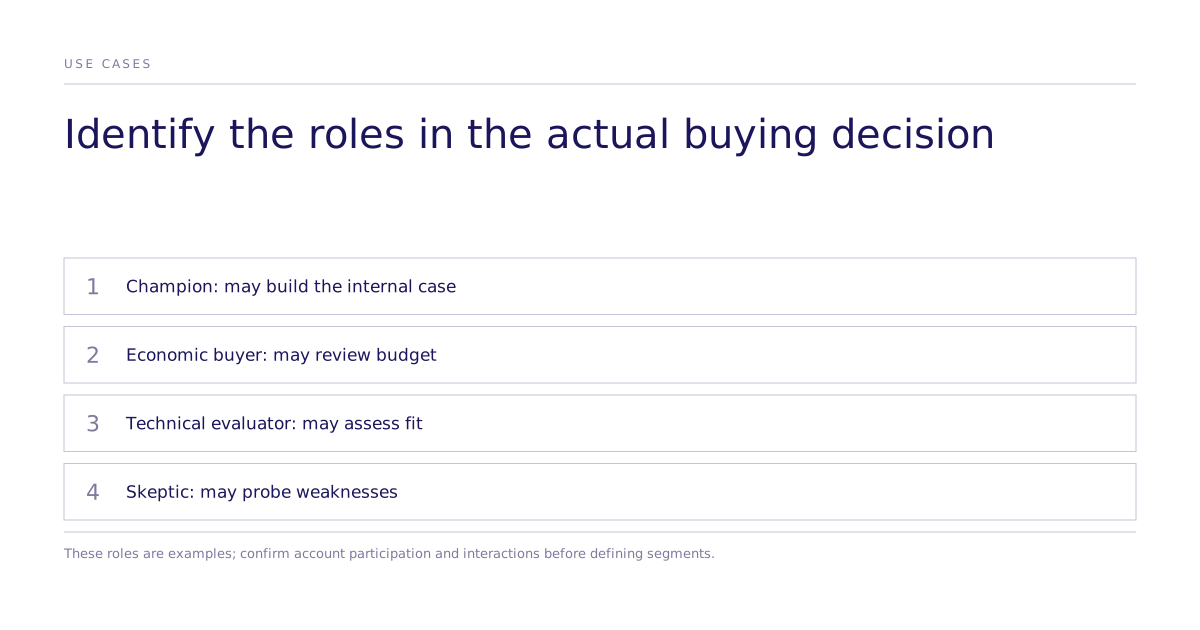
B2B purchasing involves multiple stakeholders. Four roles often matter:
The champion wants the product and builds the internal case.
The economic buyer controls the budget and needs a defensible business reason.
The technical evaluator tests fit with the requirements and existing systems.
The skeptic looks for reasons to stop the purchase.
These are study definitions, not universal truths. Adapt them to the actual buying process.
Test marketing actions
Message alternatives
Write three versions of the value proposition. Hold the audience and outcome constant. Compare which version changes the intended response and which objections appear by segment.
How do you test campaign concepts?
Before production, compare the proposed concepts against the same decision criterion. Separate creative preference from the behavior the campaign must move.
Channel and call-to-action choices
Treat channel preference as a hypothesis. Compare channel or call-to-action alternatives when study design and available behavioral evidence support the question. Do not present a simulated opinion as proof that a buyer will click.
Competitive positioning
Test how different claims perform against the same alternatives. Avoid asking a model to invent private competitor plans or customer beliefs.
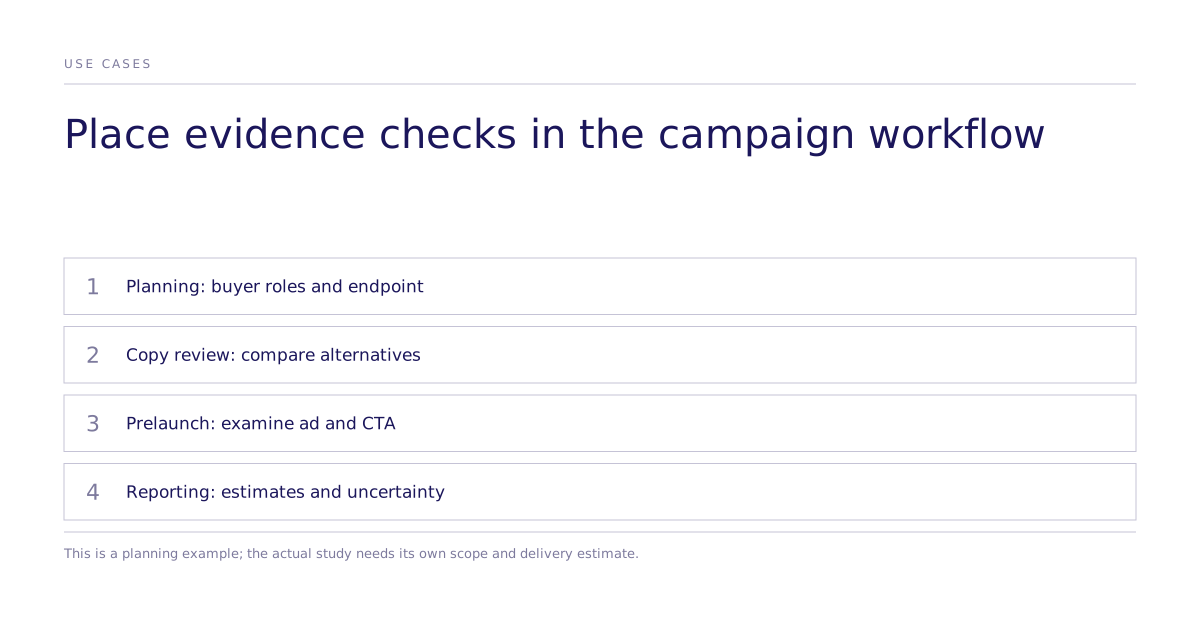
A hypothetical three-part planning session
Campaign planning (example: 2 hours). Define buyer roles, current behavior, proposed actions, and outcome. This is a planning-session allocation, not a study-delivery commitment.
Copy review (example: 30 minutes). Prepare headline and message alternatives with consistent stimuli and scoring. Agree the study scope and actual delivery separately.
Pre-launch review (example: 1 hour). Inspect the ad, landing page, and call to action, then specify which uncertainties need human or live validation.
How do you use the results correctly?
Simulated buyers can support a decision-specific experiment when tied to calibration and validation. Aggregate pattern matching is easier than person-level prediction. Segment differences, cultural effects, and prompt sensitivity need careful review.
The output should state what was tested, which audience definition was used, what changed, what outcome was measured, and what remains uncertain. The marketing team still owns the decision. Real campaign results remain the final behavioral evidence. See prior studies for what a completed one looks like.