Virtual Advisory Board: Using AI to Stress-Test a Decision Before It Ships
A founder or GTM leader facing a pricing, positioning, or market-entry decision can prepare a structured test while an advisor is unavailable. Define the buyer question, compare modeled responses, and confirm important findings with suitable human evidence before committing. Advisor judgment and access remain separate needs.
Why the advisory gap exists
An advisor may bring investment judgment, operating experience, or industry context. Recruitment, compensation, availability, and fit vary by company. Identify which of those needs a pending decision actually has before treating a simulated buyer test as an alternative input.
- Access to networks. With no industry connections already in place, getting in front of the right advisor is a chicken-and-egg problem.
- Stage attractiveness. Top advisors pick and choose, favoring companies that can already point to traction.
- Availability. Monthly calls slip. The answer that was needed on Tuesday arrives two weeks later.
- Geographic distance. An advisor in a different city or time zone adds friction to every touchpoint.
What does a simulated panel actually replace, and what doesn't it replace?
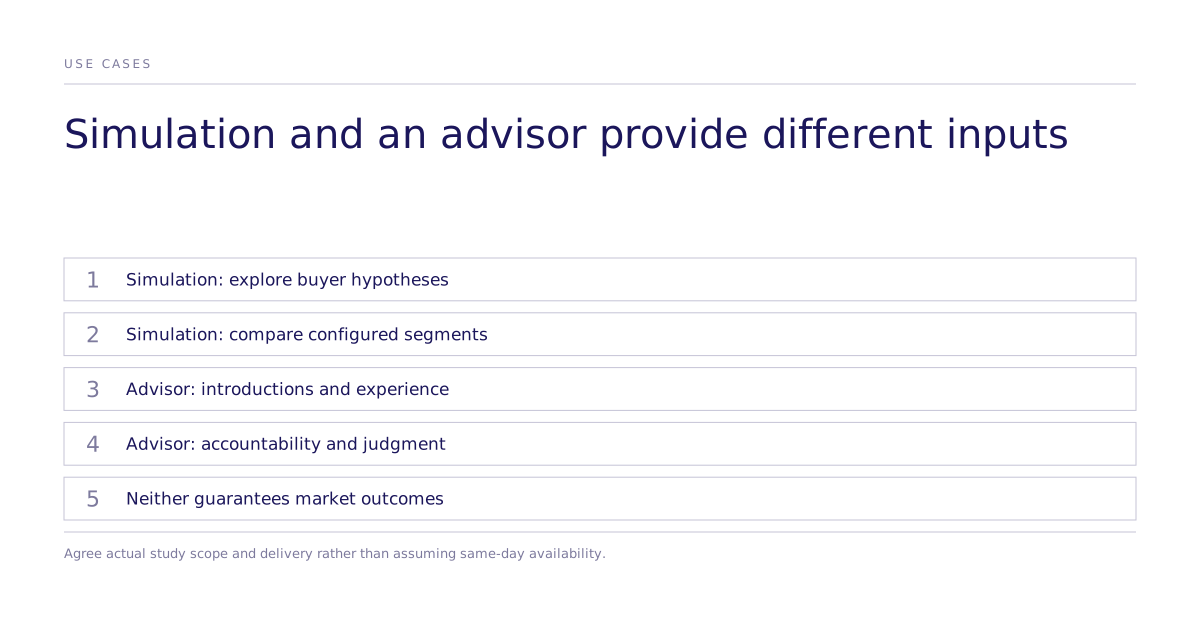
A modeled comparison does not depend on an advisor’s calendar, but it has its own design and delivery requirements. Agree those for the decision. Buyer-response evidence remains separate from the judgment, introductions, and accountability an advisor supplies.
What it can do:
- Prepare defined alternatives for a buyer-response study, with scope and delivery agreed before relying on a deadline.
- Run the same question against many audience segments at once, so a pricing or positioning question gets tested from more than one buyer's perspective.
- Let a team iterate on a question, narrowing from a general concern to a specific one, without consuming anyone's limited time.
The misses go on this list right next to the hits above. What it can't do:
- Make an introduction or open a door. A simulated panel has no network.
- Carry personal accountability. A real advisor feels responsible for advice given; a test result doesn't.
- Supply proprietary information a real operator picked up from a live deal or a competitor's board meeting.
- Substitute for the credibility of naming real advisors during fundraising or partnership conversations.
Reframe the question: not "what would an advisor say," but "what does the evidence say"
Asking a chat interface to role-play a VC or a CMO produces a plausible-sounding opinion. It is still an opinion, generated from patterns in training data, not evidence about how a target audience would actually respond to a specific choice.
Define the options, assignment, and measured endpoint. Subconscious can compare alternatives in a simulation and support a matched human check where warranted. Park and colleagues evaluate agents grounded in real participants’ interviews and surveys on held-out tasks; that does not establish an actual purchase effect or replace proprietary advice from an operator.
A four-step path from open question to a decision you can defend
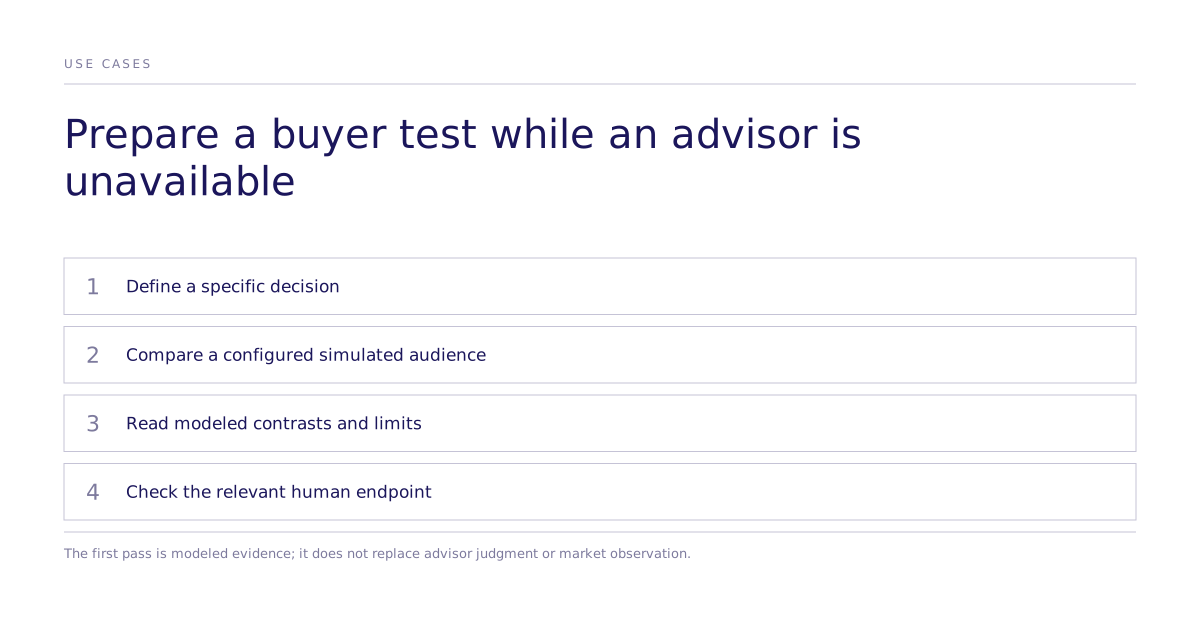
- Define the decision. Not "what do you think of our roadmap" but "does leading with Feature A over Feature B change signup intent." A specific, testable question is what makes the exercise falsifiable rather than a conversation.
- Compare in a configured simulated audience. Assign the specified price, headline, or feature alternatives and measure generated choice or response. This first pass is modeled evidence, separate from recruited human reactions.
- Read the modeled contrast. Report the difference in generated responses and uncertainty under the specified design, then inspect fidelity limits. It is not observed market behavior.
- Check with real humans when warranted. Keep the decision question, adapting recruitment and delivery to measure the relevant human response. Confirmation may support, weaken, or reverse the modeled result; it does not guarantee market performance.
Where does this approach fit, and where doesn't it fit?
This approach is most useful before a decision is final and no advisor is available this week: a pricing change, a positioning test, a market-entry call, a roadmap trade-off. It is not a substitute for a real advisory board, and it is not a market-performance guarantee: a causal test of one decision is not a clinical trial or a usability study, and it doesn't predict every downstream outcome in market.
Teams that already have advisors can still use this to prepare: arrive at the next advisory conversation with a tested question instead of an open one, so the limited time with a real advisor goes toward judgment calls a test can't answer. Teams that lack an advisory board can use it to avoid shipping a decision that was never pressure-tested against anyone.
Review the aggregate evidence record and limits and study approach, or scope a buyer comparison around a pending decision. Neither page supplies a standing delivery commitment.