What Is Generative AI Research?
Generative AI research uses large language models to produce synthetic respondents, analyze existing research documents, help design studies, and draft reports. The real question is not whether the technology works, but which parts of a pricing, messaging, or product decision can run on synthetic exploration, and which need a controlled, human-validated experiment before capital or roadmap gets committed.
Why teams reach for it
A quantitative survey needs three to six weeks between the initial brief and the finished report, and a single round of focus groups runs into the thousands of dollars. Ethnographic work, the deepest form of consumer research, can take months. Most teams end up deciding on instinct or whatever data already exists.
Generative AI research changes the economics of the first pass. LLM-based platforms can generate synthetic respondents, cluster themes out of hundreds of existing customer interviews, help draft a study instrument, or turn raw data into a structured report.
What it is actually doing
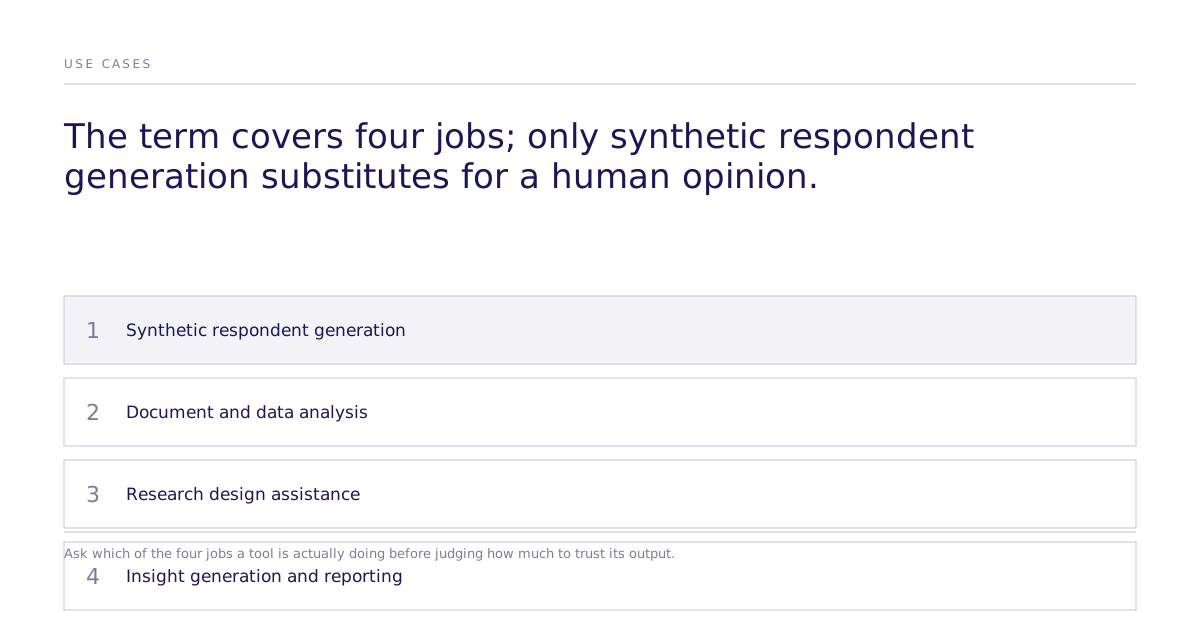
Four distinct jobs get grouped under the term:
- Synthetic respondent generation. AI personas configured against demographic and psychographic profiles answer survey questions or participate in simulated sessions, drawing on patterns in training data rather than lived experience.
- Document and data analysis. LLMs extract themes and patterns from existing interviews, tickets, and survey data at a scale no analyst team can match by hand. A team with 500 customer interviews in a folder can get synthesized themes in minutes, not weeks.
- Research design assistance. LLMs draft survey questions, flag biased phrasing, and help a team pick a defensible methodology.
- Insight generation and reporting. LLMs turn raw research data, synthetic or real, into structured summaries and recommendations.
Simulating a respondent's answer carries the most risk when a team treats it as proof rather than a hypothesis.
What does the evidence actually support?
Independent research on how closely LLM-generated responses track real survey data is mixed and method-dependent. Political scientists testing large language models against real survey panels found meaningful gaps between synthetic and human responses in some conditions (Bisbee et al., Cambridge University Press). Later work asks a narrower question: under what conditions can digital personas reliably approximate human survey findings (arXiv, 2026). A parallel comparison of LLM-generated responses against fielded omnibus survey data found the same pattern: results vary by topic and elicitation method rather than converging on one accuracy figure (Verasight).
Elicitation design, calibration against a human baseline, and topic all change how much a synthetic result can be trusted. That trust has to be earned per study, not assumed from a platform's marketing page.
Where the ceiling is
Naming where a tool stops working is what lets a buyer check it against their own decision. It cannot substitute for:
- Behaviors so new that no prior human data exists to compare against
- The last check before a major capital allocation decision goes final
- Ethnographic work that requires real environmental observation
- Research where cultural or subcultural nuance is underrepresented in training data
The misses belong on the record next to the hits. Synthetic outputs inherit bias present in training data. They are strongest for directional, early-stage decisions, not ones where being wrong is expensive.
How does Subconscious approach the same problem?
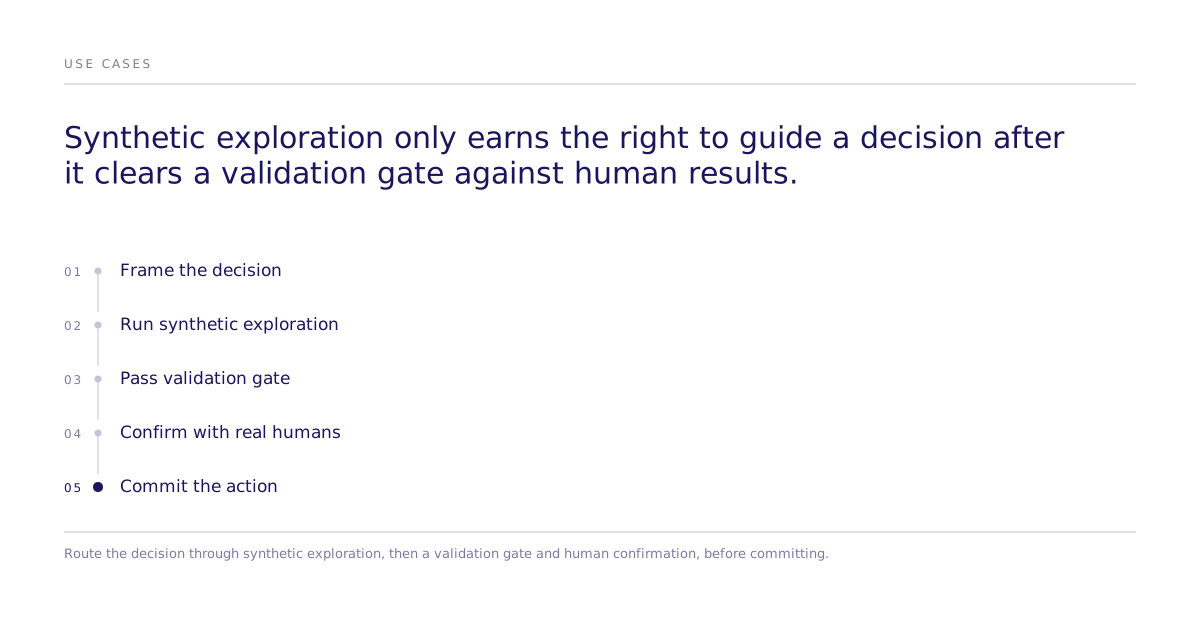
Subconscious runs controlled, randomized experiments on a simulation of a market rather than open-ended persona chat, testing a specific action against a specific outcome instead of producing free-form opinion. It can validate studies with real human participants, moving a study from simulated exploration to human confirmation without changing the underlying causal question. That progression, not a fixed accuracy number, is what separates a hypothesis-generation tool from a decision-grade one.
Where do you draw the line on a decision?
A decision belongs in synthetic exploration alone when the cost of being wrong is low: early message testing, idea screening, competitor positioning from a synthetic customer's perspective, or sales objection preparation. A decision needs a validation gate when the outcome commits meaningful budget, roadmap time, or reputational risk: a launch price, a positioning change that touches paid media at scale, or a product bet a team can't easily reverse.
Treat any generative AI research output as directional evidence, not final proof, until it has passed through that gate. Learn how Subconscious runs causal experiments or review current study results on the leaderboard before deciding where a specific decision sits on that line.