B2B Focus Groups: What Per-Role Tests Add and What They Miss
A B2B focus group can surface needs, objections, and group dynamics. It does not by itself estimate population prevalence or recreate the full purchasing process. Per-role comparisons add a way to test defined alternatives, while interviews and actual account evidence explain how the committee reaches a decision.
For both B2C and B2B, a small focus group provides qualitative insight rather than a defensible estimate of how a larger population will respond. Select the sample and method for the endpoint rather than assuming an individual purchase makes a group representative.
The method fits some B2B questions and misses others. Use the group for discovery and discussion; use suitable experiments or observed account evidence for effects and purchasing outcomes.
Why can't one focus group represent a B2B buying committee?
A typical enterprise software purchase is not decided by one person. It moves through an Economic Buyer who controls budget and weighs ROI and risk, a Technical Buyer who evaluates integration complexity and security posture, one or more User Buyers who will run the product day to day, and often a Champion advocating for the deal.
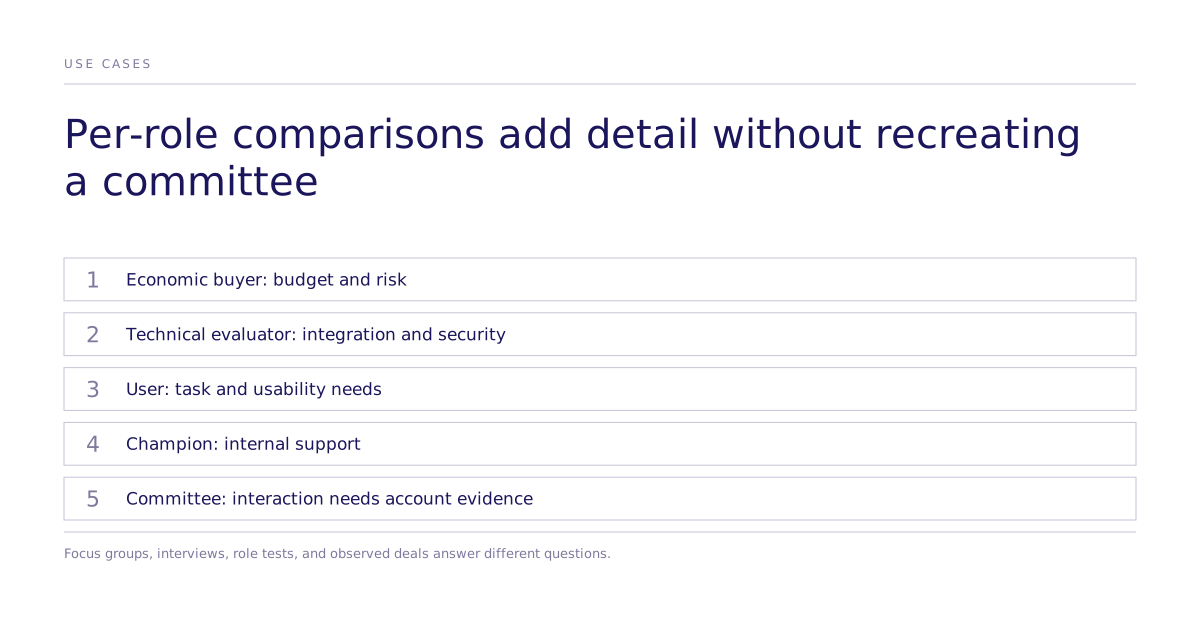
A shared session can show how participants discuss a proposal, but its participants and context may differ from an actual committee. Nielsen Norman Group describes focus groups as useful for needs and concerns, while distinguishing what people say from observed product use. Neither a blended group nor isolated role tests alone recreates the real deal.
How long does a B2B buying decision take?
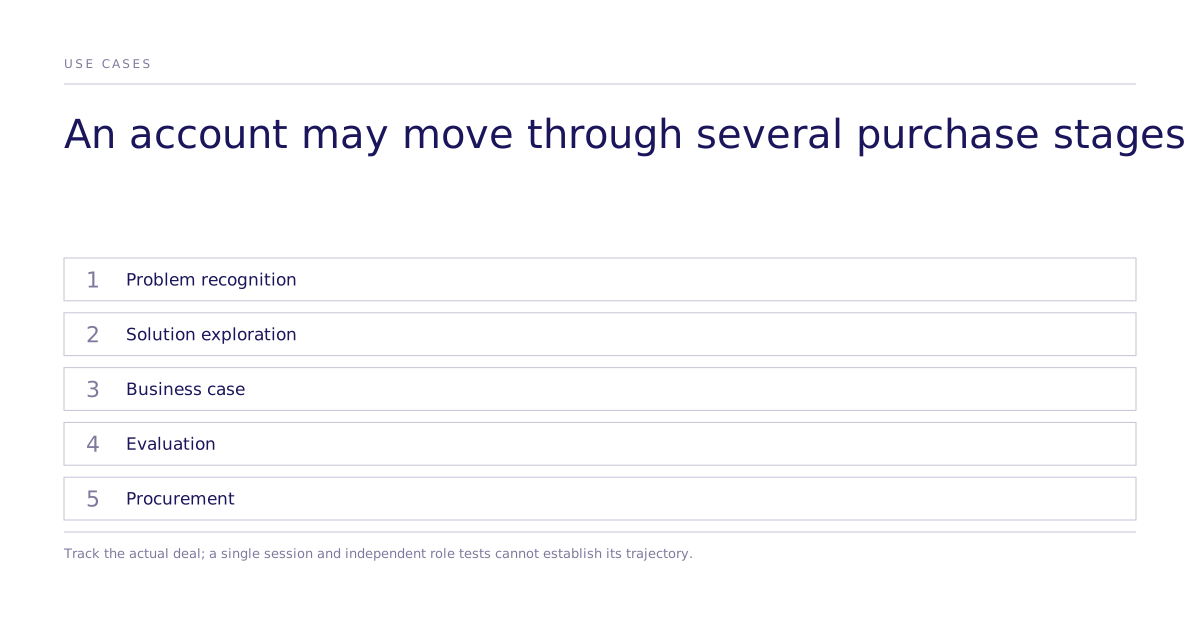
Purchase timelines vary by product, account, procurement requirements, and stage. A champion’s early enthusiasm may change when budget, security, or implementation concerns appear. A single session samples one context; track the actual account to understand changes over the buying process.
Check recruitment coverage rather than assuming who has a free calendar. Report participant roles, seniority, account size, and missing decision-makers. Selection into a research session can differ from the target committee, but the direction of that bias needs evidence.
What does B2B buyer research actually need?
A committee-level decision may need evidence from several roles and from the actual account. Per-role message comparisons answer a narrower question. Choose longitudinal records, interviews, or group discussion when the decision depends on how participants influence each other over a deal.
Ship one message that happens to work for whichever stakeholder showed up in the room, and a team can discover post-launch that the technical or economic buyer's real objection was never tested: a deal that looked validated stalls on an objection nobody ran.
Where a structured experiment fits
Subconscious can compare generated messaging responses across configured buying roles. Separate role estimates may reveal differences a blended summary hides, with uncertainty where supported. They complement interviews and account evidence; independent role responses do not estimate bargaining, vetoes, or committee interaction.
Define modeled role segments and inspect their calibration and coverage. They are separate from recruited participants. If the decision depends on real committee response, plan a suitable human study or account-level evidence for the same question.
What this does not cover
A modeled per-role comparison does not observe how one committee changes through meetings, negotiations, and procurement. A deal-trajectory claim needs evidence from the actual account. Scope the study around the message, endpoint, roles, and uncertainty rather than assuming it simulates the whole buying journey.
Next step
Review the aggregate replication evidence and limits, then scope a per-role message comparison using the actual alternatives, roles, and endpoint. That record does not show this committee’s trajectory or a completed comparison for every buyer segment.