Why Your Next Campaign Brief Needs a Test Layer Before Creative Starts
A campaign brief reads like evidence even when it is a guess. It names an audience, states a tension, and asserts a message will land. Creative teams build against those lines as if they were tested. Catching the untested assumption is cheaper before production spend, timelines, and message credibility are already committed to it.
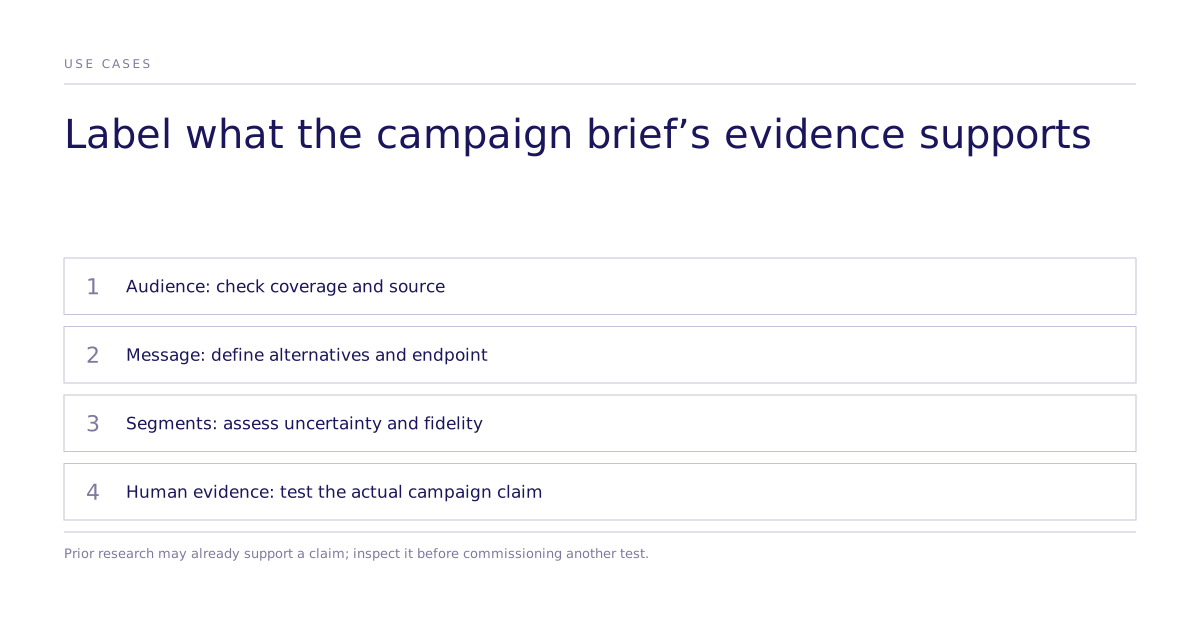
Where Does Risk Enter a Campaign Brief?
A campaign brief usually states an audience, a tension, and a message. Prior research may already test some of those claims. Check its date, population, stimulus, endpoint, and design before deciding what still needs a new comparison; experience and client knowledge can contribute context without replacing that review.
The current BLS outlook projects analyst and marketing-specialist employment growth over 2025–2035. That is labor-market context, separate from whether this campaign brief has relevant evidence. Check the brief’s assumptions before major production commitments.
What a Controlled Test Adds, and What It Does Not
Define the segment, alternatives, assignment, and endpoint before comparing a brief’s message claim. In a simulation, the result measures generated responses under the configured conditions; assess fidelity separately. Use prior human evidence where relevant and specify what an additional comparison would resolve.
A modeled comparison can show differences in generated responses and suggest objections to investigate. It does not identify why real buyers react or establish campaign performance. Label the result and its calibration limits, then plan suitable human or live evidence when the actual claim requires it.
Where Does This Fit Before Creative Starts?
Before major production commitments, a comparison can test specific audience and message assumptions while rewriting remains easier. It cannot catch every issue a finished-asset or media test would reveal, such as visual execution, delivery, or channel context. Keep those later checks in the plan.
| Stage of the brief | What a controlled test can check | What still needs real-person validation |
|---|---|---|
| Audience definition | How a configured model responds to the stated tension | Relevant audience coverage, lived context, and actual buyer constraints |
| Message or positioning claim | Differences in generated responses to assigned alternatives | Transfer to real people and performance in the actual media environment |
| Segment differences | Differences across configured segment outputs | Whether relevant human evidence supports that difference in the campaign audience |
The Failure Mode to Avoid
Naming this failure mode here is what lets a buyer check for it before the brief ships. The dangerous version of this practice is a brief that sounds audience-tested without being audience-tested. That happens under deadline pressure: the team wants a confident line, a tool produces a fluent paragraph, and nobody labels which sentences are backed by a test and which are still assumption. The fix is not more confidence. It is naming, in the brief itself, what was checked, what was not, and what should be validated before a claim goes external.
A Working Sequence for This Week
- Take one live brief with a real decision behind it, not a hypothetical.
- Write the assumption in one sentence: which audience, which tension, which message claim.
- Inspect existing evidence, then compare defined alternatives where a new study would resolve the uncertainty.
- Read the result yourself. Mark what changes the brief, what is inconclusive, and what still needs real-person validation before the claim ships.
- Send the brief to creative with the checked assumptions labeled as checked, and the open ones labeled as open.
Teams that treat this as a habit rather than a one-off end up with something more durable than a brief: a documented reason for why the brief said what it said, which is the thing that survives a client's or a creative director's first hard question.
Carry the evidence into creative
Keep the brief’s claims connected to the evidence that supports them. A modeled comparison can inform revision, while the strategist still assesses fidelity, campaign context, and the need for human evidence. Review applied case examples or scope the actual brief with the team.