The Consumer Analyst's Decision: When Directional Reads Aren't Enough
A consumer analyst loses ground to AI not by using it, but by treating a fast, plausible-sounding answer as proof and sending it forward as if validated. The decision that protects the role is narrower than "use AI" or "don't": know which consumer-behavior questions can stay at quick directional exploration, and which ones must clear a validation check suited to the decision before the business acts on them. That check may confirm a claim, correct it or reject it.
Why Is This Question Showing Up Now?
The mechanical parts of research analysis (drafting a survey, summarizing a transcript, formatting a chart, producing a first-pass read) are getting faster and cheaper to produce. That does not eliminate demand for the analyst's judgment; it concentrates risk in work that stops at production. AI adoption is reshaping which skills employers reward, with a widening premium for workers who pair AI fluency with judgment-heavy work over routine output (PwC, 2026 Global AI Jobs Barometer).
For a consumer analyst, the exposed work is dashboard maintenance and recurring summaries. The protected work is choosing which claim deserves trust, attaching the right caveat, and knowing when a directional read is not enough evidence for the decision at hand.
What Changes in the Role
The old version of analyst expertise lived partly in access: knowing how to field a study, clean the data, and package a finding. AI erodes that advantage; more people can now draft a survey or generate a first-pass customer read.
That judgment gets easier to test, because the bar shifts from "can you produce an answer" to "can you say which answer deserves trust, and why." The analyst who can name the audience assumption behind a claim, spot a thin or ungrounded result, and explain what would change the recommendation does work generation alone cannot replace.
What Is the Four-Layer Evidence System?
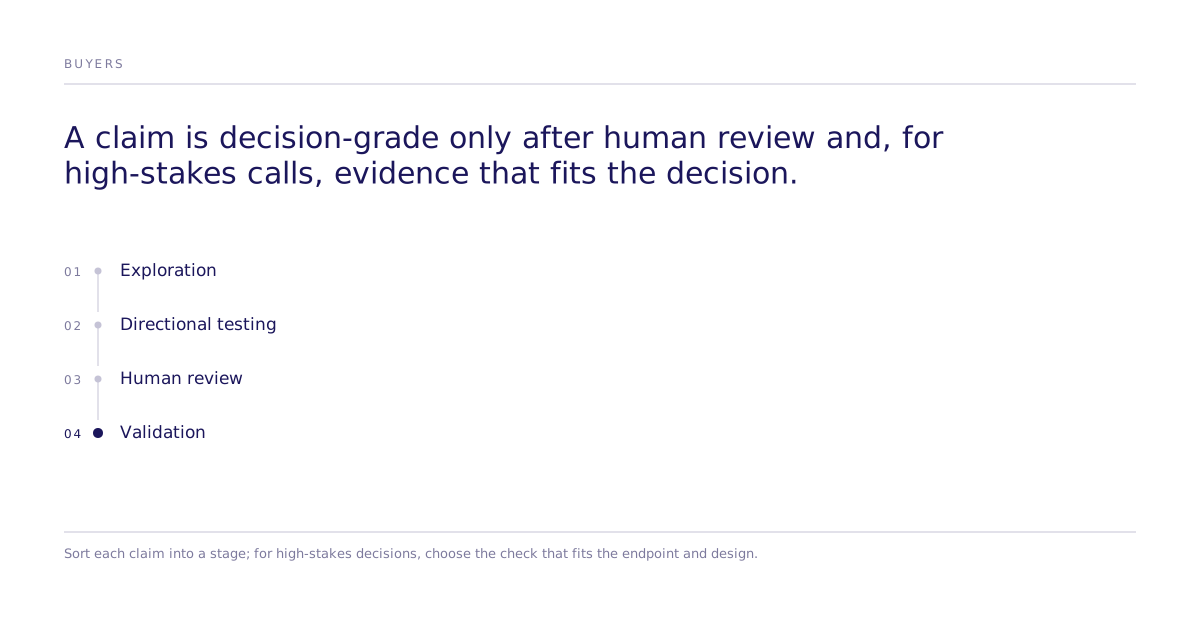
A durable analyst practice runs on a clear system for what each tool is allowed to do:
- Exploration. Use AI to generate hypotheses, objections, and alternative explanations quickly.
- Directional testing. Compare rough options to see which ideas are worth pursuing. Label this output as directional, not decision-grade.
- Human review. Check the audience definition, the framing of the question, the source grounding, and whether the result fits the business context.
- Validation. When the decision is expensive, public, or hard to reverse, move to real evidence: fielded research, behavioral data, expert review, or a controlled experiment that returns a measurable causal effect.
The output of steps 1 and 2 is not evidence itself: it is a set of candidates step 4 confirms or rules out.
Where a Controlled Experiment Closes the Gap
A quick exploratory pass can surface which concept, message, or price story looks more promising. It cannot tell the business, with a stated confidence level, that changing the price or the message changes the outcome, because it was never designed to isolate cause from correlation.
Subconscious runs controlled discrete choice experiments and returns estimated effects on simulated stated choice with confidence intervals, using a choice-experiment design and a specified analysis model rather than a fluency claim about any AI model. An analyst can run the defined choice task with a modeled population. The resulting estimate and uncertainty describe that simulated task; a target-market claim needs matched human or market evidence. When the decision is expensive enough to need it, the same question can be put to real human participants in a matched study, which is scoped per decision.
That answers the labeling problem. "Directional read, not yet validated" becomes "estimated effect on simulated stated choice, with a confidence interval and known limitations, and a matched human validation either completed or still pending." The label names both the simulation status and the validation status.
What Mistake Erodes Analyst Trust?
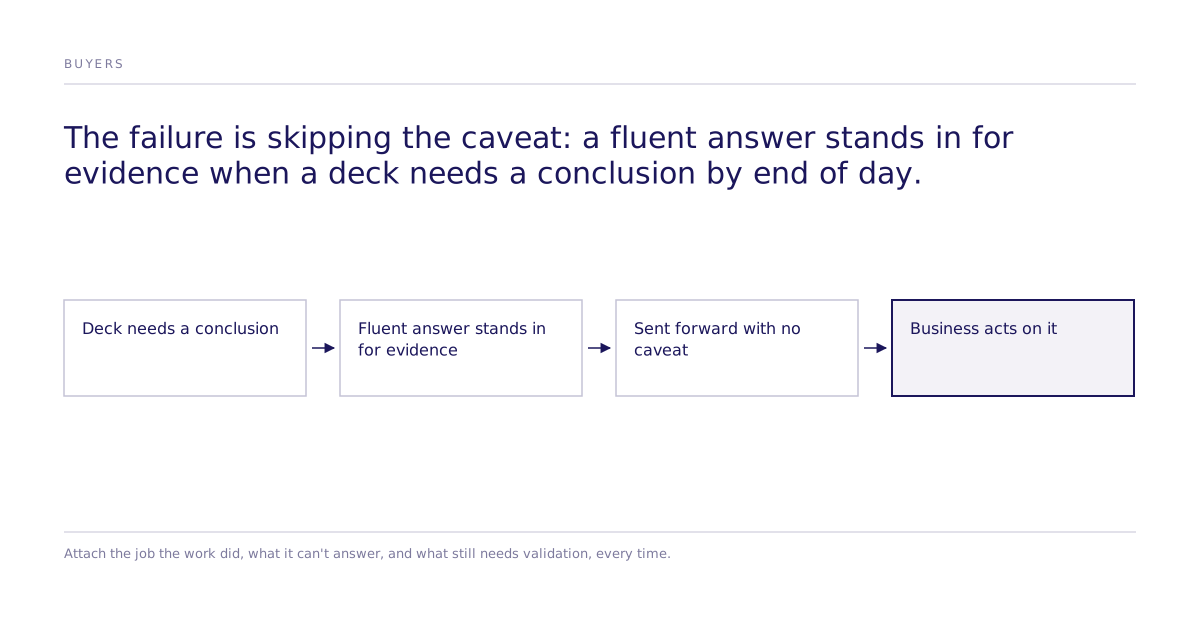
The costly error is not using AI. It is sending a chart or a recommendation without explaining the behavior behind it, letting a fluent, fast answer stand in for evidence because the deck needed a conclusion by end of day.
The fix is to make the limits part of the deliverable, every time: name the job the AI-assisted work did, flag the questions it cannot answer, and spell out what still needs validation before the business acts on it. This does not make an analyst sound less confident; it makes them more credible, because they can name exactly where their confidence stops.
One Habit to Start This Week
Do not redesign the whole workflow at once. Start with one live decision:
- Pick a real project tied to an actual decision.
- Write the business decision in one sentence.
- Define the audience and how much is riding on being wrong.
- Use AI only for the exploratory and directional stages.
- Review the output manually and mark it useful, weak, or unsafe to act on.
- Present the answer with a clear caveat and a named next validation step, such as a matched human study or controlled experiment, chosen to fit the endpoint and design.
Repeat that on one decision a week for a month. The output is not a longer list of tools. It is a working system that shows speed, judgment, and where the evidence stops.
What This Does Not Replace
A controlled experiment tests the action once the analyst has framed the right question and defined the right audience. It does not choose the question, decide which caveat matters most to a stakeholder, or substitute for real-human validation when a decision is legally exposed or highly public. The analyst still owns the framing.
When the decision is small, reversible, and cheap to test in market, a well-labeled directional read may be all a business needs. Deciding which tier a given decision requires stays the analyst's call.
Where to Go Next
Review the Subconscious research program for how the method and human-baseline validation work, or see the current case studies for examples of a directional question becoming a tested pricing or messaging decision. To scope a specific decision, bring it to a working session with the alternatives, the audience and the cost of being wrong, or read how Subconscious works.