How much validation does a research decision need?
A buyer weighing causal experimentation against incumbent market research asks two questions: does this method answer "why," and how much validation does this decision need before the budget commits. Getting the second wrong is the expensive mistake: paying for human-scale validation on a low-stakes call, or shipping a high-stakes launch, pricing, or messaging decision on simulation alone when the cost of being wrong is large.
The decision this method is built to test
Subconscious runs randomized controlled experiments on synthetic respondents to estimate effects on modeled choices under the tested alternatives, for which population, with quantified uncertainty where supported. A stated-preference survey can also contain randomized choice tasks. Specify the respondent source, design, outcome and validation for each result. The method uses discrete choice modeling and randomized comparisons rather than generic AI persona roleplay.
Matching validation depth to the cost of being wrong
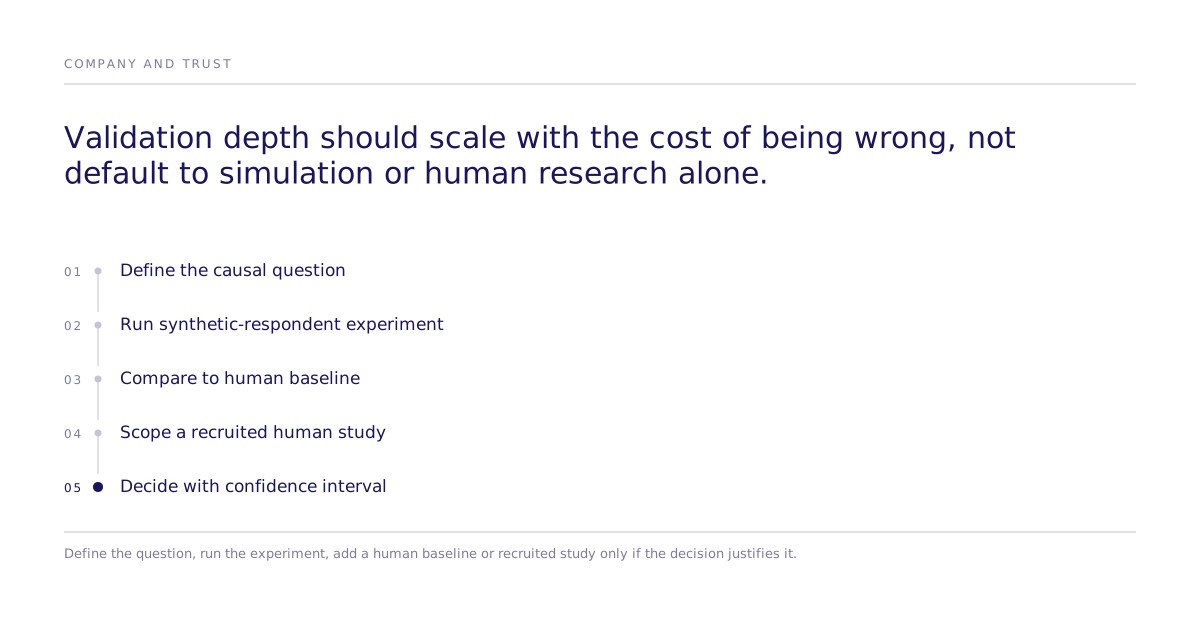
A low-stakes messaging test can often run and resolve entirely in simulation. A launch, pricing, or positioning decision with real capital behind it usually needs a second step: comparing the simulated result against a human baseline, then, if the decision justifies it, scoping a recruited human study on the same question.
A separately specified human study can check simulated choices under comparable alternatives and outcome definitions. Agree recruitment and analysis ownership before relying on the fielding plan. Primary research documents that language-model responses can diverge from human data. Political Analysis study.
Where scale and validation stay separate concepts
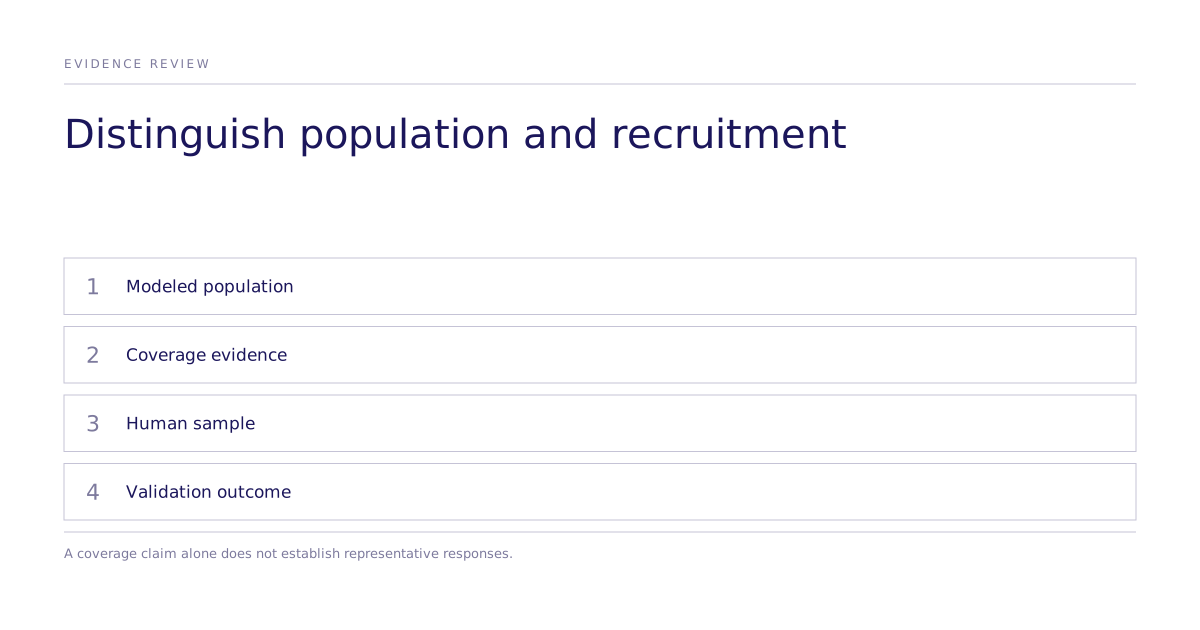
A modeled population and a recruited human sample need different evidence. Document the actual population definition, data provenance, coverage exclusions and matched validation. For human fielding, specify inclusion criteria and the recruitment method. A numerical reach claim would not establish either representativeness or a recruitable panel.
Next step
When being wrong is expensive, the right first move is to define the causal question precisely, run the synthetic-respondent experiment, and decide up front whether the result needs a human-baseline comparison before it goes to the team making the call. Read the method evidence and its limits or see how an experiment gets scoped before scoping a study, or book a decision review to walk through validation depth for a specific decision.