Delphi vs. a Causal Experiment Platform for Pricing and Messaging Decisions
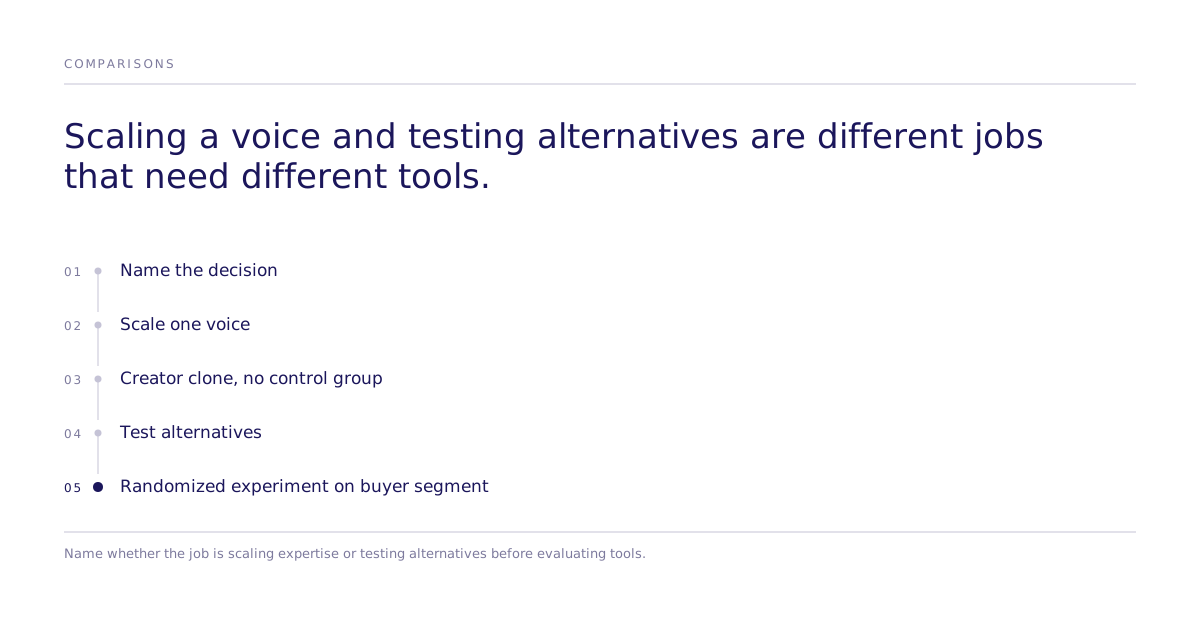
A pricing, packaging, or messaging change is on the table, and the shortlist includes a tool built to put a creator's voice in front of an audience. Name the actual decision first: is the team trying to scale one person's expertise, or find out which pricing or message alternative a buyer segment will respond to? Those are different jobs, and picking the wrong category produces an answer that does not transfer to the real decision.
What Delphi is built for
Delphi lets a creator, coach, or expert build a conversational clone trained on their own material, then deploys that clone to their audience so it can answer questions and hold conversations at a scale the person alone could not sustain (delphi.ai). The people using the finished product are the creator's own followers, not a target customer or prospect segment the creator is trying to understand (Delphi's discover page, which lists creator clones built on the platform). There is no control group and no randomized comparison across alternatives. It is built to scale one voice.
What is a causal experiment platform built for?
Subconscious is the causal AI company: it runs randomized, controlled experiments on a simulation of a target market and returns causal effects with confidence intervals, showing why people choose and which action moves the outcome. Instead of one voice talking to many people, a team names two or more pricing, packaging, or message alternatives and tests them against a modeled buyer or customer segment under the same experimental design.
These two categories can look similar on a comparison page because both produce conversational or persona-driven output, but a pricing or messaging decision needs the second one.
Where the two jobs diverge
| Dimension | Delphi (creator clone) | Causal experiment platform |
|---|---|---|
| What it builds | One conversational clone trained on one person's content and voice | A modeled buyer or customer segment used inside a controlled experiment |
| Who interacts with it | The creator's own audience | The team deciding between pricing, packaging, or message alternatives |
| Comparison structure | One clone, one conversation at a time | Multiple alternatives tested against each other under the same design |
| Output | A conversational answer in the source person's voice | An estimate of which action moves the outcome, with confidence tied to the study design |
| Validation path | Depends on the source person's own material | Can move from a simulated study to real human participants without changing the causal question |
When is Delphi the right fit?
Choose a creator-clone tool when the underlying job is scaling one person's expertise to their own audience, with no comparison across business alternatives involved.
When a causal experiment platform is the right fit
Choose a causal experiment platform when the decision is which pricing, packaging, or message alternative to back for a target segment, and the team needs a randomized comparison instead of a single conversational answer. When the decision warrants it, the team can move from simulation to real-human validation without changing the causal question.
What does a causal experiment platform not do?
Subconscious does not provide clone-hosting, follower administration, or content-delivery tooling for a creator's own community. Buyers evaluating a tool for that specific job should keep evaluating that category, including Delphi.
Publishing what a method cannot claim is what lets a buyer check it against the study design before relying on it. A controlled study estimates effects under its study design. It does not guarantee the exact result of a market launch, and testing or validating a study with real participants adds external evidence rather than automatic proof of commercial performance.
The core difference
Delphi helps one person's knowledge reach more people. A causal experiment platform helps a team find out which action changes buyer behavior before the change ships. Scoping a pricing or messaging decision around the wrong category means shipping on a chat transcript instead of an experiment. The gap only shows up after the change is live and the market does not respond the way the transcript implied.
Before scoping a pilot, name the decision first. If it is "which action moves this outcome," start with how Subconscious runs a study, review replicated study results or the public leaderboard, and book a working session to define the alternatives worth testing.