Koji vs a Controlled Synthetic Experiment: Recruited Interviews or Fast Filtering First
A product marketing or consumer insights lead facing a launch, message, or pricing decision usually has to choose between two different research jobs, not two competing brands. One job is recruiting real people for interviews that produce quotable, transcript-level evidence. The other is running a controlled experiment against a defined synthetic population to filter a long list of candidate ideas down to a few worth testing with real people. Koji is built for the first job. A causal simulation approach is built for the second.
What does Koji actually do?
Koji describes an AI interview platform that moderates real participants and synthesizes interview material (Koji's platform comparison, checked October 2, 2026). Measure recruitment, scheduling, researcher review and analysis workload in a pilot; the software description does not establish a particular increase in monthly interview volume or a headcount saving.
That output has a property a simulation cannot substitute for: a transcript from a real person that a stakeholder can read and trust as evidence of what an actual customer said.
What does a controlled synthetic experiment test instead?
A causal simulation approach defines a synthetic population that stands in for a target audience, then runs a controlled experiment that compares candidate actions, messages, prices, or concepts against each other. Subconscious runs this kind of study with randomized comparisons on a configured market simulation. The team names the generated response being measured, such as the share of simulated respondents who choose each option, and uncertainty is reported where the study design supports it. The output is a comparison of generated responses across the options tested, not a transcript and not observed customer behavior.
A transcript answers "what did this person say about the idea?" A controlled experiment answers "which of these alternatives produces the higher simulated response, so the team knows which to examine first?"
Where each method wins
| Dimension | Recruited interviews (Koji) | Controlled synthetic experiment |
|---|---|---|
| Respondent type | Real, recruited participants | Defined synthetic population instrument |
| Primary output | Interview transcripts, themes, quotes | Causal comparison across actions, with uncertainty where supported |
| Provenance for stakeholders | Real-person quotes and transcripts | Generated responses, not quotes from real people; not a substitute for recruited evidence |
| Best use | Discovery, comprehension and context from real participants | Screening defined candidate messages, prices or concepts |
| Escalation path | Challenges assumptions and explains customer context | Supplies hypotheses for interviews and matched human outcome testing |
When recruited interviews are the right starting point
Choose recruited interviews first when the output needs to be cited to stakeholders as real-customer evidence, when the decision carries high-stakes investment behind it, or when the team is exploring a genuinely new market segment where no population definition yet exists to simulate against.
When a controlled experiment is the right starting point
Choose a controlled synthetic experiment first when the team has more candidate messages, prices, or concepts than a recruited study can responsibly cover, or when a marketing, product, or growth team without dedicated research operations needs a provisional shortlist before asking for real-human research budget. Choose the starting method from the actual scope and the schedule each supplier quotes for it. Timing differs by audience, sample and review needs, so compare quoted dates rather than assuming one method is faster.
How the two connect in one workflow
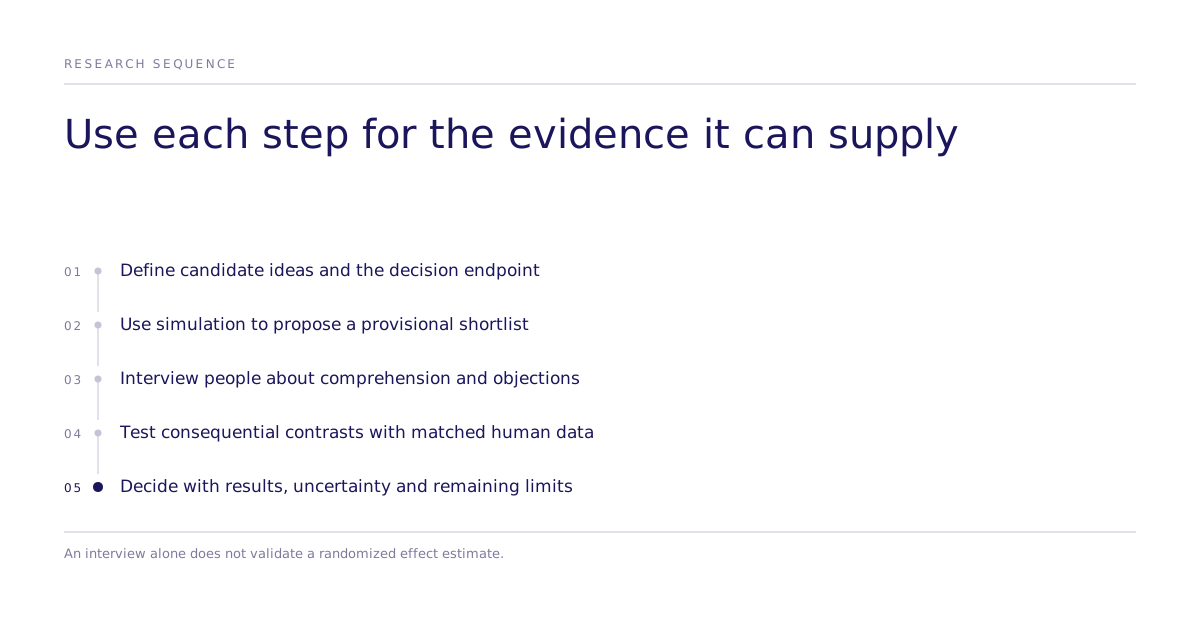
A simulated comparison can propose a provisional shortlist. Recruited interviews then examine comprehension, objections and context, including promising alternatives the simulator ranked lower, because a simulated screen can miss an option that real people would favor. To check an estimated comparative effect, match the human study's alternatives, population and response endpoint to the simulated contrast.
How Subconscious fits into that workflow
For a consequential decision, define the human confirmation study alongside the simulated screen. Check the configured audience's provenance and segment coverage. Interview transcripts supply evidence of what participants said; a matched controlled study supplies evidence about the comparative endpoint.
Limitations and failure conditions
This workflow is a modeled comparison. It is not recruited-interview evidence, its outputs are not human-respondent transcripts or quotes, and it does not replace recruited real-human research when a decision requires that kind of provenance. Treat any specific sample size, panel configuration, or turnaround number described for a particular research vendor's own product as a feature of that vendor's setup, not a universal limit of every simulation-based method.
Next step
See how Subconscious runs these experiments, review prior case evidence, or read the current research before deciding which starting point fits the decision in front of you. Teams ready to scope a specific decision can book a session.