Panel Data vs. Controlled Experiments: Choosing the Right Tool for a Pricing or Packaging Decision
A brand manager deciding whether to change a price, a package, or a claim usually starts with the same question: what do we already know? The answer sits in three different places, and each one answers a different part of the decision.
What syndicated panel data tells you
Platforms like Numerator aggregate purchase and shopping behavior across a consumer panel and deliver it through dashboards built for research and analytics teams; Numerator positions itself as a consumer and market intelligence platform (Numerator). That kind of data answers a retrospective question well: what have customers actually bought, and how has that shifted over time. A comparison earns trust when the miss sits next to the hit for panel data too. It does not answer a prospective one: if a price or a pack changes, will behavior move, and by how much.
Structured research programs on this model typically run days to weeks from question to answer. That cost is reasonable when the question is descriptive and the data needs to cover the full market. It is the wrong tool when the open question is which specific version of a change will move behavior before money is committed to it.
What's the gap between what happened and what would happen?
Descriptive purchase history and syndicated panel data can show that share dropped after a competitor cut price. Neither one isolates which lever (price, pack size, claim wording) would move the outcome if pulled today. Answering that requires holding everything else constant and varying only the one thing under consideration: a controlled experiment.
This is the sequencing most teams get wrong: they either ship a launch straight off descriptive data, or commission a new correlational survey that still can't isolate cause from coincidence. The useful order is descriptive data first, then a controlled test of the specific action under consideration.
Three ways to answer a pricing or packaging question
| Approach | Question it answers | Timeline | Where it fits |
|---|---|---|---|
| Syndicated panel data (e.g. Numerator) | What customers have bought, and how that has changed | Ongoing, dashboard-refreshed | Establishing the baseline and the trend |
| Commissioned survey or panel research | What customers say they prefer or intend | Days to weeks per study | A directional read when no panel data exists |
| Controlled discrete-choice experiment | Which specific action changes the outcome, and by how much | Study-dependent | Testing the action before it ships |
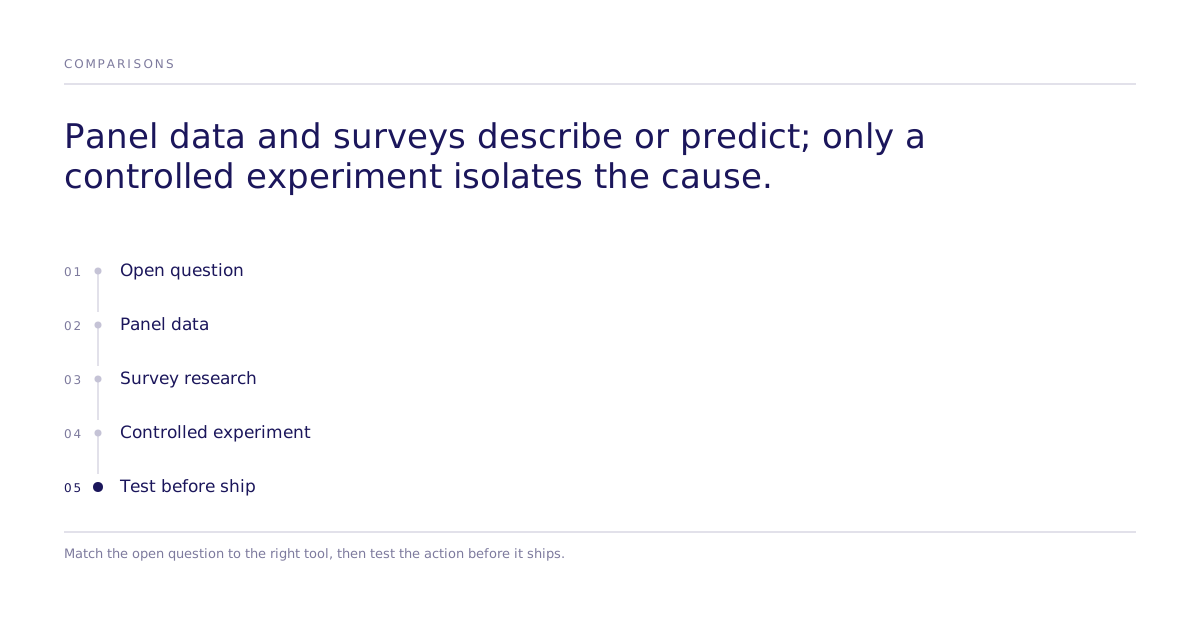
The first two rows describe or predict. The third isolates cause. A brand team that only has the first two is still guessing at the third question.
Testing the action, not reconstructing the market
Subconscious runs controlled discrete-choice experiments against a synthetic population to test the effect of a specific action, a price point, a pack change, a claim, on choice, returning a causal estimate with a confidence interval. There is no published case study for this exact comparison; the argument rests on the research method itself: a controlled experiment isolates the variable under test in a way observational and panel data cannot.
For a CPG brand deciding between two package designs or three price points, the panel answers "what's the current trend," and the controlled experiment answers "which of these specific options would move the number."
What does a controlled experiment not replace?
Naming what a tool does not do is what lets a buyer check the fit before they commit budget. Subconscious does not aggregate historical purchase transactions or syndicated retail panel data. Teams that need that baseline still need a panel data provider; a controlled experiment tests the next decision.
Before committing the budget
Ask which of the three questions above is still open. If it's "what has been happening," panel data answers it. If it's "which specific action will change what happens next," that calls for a controlled test of the actions under consideration before they ship. Book time to scope a test for a specific pricing, packaging, or claims decision.