Qualtrics vs. Synthetic Panels: Which Stage of a Launch Decision Needs Which
A launch study may need to explore options, estimate a contrast, or confirm that a result transfers to real buyers. Qualtrics supports human fieldwork and a synthetic-panel workflow. Compare the proposed respondent source, design, and evidence with a Subconscious choice study.
The two jobs a research question actually has
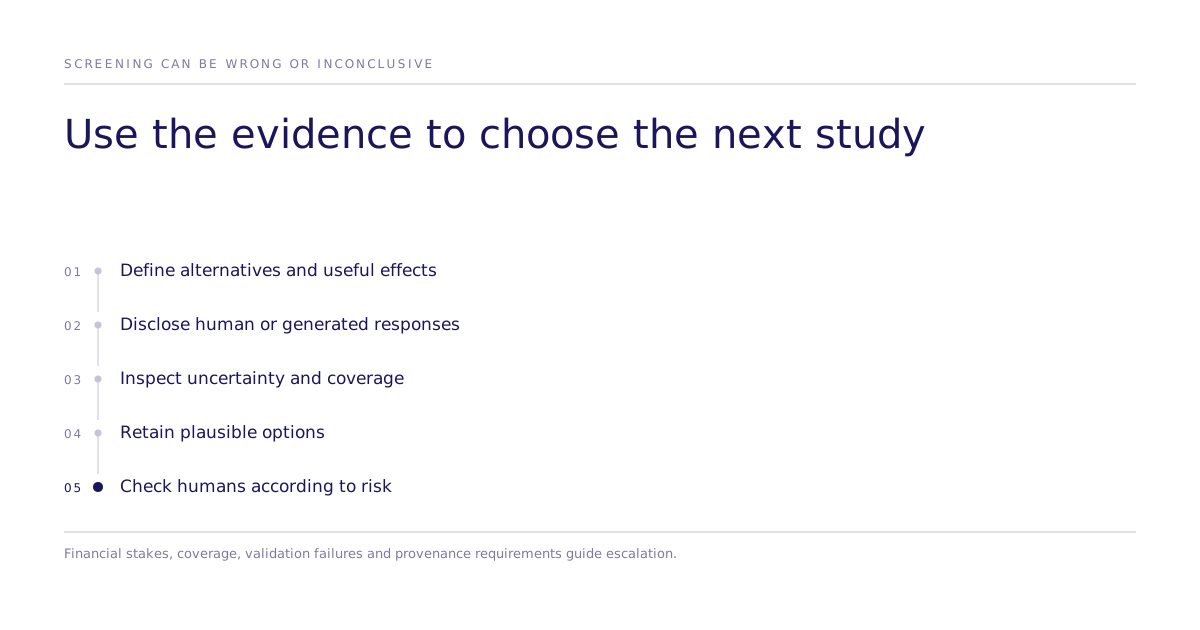
Screening and confirmation can require different evidence, but a synthetic screen may reject a useful option or produce an inconclusive ranking. Define a minimum useful effect and the cost of false rejection before using any first pass to narrow the alternatives.
What are structured survey platforms built for?
Qualtrics supports human survey fielding and Edge Audiences synthetic panels. Its current synthetic documentation specifies US general-population responses in English, supports common randomization and logic, and lists feature limits. These capabilities do not alone establish human effect fidelity.
Obtain a delivery estimate for the actual design, respondent incidence, recruitment, quality checks, and analysis. Platform category does not establish a universal study timeline.
What a causal, simulation-first pass changes
Subconscious uses randomized choice designs with generated responses to estimate attribute effects within a simulated study. The public causal-fidelity paper compares estimated choice parameters with corresponding human studies. That evidence concerns parameter ranks and does not guarantee a result for a new launch.
Simulation is not a substitute for real-respondent recruitment when a regulatory body, board, or stakeholder requires human-sourced evidence. A matched human study is a separate scope with its own recruitment and fielding plan. It can use the same alternatives and response endpoint as the simulated contrast, but the simulated study does not guarantee it.
Where the two approaches actually diverge
| Question | Qualtrics human fieldwork | Qualtrics synthetic panels | Subconscious choice study |
|---|---|---|---|
| Who answers | Recruited people | Generated US general-population responses in English | Generated responses from a specified modeled population |
| What to inspect | Instrument, sample, assignment and analysis | Supported features, population scope, design and validation | Randomized attributes, choice endpoint, estimator and validation |
| Delivery | Obtain a scoped fielding estimate | Obtain a scoped run and analysis estimate | Obtain a scoped study estimate |
| Decision fit | Human evidence for the specified instrument and population | Check whether the question fits documented synthetic support | Compare specified alternatives and check human transfer |
| Human validation | Human responses still need design and quality checks | Request evidence matched to the task | Plan a matched human study when needed |
These workflows can be combined. Respondent source and experimental design are separate choices, and human responses alone do not prove an intervention effect. Disclose which source supplied each result.
How do you sequence Qualtrics and simulation testing for a real decision?
Set a useful-effect threshold before screening. Retain plausible alternatives when uncertainty or model coverage leaves a meaningful false-negative risk. Choose human confirmation based on financial stakes, audience coverage, validation failures, and provenance requirements, including decisions without board or regulatory review.
Subconscious's research and how we work pages describe this sequencing in more detail, and the case studies page shows it applied to specific launch decisions. Teams evaluating whether a given decision needs the validation step can book time to walk through it against their own launch calendar.
What is the limit of real-human validation testing?
A human study checks the tested response under its own population and instrument. It does not automatically establish market performance, observed usability, or clinical outcomes. Match the validation method to the endpoint the decision requires.