Recruit First or Test First: Sequencing Human Research Against a Controlled Experiment
A research or insights lead deciding how to source evidence for a product, pricing, or messaging call has two starting points: commission recruited-participant interviews immediately, or run a controlled experiment first and reserve recruited sessions for validating what survives. Spend the full recruitment budget and a multi-week timeline testing variants a faster comparison would have narrowed, and both are gone before the real question gets answered. Skip human confirmation entirely and ship a decision on unvalidated output, and the team has a causal claim nobody has checked against a real person.
What Does Recruited-Participant Research Actually Solve?
A recruitment platform like User Interviews matches a study's target profile (job title, industry, behavior, demographics) against a pool of real people willing to be interviewed, tested, or surveyed. The researcher still designs and conducts the session; the platform's job is finding qualified humans and getting them to show up. That is a distinct capability, and it answers a different question than which of several actions is more likely to change a specific outcome.
The category has been consolidating. UserTesting's acquisition of User Interviews folded a recruitment specialist into a broader user-research suite, a sign that recruitment is increasingly treated as infrastructure rather than a standalone research method.
The Structural Cost of Recruiting Before the Question Is Narrowed
Recruitment carries constraints no scheduling tool removes. As historical planning examples from the recruitment-research category, not current Subconscious figures: common participant profiles have been planned at roughly three to seven days to fill, and niche B2B targets (an enterprise SaaS engineering VP, a pharma procurement lead) have been planned at two to four weeks. Industry no-show rates in the 20-30% range are common, so paid recruiting and blocked calendar time go to sessions that don't happen. Each session is also a one-shot interaction, typically thirty to sixty minutes: if the questions should have been different, the participant is gone and re-recruiting starts the clock over.
None of this is a flaw in a specific vendor; it is what happens when the unit of research is a scheduled human conversation, and it matters most before a team has narrowed which questions are worth that conversation.
Where Does a Controlled Experiment Change the Sequence?
Subconscious runs controlled experiments against a person-level audience graph covering 800 million real people. That is an experimentation surface, not a recruitable pool of participants: nobody is scheduled, screened, or paid to take part, because the graph is the substrate an experiment runs against, not a group of people waiting to be reached. Comparing several pricing, messaging, or product alternatives against that graph produces a directional read on which action is more likely to move the outcome.
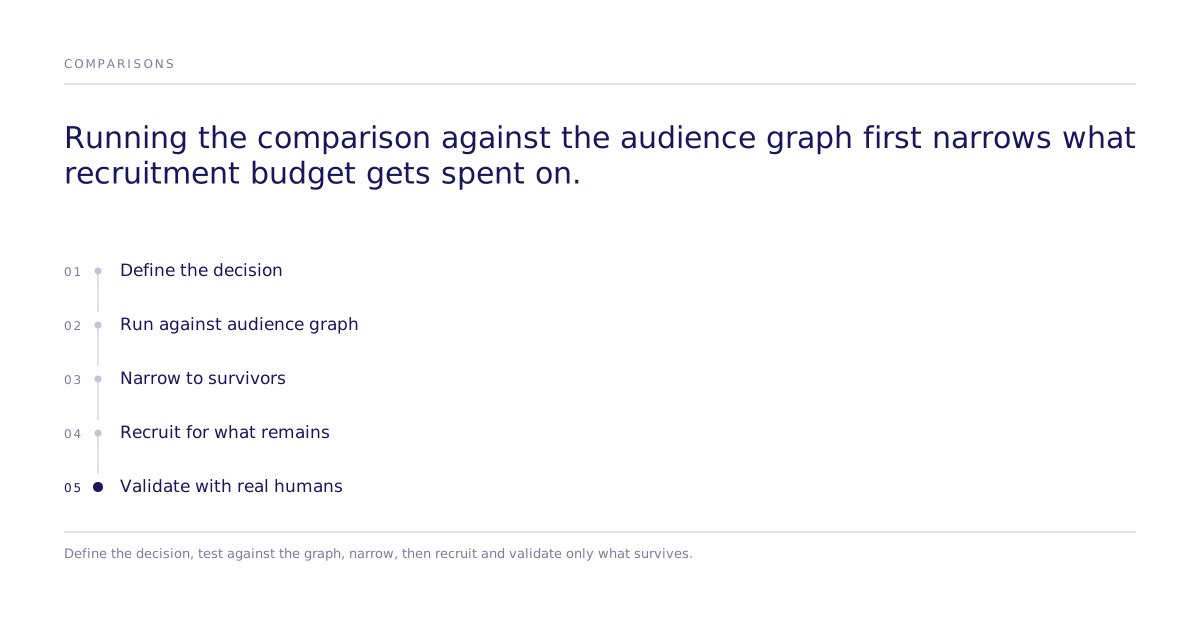
That changes what recruitment is for. Instead of using interviews to narrow a long list of ideas to a shortlist, a team can run the shortlist question against the audience graph first and spend the recruitment budget only on the alternatives that survive.
What Does Real-Human Validation Add, and Where Does It Stop?
Subconscious can test or validate studies with real human participants, letting a team move from a controlled experiment to real-human validation without changing the causal question: the same comparison, the same outcome definition, confirmed against real respondents rather than the audience graph alone.
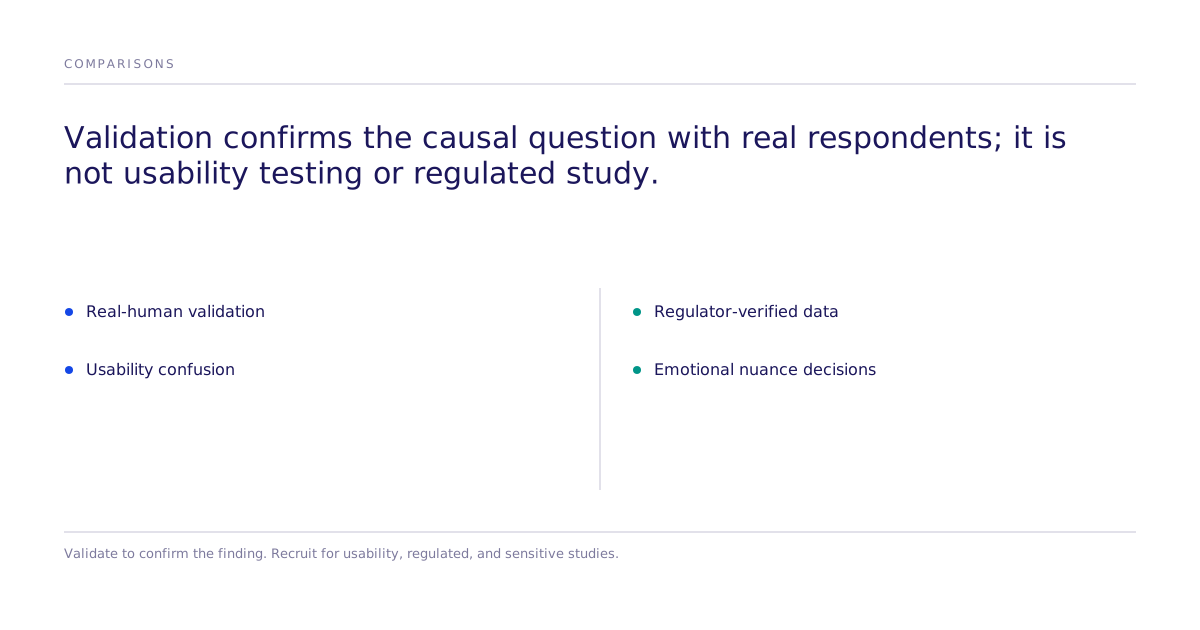
That is a validation step, not a replacement for what recruited, moderated research is built for. Watching someone click through a prototype and report confusion, running a study that requires regulator-verified real-respondent data, or sitting with someone through a healthcare or financial decision where emotional nuance carries the finding: those remain jobs for recruited human sessions. Real-human validation through Subconscious does not turn a controlled action test into a moderated usability session, a clinical trial, or a guarantee that a decision will perform in market.
A Practical Sequence
- Define the decision and the outcome it should move. Name the action being compared, not just the topic.
- Run the comparison against the audience graph first, when the question is which of several actions is more likely to change the outcome.
- Recruit real participants for what a controlled experiment can't answer: usability, emotionally sensitive topics, regulator-verified data, or the small number of ideas that survived the first pass and deserve a scheduled human conversation.
- Validate the surviving hypothesis with real humans before it becomes a launch decision, keeping the same causal question throughout.
Recruited interviews and a controlled experiment aren't competing for the same budget line; they answer different parts of the same decision.
Limitations
Subconscious is not a participant-recruitment service and does not substitute for moderated usability testing, hands-on prototype interaction, or research contexts that require regulator-verified real-respondent data. This comparison does not include named customer results or an accuracy benchmark for this specific decision type; readers evaluating claims about experiment accuracy should look at the primary Subconscious research rather than infer a number from this article. Teams that want to see how Subconscious's experiments work in practice or want the method applied to a real decision can review case studies or book time to walk through a specific decision.