Toluna vs a Causal Experiment Layer: Panel Research or Test-First?
An insights lead who already runs studies through a recruited panel vendor faces a recurring choice: commit the next product, pricing, or messaging question to a full panel cycle, or test the candidate actions first and reserve the panel for confirmation. Getting this wrong is expensive either way. A panel study built around the wrong question burns weeks and recruitment budget, and a decision shipped on stated-preference survey answers alone can miss the gap between what people say and what they actually do.
What a recruited panel delivers
Toluna operates as a consumer-panel and research platform, connecting brands to a recruited base of real respondents for structured studies, tracking, and reporting (Toluna). That model fits discovery work, ongoing brand and category tracking, and studies where a client needs confirmation from an identifiable human population, not just a directional read.
Toluna also offers a self-serve research product built for teams that want to launch and manage studies against its panel directly rather than working through a managed-service engagement (Toluna Start). Either route still depends on recruiting, fielding, and waiting for real respondents to answer: a cycle with real value, but still a cycle.
The gap a panel cycle alone doesn't close
A recruited panel is strong at telling a team what respondents say they think or prefer. It is not built to isolate which specific action (a price point, a message, a feature) causally moves a target behavior before that action goes into the field. Running every candidate variant through a full panel study to find the ones worth fielding is slow and expensive, and stated preference alone does not reliably predict behavior.
Where does a causal testing layer fit?
Subconscious is a causal behavioral platform: it runs controlled experiments on simulated populations to estimate which action moves a target behavior, before a team commits to the full research cycle. It is not a panel-recruitment replacement: recruited human panels remain valuable for discovery, tracking, and confirmation. Existing survey or panel data can be used as an input, extending the workflow into experimental decision testing. Where scale matters, the same experiments can run against a person-level audience graph covering 800 million real people: a modeled comparison population, kept distinct from a panel a vendor recruits and manages directly.
When the decision depends on it, a team can move from a simulated experiment to a study validated with real human participants without changing the underlying causal question. That step confirms a result before it drives a launch decision.
Comparing the two motions
| Dimension | Recruited panel (Toluna) | Causal experiment layer (Subconscious) |
|---|---|---|
| Primary question answered | What does this population say or report? | Which action causally moves the target behavior? |
| Respondent source | Recruited, managed human panel | Simulated population, extendable to real-human validation |
| Best fit | Discovery, tracking, confirmation | Narrowing candidate actions before a study commits budget |
| Who typically operates it | Research or insights team, often with managed services | Product, marketing, or research teams testing specific actions |
| Relationship to each other | Confirms and measures | Narrows and de-risks what reaches the panel |
What does a causal experiment layer not replace?
A causal experiment layer is not a substitute for recruiting real respondents when the decision requires it. Regulatory research, brand tracking, and studies where a client needs a confirmed human data point still belong with a recruited panel. And moving a study from simulation to real-human validation does not turn it into an observed usability session, a clinical trial, or an automatic guarantee of market performance; it changes who answers the same causal question, not what kind of evidence the question needs.
Sequencing the two together
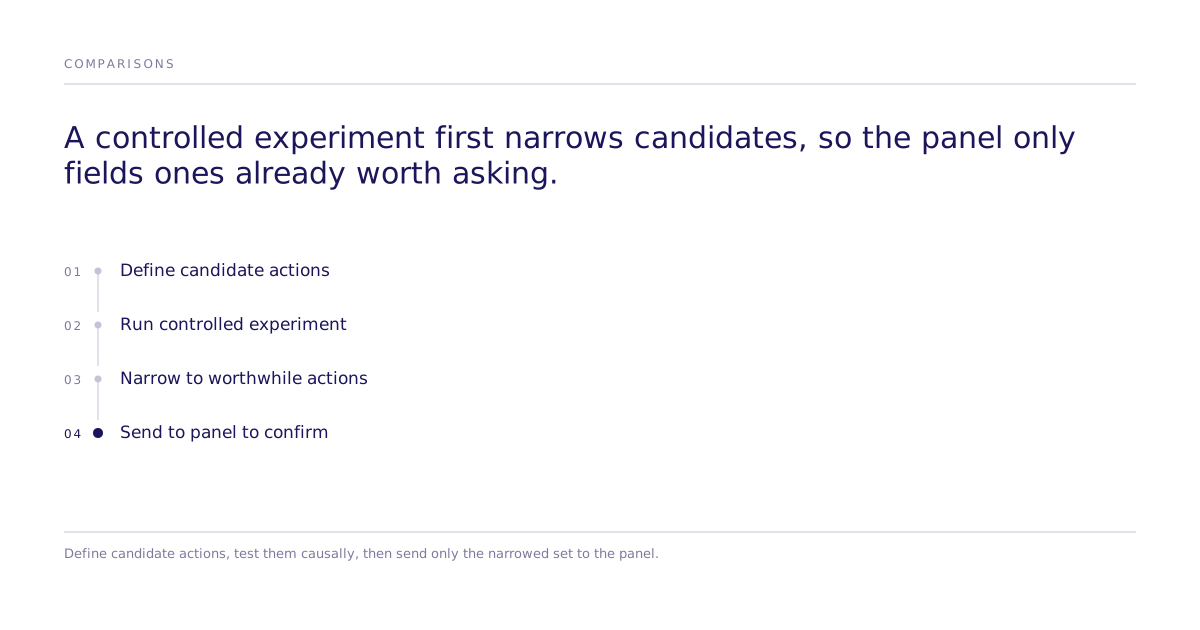
A workable order for the buyer weighing this decision: define the candidate actions, run them as a controlled experiment to identify which ones are worth fielding, then send only the narrowed set to a recruited panel for tracking or confirmation. That sequence spends panel budget on questions already worth asking, rather than on the full space of things that might have worked. Book time to walk through a specific decision before committing the next study to a full panel cycle.