10 Ways to Pair Causal Testing With a Research Stack Already in Place
A research stack may already support observation, interviews, surveys, conjoint, and live experiments. Pair those methods by specifying the decision and endpoint each contributes: generated preference, human stated choice, task completion, or an actual purchase.
Run a comparison while the decision can still change. Before adding a simulated study, identify what evidence it would supply and how the existing human or live workflow will assess the result.
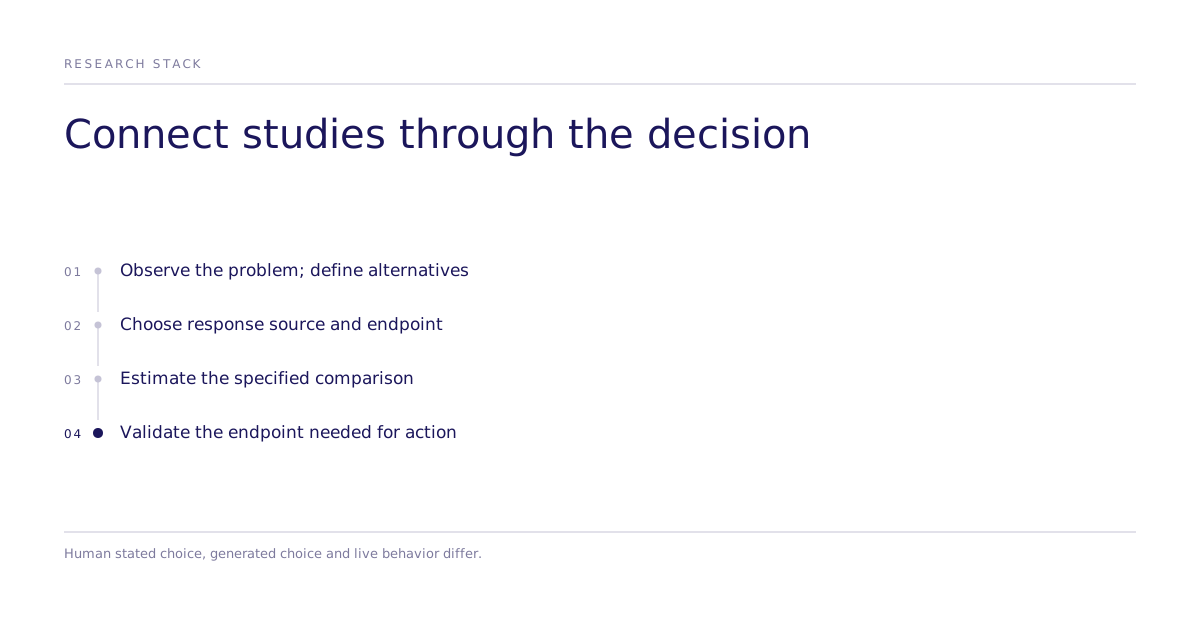
Ten places to connect a defined comparison to an existing workflow:
1. Behavior analytics and drop-off tracking
Analytics can locate a pricing-page, checkout, or onboarding drop-off. Replays and feedback suggest candidate problems. Compare specified changes on the endpoint each study measures; a generated offer choice does not measure live completion. Use a randomized live comparison for the completion effect.
2. CRM and segment definitions
CRM records help define eligible segments and past activity. Randomizing offers within segments can estimate whether the tested offer effect differs between them. That contrast alone does not establish the psychological reason for the difference.
3. Qualitative research
Interviews and focus groups supply reported reasons and context. Use those accounts to define alternative messages or features, then compare them under a specified design. Follow-up interviews may help interpret unexpected results without turning testimony into a causal mechanism estimate.
4. Traditional surveys
A survey can collect ratings, open text, or randomized choice tasks. To ask whether a rating predicts a later choice, collect aligned human outcomes and evaluate that relationship. A generated choice comparison alone does not validate prediction of actual human purchases.
5. How does conjoint connect to controlled testing?
Conjoint and DCE can themselves use experimental attribute designs to estimate preference contrasts. Human hypothetical choices are stated preferences; generated choices are simulated responses; recorded purchases are observed behavior. Van Helvoort-Postulart and colleagues' 2009 study compared a human DCE with ratings of barriers and facilitators to a breast-surgery care guideline. It did not compare conjoint with a separate revealed-purchase experiment.
The study found that the DCE differentiated relative attribute importance where the ratings gave similar answers. It also reported feasibility concerns and did not establish that the preferred implementation strategy improved clinical practice.
6. Reporting and data visualization
Show the intervention, comparison condition, response source, estimate, and uncertainty beside the relevant trend. Keep historical observations separate from experimental estimates so a dashboard does not imply that a tested change explains every earlier movement.
7. How does A/B testing differ from a causal test?
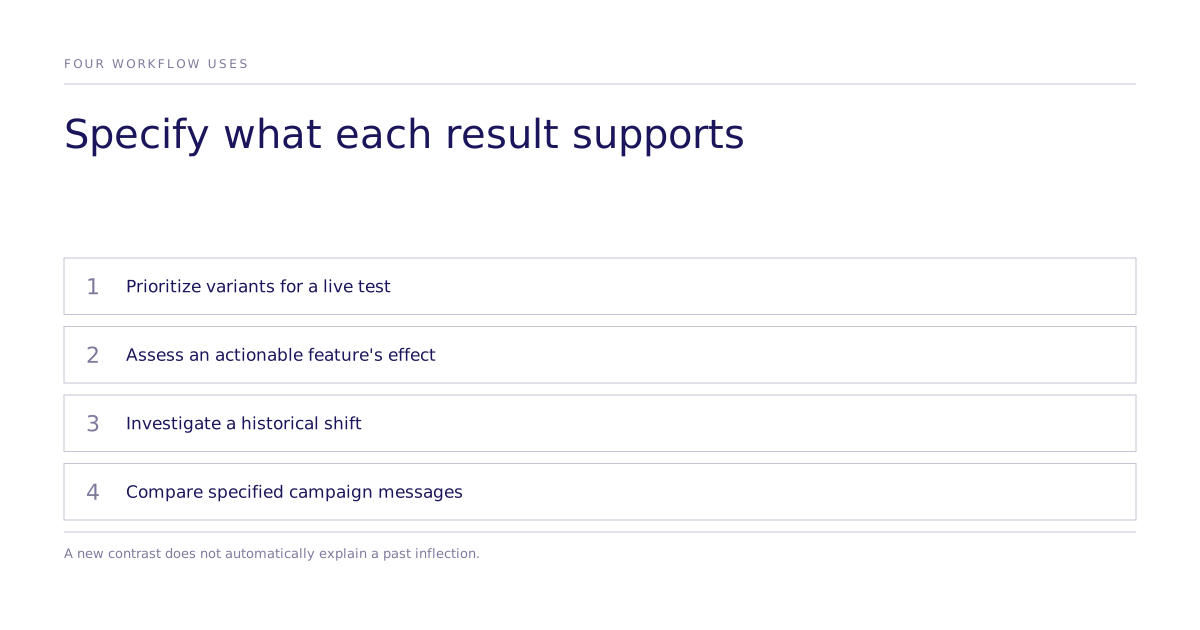
A properly randomized live A/B test estimates the tested version's effect on its endpoint. A simulated comparison may help prioritize versions, while a live test measures actual conversion or another production outcome. Neither comparison automatically identifies a psychological mechanism; separate manipulations or measurements and assumptions are needed for that claim.
8. Machine learning feature pipelines
Predictive features can lose usefulness outside their training context. Validate them on held-out data appropriate to the deployment setting. If a feature represents an action the business can change, a suitable intervention study can assess that action's effect; predictive importance alone does not establish it.
9. What do longitudinal tracking studies measure?
Tracking studies detect changes over time. A new experiment can test candidate interventions or explanations under current conditions. Attributing an earlier inflection also requires historical context and a credible design that addresses concurrent changes and selection.
10. Campaign and messaging planning
A generated comparison can help prioritize specified messages or incentive framings. Record how alternatives were selected and the uncertainty in that screen. For claims about a campaign's actual response, compare versions with the relevant people or live audience before committing the full spend.
What this pairing is not
This is a sequencing framework for where a causal test adds distinct value in a workflow that already exists, not a certified integration, connector, or data pipeline into any specific analytics, CRM, BI, or marketing-automation product.
Where to start
Start with one decision where the current evidence leaves alternatives unresolved. Define the response source and endpoint, then decide whether a generated screen, human study, or live experiment adds the missing evidence. Read Subconscious's public method and validation, or book a decision review.