How to write a causal question before you scope a behavioral experiment
Start with the decision, not the topic
Before an insights, product, or growth team scopes a first behavioral experiment, or evaluates a platform to run one, the question that anchors the study has to name a cause and an effect. A topic is not a question. "Car buying" is a topic. "How does fuel efficiency impact car buying?" is a question, because it names a candidate cause (fuel efficiency) and an outcome (the buying decision).
This distinction is the difference between a study that can support a decision and one that cannot. A team that commissions research around a topic instead of a causal question usually gets description back: rates, preferences, sentiment. None of that tells them what to change.
Why is "what causes X" a better question than "tell me about X"?
A causal question requires two things a purely descriptive question doesn't: a candidate cause that could plausibly come before the outcome, and an outcome that can move in response to it. Research design guidance on causal study design describes this as establishing temporal precedence and covariation between the proposed cause and effect before a study is built around it (Research Connections, Causal Study Design).
Test a candidate question against two checks:
- Does it name a cause and an outcome? "What causes car buying?" is broader than "How does fuel efficiency impact car buying?" Both can work as a starting point, but the broader version will need to be narrowed again once the study design starts, because "car buying" bundles together dozens of separate influences.
- Is the cause something a study can actually vary or compare? A factor a team can present in different versions to different audience segments (price, framing, a feature claim, a policy change) is testable. A vague attitude or trend is not, until it's translated into something concrete.
Narrowing a broad topic into a testable question
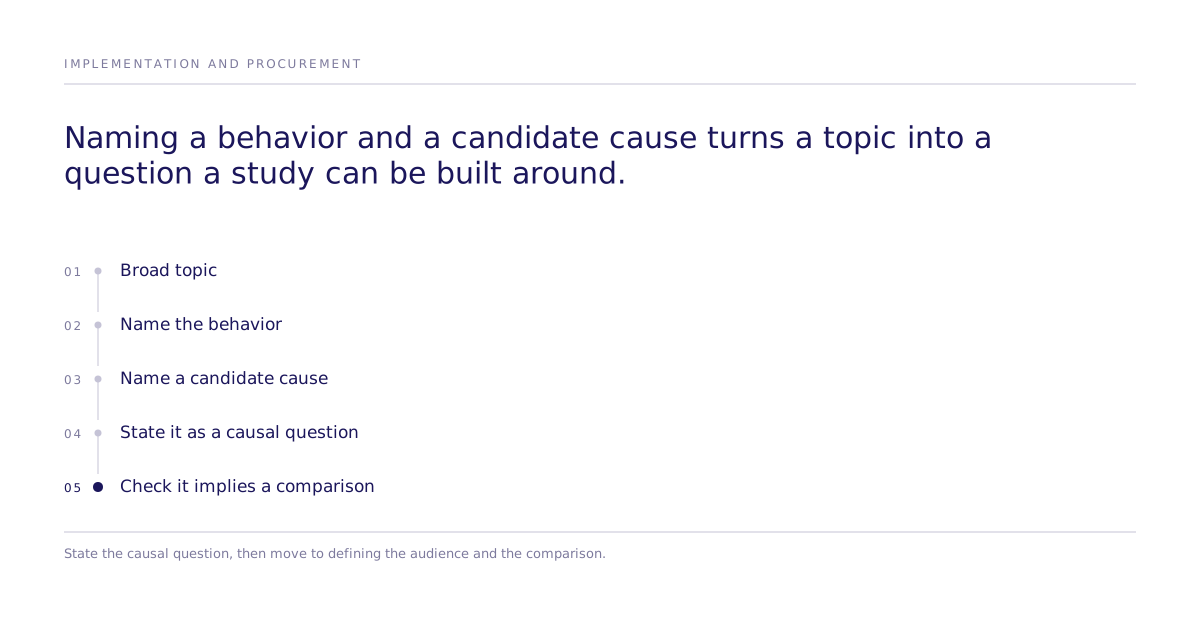
Most teams start broader than they need to. Work through the topic in order:
- Name the behavior of interest. Not "the market" or "our customers," but the specific action: buying, switching, renewing, recommending.
- List the factors that plausibly influence that behavior. Price, a feature, a message, a competitor's move, a policy change.
- Pick one factor and state it as a cause. "Does [factor] change [behavior]?"
- Check the question against the study you'd actually need to run. If answering it requires comparing at least two versions of something in front of a defined audience, it's ready to move to audience and design decisions.
A causal action test on Subconscious is scoped the same way: a decision prompt, a target audience, and the specific actions or concepts being compared. Getting the causal question right at this stage is what makes that scoping possible.
What doesn't this step decide yet?
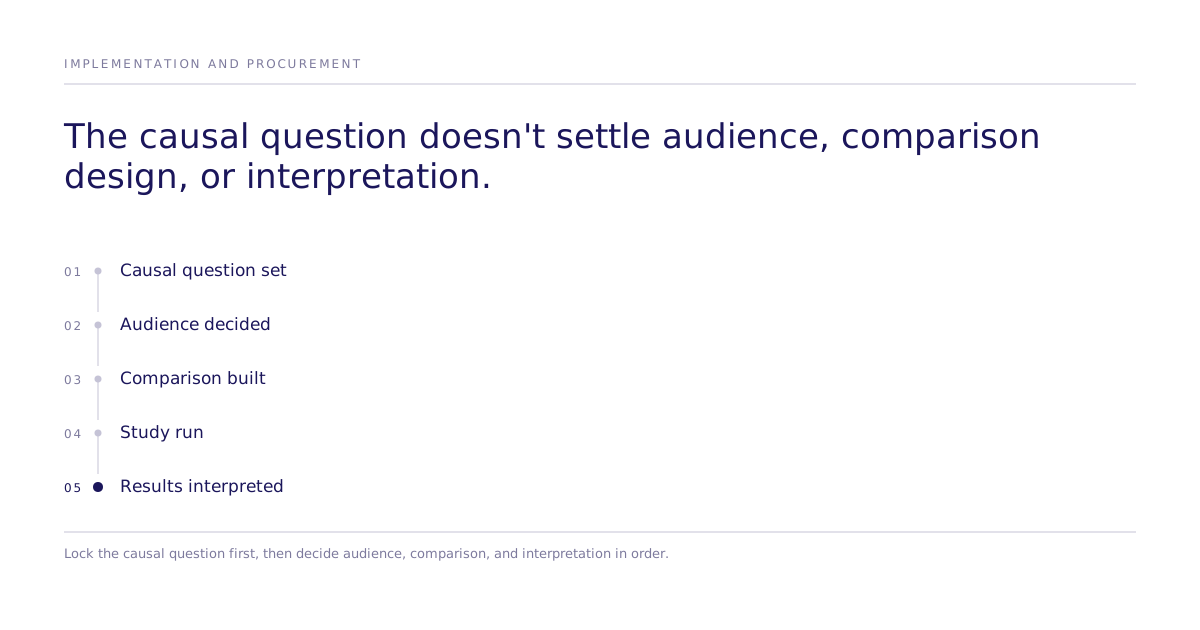
This step is scoped on purpose, and naming that scope is what lets a buyer see where its authority ends. Framing the causal question doesn't determine who the audience is, how the comparison will be built, or how results get interpreted once the study runs. Those are separate decisions, made after the question is set. It doesn't guarantee the resulting study will be well-powered or well-designed; a clear causal question is necessary but not sufficient for that. And it makes no claim about the timeline, price, or delivery terms for scoping a study.
Where to go from here
Once the causal question names a behavior and a candidate cause, the next decisions are who the audience is and what versions of the cause to compare. Research covers how Subconscious structures causal action tests once that question is set, and How we work walks through the process from question to result. Teams ready to scope a specific study can book time to talk through it.