Validate a Product Idea Before You Commission Formal Research
An innovation or insights lead facing a vague product idea has two bad options: commission an expensive formal study around an idea that isn't sharpened yet, or skip evidence and let a stakeholder's gut call the decision. The better path is a middle tier: directional, AI-assisted exploration that clarifies the idea first, then real, controlled validation once the decision is expensive or public.
Why the pressure to skip evidence is rising
AI has moved from a novelty layer into daily research work. Demand for evidence has not disappeared: the U.S. Bureau of Labor Statistics puts market research analyst and marketing specialist roles on a growth track for the 2024-to-2034 decade (BLS, Occupational Outlook Handbook).
The real risk is narrower: a team spends real money on a formal study while the underlying idea is still fuzzy or poorly framed. Automating the mechanical parts of research does not shrink the cost of a bad question. That cost arrives later, once the budget is gone.
Should you pick a better AI tool or build an evidence system?
The fix is not choosing the right AI tool. It is setting the rules up front: the scope of what AI-assisted output may do on its own, where a person must sign off, and the claims that need real validation before they touch a launch, pricing, or positioning decision.
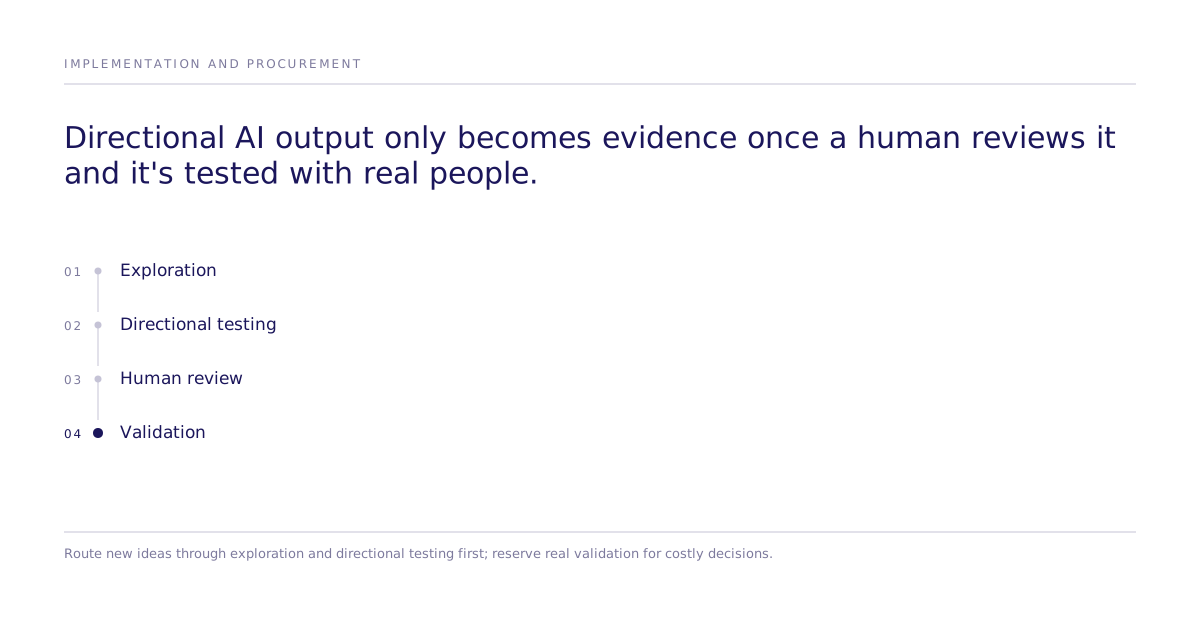
A workable system has four layers:
- Exploration. Generate hypotheses, objections, and alternative framings for a loose idea.
- Directional testing. Compare options quickly against a synthetic audience to see which framing holds up before spending on a fielded study.
- Human review. Check the audience definition, prompt neutrality, source grounding, and business context before trusting any output.
- Validation. Move to real respondent data, behavioral data, or expert review.
The output of the first two layers is not evidence. It is a faster route to a sharper question: better segments, clearer use cases, and named objections a formal study can build around.
Where should the line be drawn between AI output and real validation?
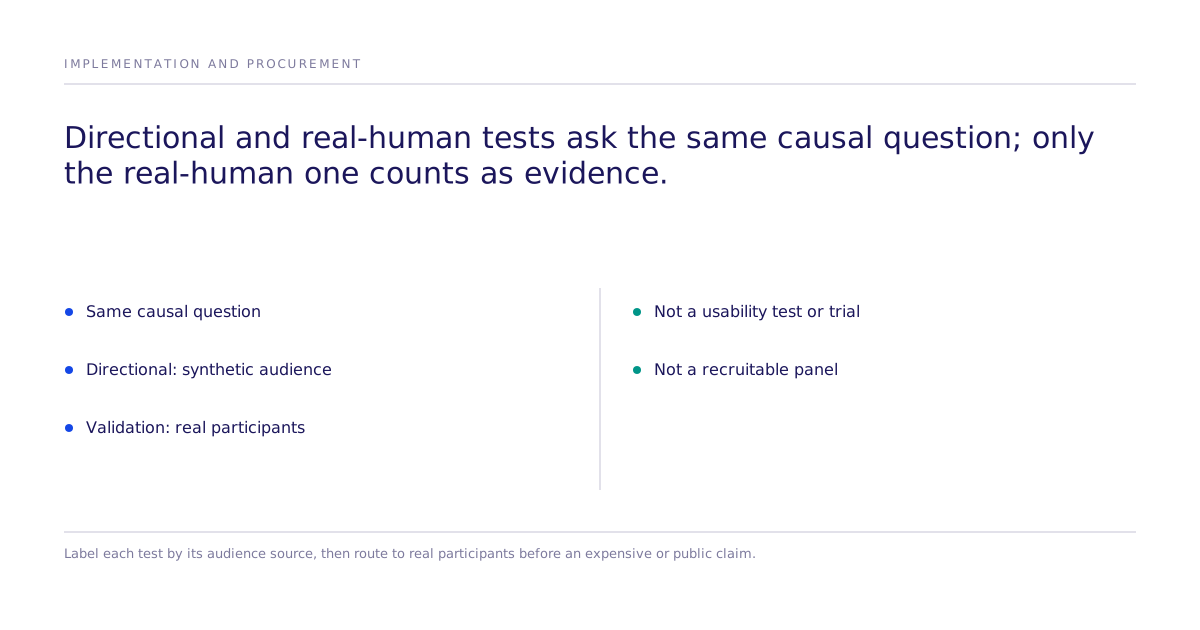
The danger is treating directional, AI-assisted output as a substitute for real usage or demand testing. A fluent answer from a synthetic audience is not proof real buyers will act the same. Credible research separates output from evidence, then labels each: "directional read," "hypothesis for validation," "requires real-human testing before external claim."
A controlled causal experiment fits here. Subconscious runs the same causal question, what action actually changes a buyer's choice, as a directional test first, then can test or validate studies with real human participants. Real-human validation does not turn a causal action test into an observed usability session, a clinical trial, or an automatic proof of market performance. It answers the same causal question with a different evidence source.
What are the limits of directional AI testing?
A directional or causal read does not eliminate the need for a human to define the audience and judge whether the output is credible. An audience graph built for controlled experiments is not a recruitable panel for open-ended qualitative work: it answers a specific causal question, not every research question a team might have.
What to do with the next idea on the list
Do not rebuild the research process. Pick one real project with a live decision. State the business decision in a single sentence, pin down the audience and the risk at stake, and keep directional AI-assisted exploration to the exploratory stage. Review the output, mark what's useful or unsafe, and name the validation step that must happen before treating the answer as proof.
When the cost of being wrong is high, a launch, a pricing change, a public claim, that validation step means running the causal question again with real participants before it ships. See how that step works in Subconscious's research process, or talk through a specific decision.