AI Causal Graphs: 4 Checks Before You Act on One
An AI model can read a short list of variable names, say TV spend, brand awareness, website visits, sales, and return a full cause-and-effect graph without seeing a single row of your data. The output looks decisive: arrows, direction, a written explanation for every edge. It is still a hypothesis. Before it moves a budget or a strategy, it needs to clear four checks.
What a proposed causal graph actually claims
A causal graph represents each variable as a node and each cause as a directed arrow: TV spend → brand awareness, brand awareness → website visits, website visits → sales. Each arrow makes a specific, testable claim. Change the variable at the tail and the variable at the head should move. Change the variable at the head and the tail should not move back. That asymmetry, not the correlation between the two, is what makes a relationship causal.
How an AI model builds that graph
Given variable names, short descriptions, and a working definition of causality, a large language model can propose a plausible graph and attach a structured, machine-checkable explanation to each edge (Wan et al., "Large Language Models for Causal Discovery," arXiv 2402.11068). It reasons from general market knowledge, not your numbers. That makes it a low-effort way to generate a first hypothesis. It is not evidence that the pathway holds in your market.
Four checks before an AI-proposed causal graph drives a decision
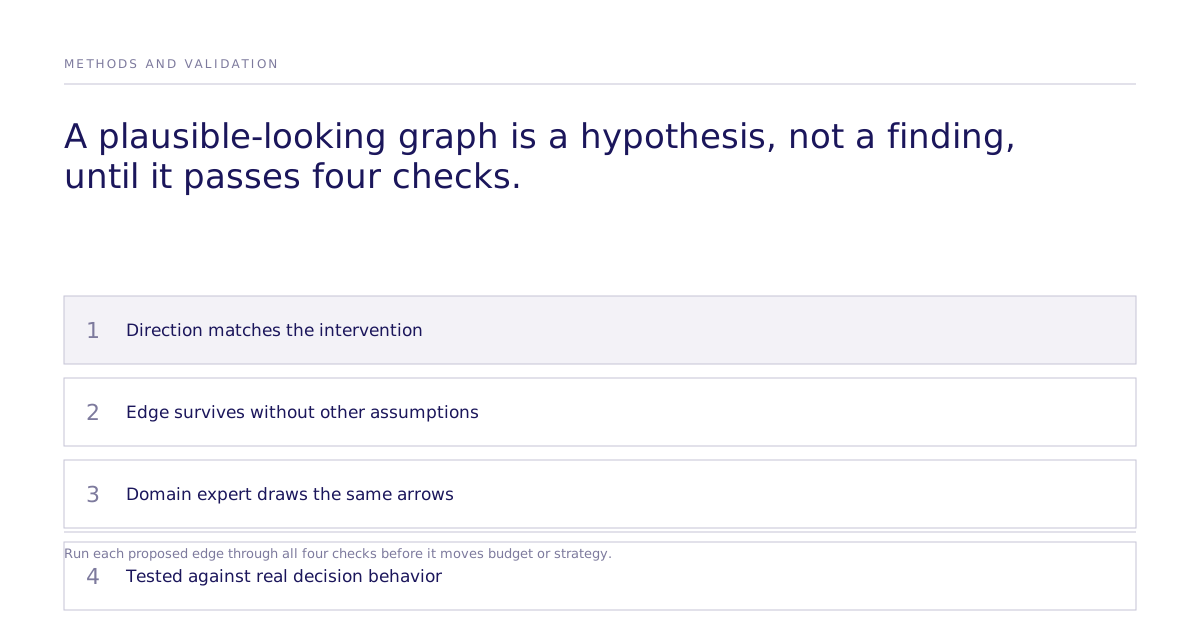
1. Does the direction match how the intervention would actually run?
An edge like "brand awareness → website visits" implies that raising awareness would raise visits, not the reverse. Ask whether your team could run the change the arrow implies. If the intervention that would move the tail variable does not exist, or moves several variables at once, the direction is a guess dressed as a finding.
2. Does the edge survive without the graph's other assumptions?
A graph is a set of edges that were accepted and a set that were deliberately left out. A single doubtful edge, such as routing all of TV's effect through awareness and none directly to visits, changes what the whole graph implies about where a dollar should go. Check the edges the model chose not to draw, not only the ones it kept.
3. Would a domain expert draw the same arrows from the same variable names?
Because the model reasons from variable descriptions and general world knowledge, two plausible-sounding graphs can disagree on direction for the same variables. Recent work on LLM-guided causal discovery treats this as an active-learning problem: propose, score, and revise edges rather than accept the first pass (Wan et al., arXiv 2506.12227). Treat disagreement between the model and a domain expert as a signal to test the edge, not a tiebreaker to resolve by re-prompting.
4. Has the pathway been tested against real decision behavior?
A graph that reads well is not the same as a graph that has been checked against how people actually respond to the intervention it describes. Until the specific pathway, TV spend to awareness to visits to sales, has been run as a controlled test, it is a hypothesis about your market, not a finding about it.
From hypothesis to a decision-ready effect
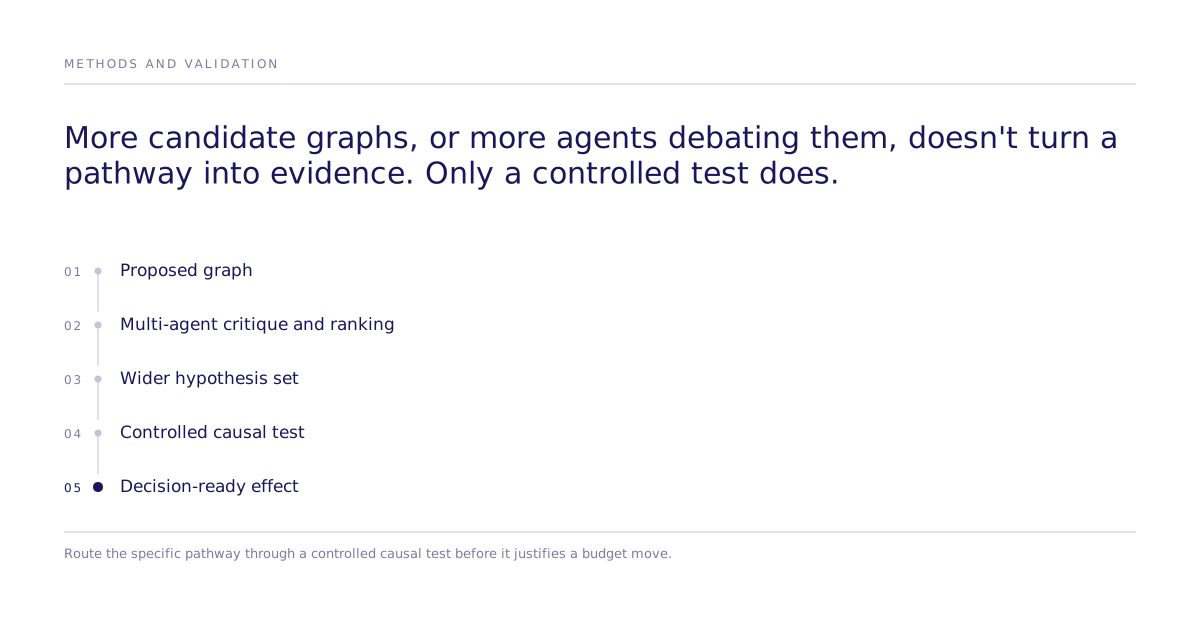
The fourth check is the one a proposed graph cannot answer on its own: does the hypothesized pathway move behavior, and by how much. Subconscious runs controlled causal experiments on simulated populations to test the total effect of a specific intervention, such as "cutting TV spend changes visits," establishing internal validity within the simulated population before it justifies a budget shift. The same causal question can move from that simulated test to real-human validation: Subconscious can test or validate studies with real human participants. Those controlled studies draw on simulated populations built from a person-level audience graph covering 800 million real people, kept distinct from the smaller set recruited for real-human validation. See how a study moves from hypothesis to replicated evidence and the kinds of decisions it has tested in past studies.
Where this still needs care
An AI-proposed graph is a hypothesis-generation step, not a validated causal effect. Multi-agent setups where several model instances propose, critique, and rank candidate graphs can widen the hypothesis space (Le et al., "Multi-Agent Causal Discovery Using Large Language Models," arXiv 2407.15073), but a wider set of plausible graphs is still a set of untested hypotheses. Treat every edge the same way regardless of how it was generated: as a claim to check against real decision behavior before it changes what your team does next.
Next step
Before reallocating budget on the strength of a proposed causal graph, pick the one edge the decision actually depends on and test that pathway directly. See current results on the leaderboard for how tested causal claims compare against untested ones.