Lock the Target Group and Stimulus Before Writing Survey Questions
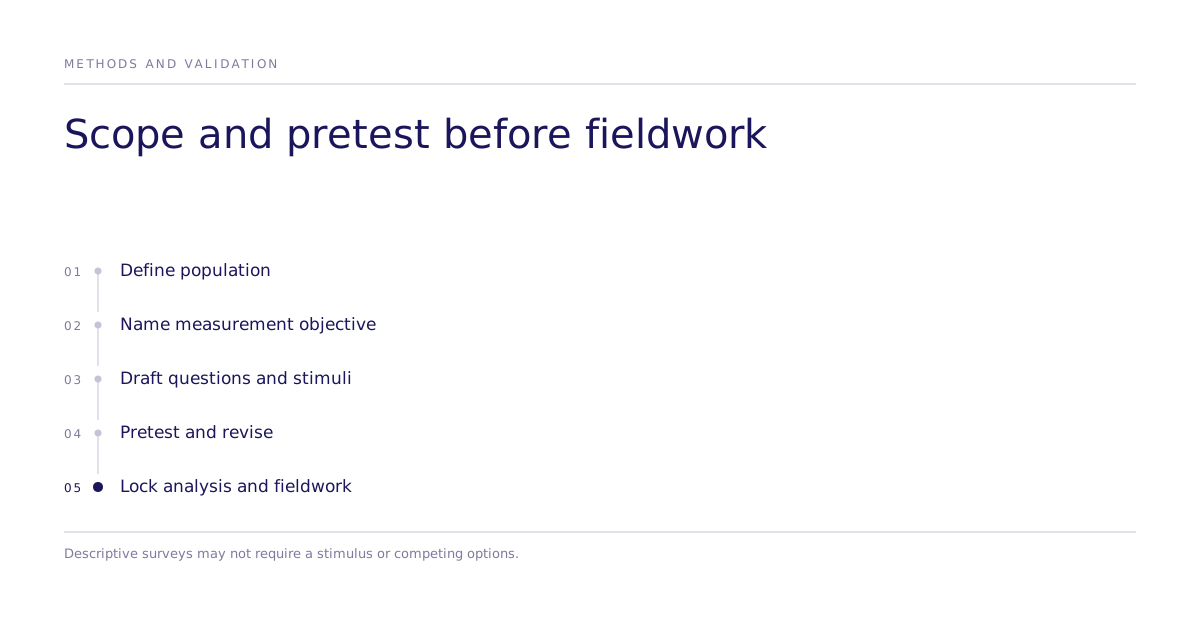
Before fieldwork, define the target population and measurement objective, pretest the questions and any stimulus, then lock the final instrument and analysis plan. Drafting and pretesting can iterate; the final study must still answer the intended business question.
The decision this page answers
A research lead, or a product or brand manager without a dedicated research team, is about to scope a study on product, pricing, CX, brand, or UX. The choice: lock the target group, the stimulus, and the decision question into a structured plan before committing fieldwork budget, or write questions from a loose brief.
Why is the wrong order expensive?
A number on its own is a marketing claim. Publishing the failure mode next to it is what makes the number checkable. A fielded instrument built on a fuzzy target-group definition or an untested stimulus still returns answers that do not map to the actual decision. The team has already paid for recruiting, programming, and moderation by the time that becomes visible, and the usual fix is re-running the study or quietly shelving the results.
What to lock before writing a question
For an action-comparison study, use the four choices below as a checklist. Draft questions and stimuli can be revised during formative testing. A descriptive survey may estimate a population quantity without a stimulus or competing options.
| Choice | What it forces you to decide | What happens if it stays vague |
|---|---|---|
| Target group | Who answers, what context they're in, and how much prior familiarity they bring to the product, the category, or the brand | Segment-level objections get buried inside an average that describes no one |
| Decision question | The comparison to estimate, or the descriptive population quantity to measure | Questions drift away from the measurement objective |
| Stimulus | The concept paragraph, landing page, pricing table, feature list, message set, or prototype respondents will react to | Answers reflect the respondent's guess at the product, not the product itself |
| Analysis plan | How answers get scored, ranked, or compared before the study runs, not after | The team picks the cut that supports the conclusion it already wanted |
If the target-group definition is still fuzzy at this stage, the task is to pressure-test it and surface the subsegments and assumptions that need evidence before fielding a study.
The American Association for Public Opinion Research's best-practice guidance treats a clearly specified target population and a defined measurement objective as preconditions for a defensible survey, not optional refinements made after drafting.
Where does simulated pre-testing fit?
For a proposed action, a simulated pretest can help explore responses to a draft stimulus. A buyer evaluating Subconscious should request the actual audience definition, available fields, study sample, and human comparison relevant to the proposed question.
Licensed pool coverage, sampled respondents, and the population represented by an estimate are different quantities. Verify those quantities from the study record rather than inferring them from a scale claim.
When does the plan still need real respondents?
Representative survey statistics need an appropriate human sampling and measurement design. Financial, regulatory, or compliance claims may instead require transactions, administrative records, technical testing, or legal substantiation. A fielded human survey does not provide automatic certainty.
When a decision uses a simulated result, specify the matched human treatment and endpoint needed to check it. Confirm recruitment, fieldwork ownership and deliverables with the provider. A change from stated answers to observed behavior requires a separate measurement design.
Failure conditions to watch for
- The target group is still a guess. If the team cannot describe who is answering and what they already know, no amount of question polish fixes that.
- The stimulus is described instead of shown. A vague verbal summary of a pricing change or feature produces answers about the summary, not the product.
- The analysis plan gets written after the data arrives. Deciding the cut or comparison after seeing the answers is how a study ends up supporting whatever conclusion the team already believed.
- A directional pre-test gets treated as a final measurement. A confident-sounding answer from a simulated pass is not automatically a certified statistic.
Practical checklist before fieldwork opens
- Write the target group as a specific population, not a demographic label.
- State the intended comparison or descriptive quantity.
- If the question requires a stimulus, build the actual material respondents will see and pretest it.
- Choose formative checks from the measurement objective: cognitive interviews, human pretesting or an optional simulated pass. Use those findings to revise and retest the instrument.
- Lock the final instrument, primary analysis and segment comparisons before collecting confirmatory answers. Match any later validation to the claim used for the decision.
More on how that review process works in practice is at how we work and in applied case evidence. To scope a causal comparison around a specific product, pricing, messaging, or market decision, book a study discussion.