The Model Was Right. The Decision Came First Anyway.
Consider an illustrative planning scenario: an analyst receives budget what-ifs on Monday, the executive decision is due Thursday, and analysis takes a week. The answer arrives after the deadline. These timings illustrate the coordination problem; they are not a measured client case.
Even an accurate forecast cannot inform a decision that has already been made.
Why is the bottleneck structural, not personal?
The gap does not come from a shortage of skill. It comes from three misalignments that compound.
Translation. Stakeholders talk in business outcomes: volume, share, revenue. Analysts talk in code, parameters, and statistical significance. Turning "what if we tweak the budget?" into a validated query is manual work, and every what-if becomes its own small project.
Timeline. Analysis runs in sprints. Business pressure runs in real time. When a decision is due Tuesday and the analysis lands Friday, the model arrives too late to shape the outcome it was built to inform.
Burnout. The first two compound into a third. Stakeholders start treating the analytics team as a black box where urgent requests disappear. Analysts spend their time re-running yesterday's questions instead of improving the model, and trust erodes on both sides.
McKinsey's research on data culture describes the same pattern at the organizational level: teams report being data-driven while decisions still lean on intuition once the analysis lags the decision window (Why data culture matters).
What are two ways to close the gap?
One response, common among teams building conversational layers over existing models, is to let a stakeholder ask a business question in plain language and have an agent translate it into a query against the model on the spot. For example: a stakeholder asks what happens to Q3 revenue if the digital ad budget drops 15% with half reallocated to TV, and the agent runs the scenario and returns a summary with confidence intervals. The translation step still happens, just automated and moved closer to the moment the question is asked.
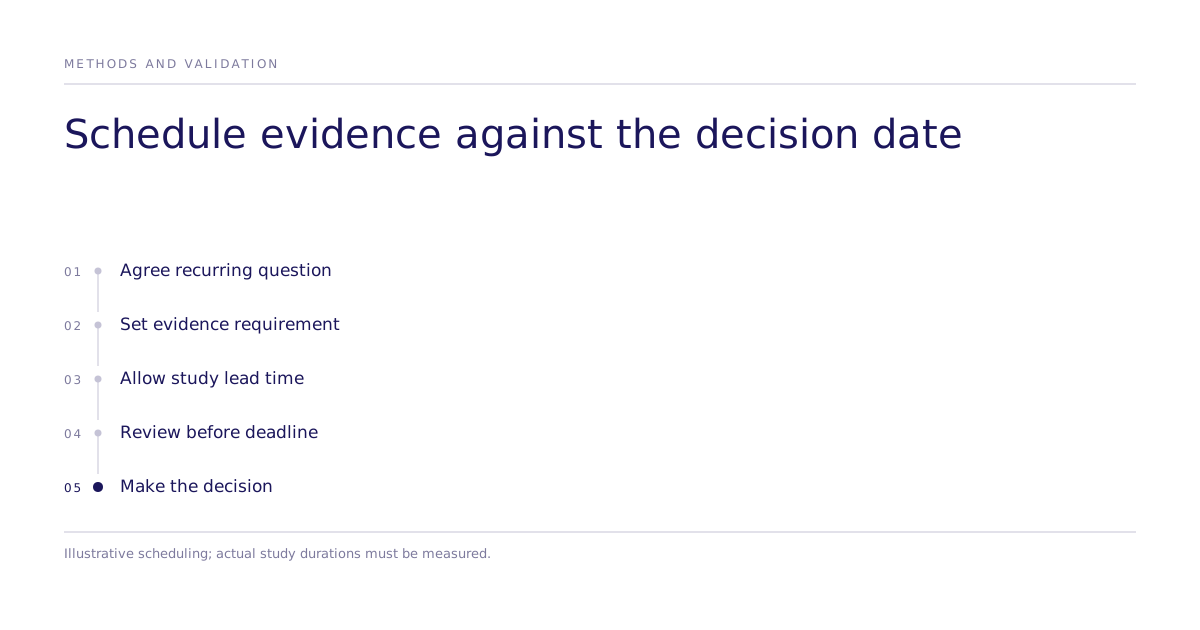
For a recurring decision, agree the action, audience, outcome, and evidence requirement in advance. An experiment can then start early enough for analysis and review before the deadline. Scope and translation still require work, and a changed question can require a changed design.
Both approaches attack the same translation gap. The difference is where the design work happens: at query time versus at experiment-design time.
What does this approach not solve?
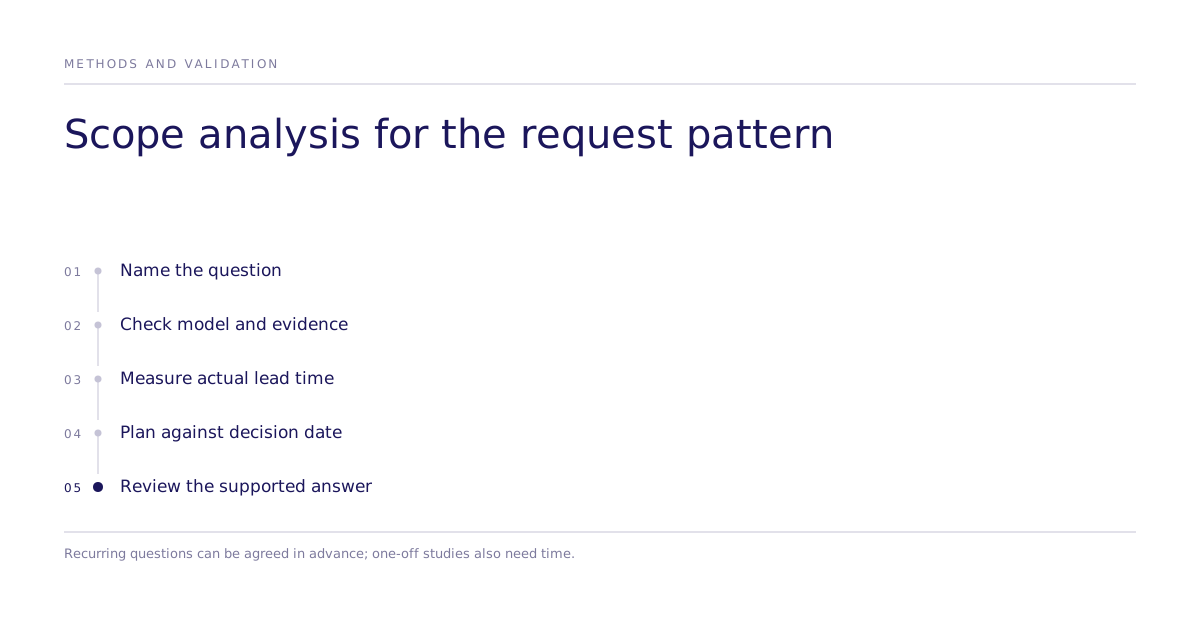
Querying an existing predictive model and designing an experiment require different inputs and evidence. For a Subconscious engagement, confirm the available integrations, query interface and deliverables for the question at hand. Agreeing a recurring experiment question in advance can reduce last-minute scoping, while new queries and design changes still need analysis and review time.
When it is worth restructuring the analysis
For one-off explorations of an existing model, a suitable query interface may help. For a recurring launch decision, agree the study question before the next cycle and schedule design, execution, human validation if required, and review against the actual decision date. In an illustrative Thursday decision, work requiring a week must begin the prior week; no evidence exists before a question is defined.
See how this fits into a working process, or talk through a specific decision.