UX Survey Methods for Product Teams
A product team about to ship a redesign usually reaches for a survey. The harder question is which instrument, because "how usable does this feel" and "which version will more people actually adopt" are different questions that need different tests. Pick the wrong one and the team either fields a full usability study to answer a simple wording question, or walks away with a satisfaction score that says nothing about which design change will move behavior.
Match the instrument to the decision, not the other way around
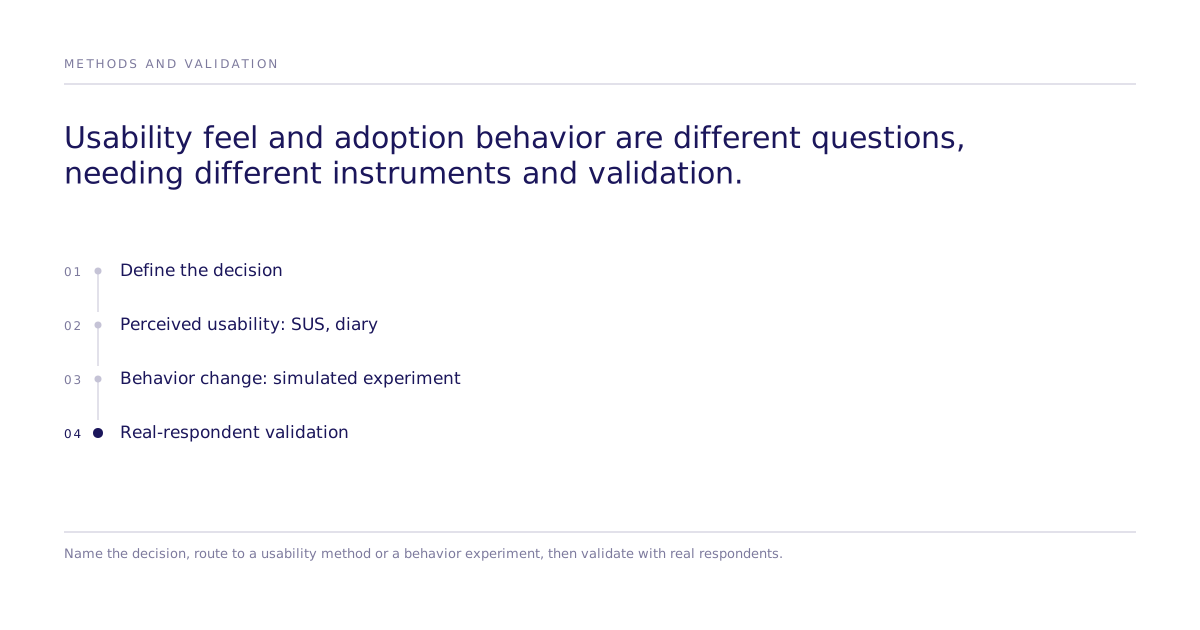
Before drafting a single question, name the decision the result has to support. A UX measurement instrument answers a narrow slice of that decision: how usable a design feels to the people who try it. It does not tell you which of two designs will get more people to complete a purchase, upgrade a plan, or return next week.
Perceived-usability instruments
These methods ask people to report their experience with a design. They are stated-preference tools: straightforward to field and useful for catching friction before launch.
1. What is the System Usability Scale (SUS)?
A ten-item, standardized questionnaire that produces a single usability score for a design or flow. It is well suited to tracking usability over time or comparing versions of the same product, and its scoring method is documented and widely replicated (Nielsen Norman Group). A usability score only means something next to the limit on what it scores. It measures perceived ease of use, not purchase intent or adoption likelihood.
"The SUS is a well-established 10-question survey administered at the end of a user test; it gives you a measure of the perceived usability of your product and enables you to compare it with others."
Raluca Budiu, Nielsen Norman Group (source)
2. What is a task survey?
Respondents attempt a specific task inside a prototype or live product, then answer structured questions about difficulty, confidence, and completion. This surfaces where a flow breaks down at the step level, which a single aggregate score cannot show.
3. What is a semantic differential scale?
Respondents rate a design or concept along paired adjectives (confusing–clear, basic–premium, unresponsive–smooth). This is useful for capturing perception and brand association, but the result is a stated impression, not an observed choice.
4. Diary prompt
Respondents log short, repeated entries about a product over days or weeks. This captures usage context and friction that a single-session study misses, at the cost of longer fielding time and smaller samples.
When the real question is behavioral, not perceptual
Teams often start with "let's run a usability survey" when the real decision is which of several design, feature, or message alternatives is more likely to move adoption or conversion. No amount of SUS scoring answers that directly.
For that decision, Subconscious runs a randomized discrete choice experiment comparing the alternatives on a simulated population and reports the estimated effect on choice among the tested alternatives. Randomized attribute assignment identifies which design change moves choice; an aggregate usability score cannot. Simulated choice has replicated human study outcomes at 87% of the measured human ceiling (0.832 over 0.959; mean 0.73 across the 43 studies passing design filters), a training-data benchmark, not validation of this specific comparison (methodology).
Configuring any of these instruments
The setup work is the same across instruments:
- Define the target group: who should respond, and what they already know about the product or category.
- Define the stimulus: a prototype, task, concept, landing page, or feature list.
- Define the decision the result has to support before writing questions, not after seeing the data.
- Pressure-test question wording for leading phrasing, double-barreled questions, and missing answer options before the instrument reaches real respondents.
Limitations and when to validate with real respondents
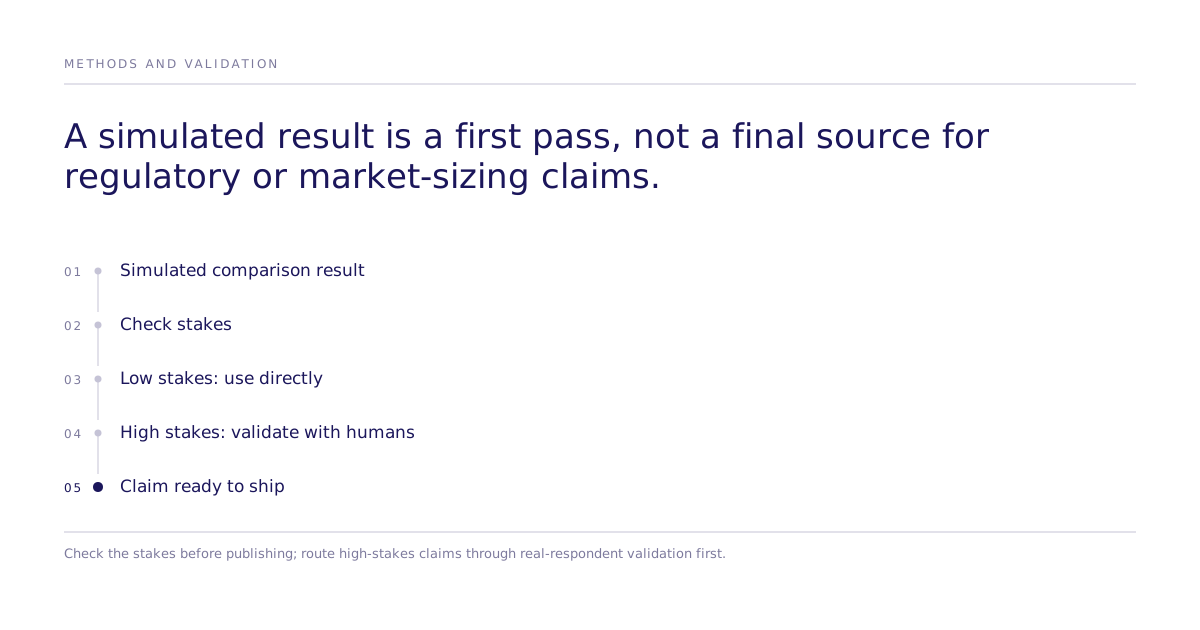
Naming a method's limit here is what lets a buyer check it before relying on the result. None of these methods, simulated or fielded, should be the final source for representative statistics, regulatory claims, or formal market sizing on their own. The higher the financial or compliance stakes, the more a team needs real-respondent data behind the conclusion. Subconscious does not draft usability survey wording, administer SUS or diary studies, or replace fielded human usability testing where discovery, emotional nuance, or regulatory evidence is required. Simulated experiments are a first pass on which alternative is worth testing further. Subconscious can also test or validate studies with real human participants.
Next step
If the question is "how usable does this feel," a SUS or diary study is the right tool. If the question is "which version will more people actually choose," that is a randomized choice experiment, not a usability survey. See how Subconscious runs these comparisons or set up a study.