6 Focus-Group Risks and When to Use a Quantitative Test
Focus groups can uncover language, objections and experiences. They can also be affected by group influence, moderator framing and recruitment limits. An insights leader choosing a method should distinguish qualitative discovery from a population preference estimate or intervention effect.
A small moderated discussion provides depth and interaction. It does not automatically represent a market or quantify how a launch changes purchasing. Choose the method from the outcome rather than treating a persuasive discussion as a numerical forecast.
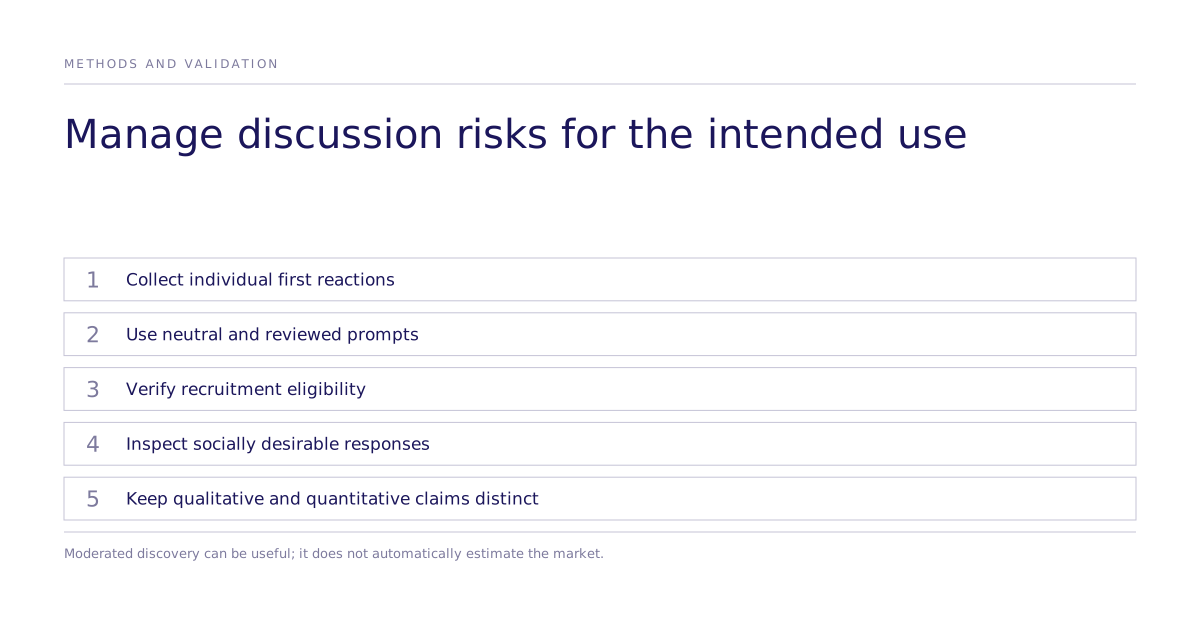
Six risks to manage
1. How does groupthink kill honest feedback?
Participants can respond to earlier or dominant opinions. Collecting individual reactions before discussion and inviting dissent can help the moderator see that influence.
Invented example: one smartwatch participant praises rounded edges and others echo the comment. The analyst should inspect independent first reactions before reporting a shared preference.
Asch's conformity experiments demonstrate social influence in their experimental setting. They do not establish that every moderated group fails.
2. How does moderator bias shape the outcome?
Moderator wording and follow-up choices can influence responses. Use neutral prompts, a consistent guide and review of recordings or transcripts.
Invented example: “premium price” presumes a value judgment. Asking about the specified price without that label avoids that particular framing, though neither wording guarantees an unbiased answer.
Check whether follow-ups explore disconfirming answers as carefully as supportive ones.
3. Recruitment bias means the wrong people showed up
Recruitment needs to match the discovery audience. A purposive qualitative sample can be appropriate, but its percentages should not be treated as probability-sample estimates.
Invented example: a study seeking corporate IT decision makers recruits consultants instead. Verify current purchasing roles and eligibility before interpreting the discussion.
Check repeat participation and product experience where they affect the study question.
4. How does social desirability bias make people perform?
Socially judged topics can encourage impression management. Confidential individual responses and neutral phrasing can help, but do not remove every measurement risk.
Invented example: enthusiasm for a healthy snack does not establish that participants will buy it. A purchasing claim requires relevant behavioral evidence.
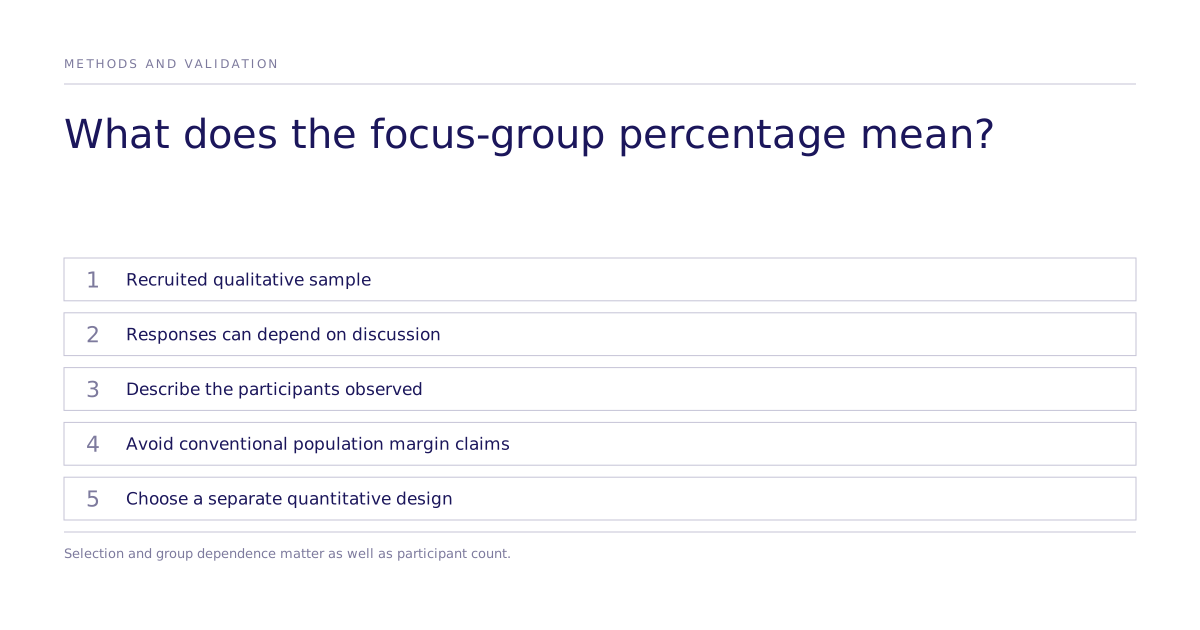
5. A recruited discussion does not supply a population estimate
Small purposive groups are intended for qualitative discovery. The limitation is the sampling and interaction design, rather than a universal participant-count cutoff for all inference.
In an invented example, 24 recruited group participants report a packaging preference. Their percentage is a description of those participants, not a market estimate with a conventional binomial margin of error. Selection and group dependence prevent that interpretation.
Focus groups are qualitative by design but get used to justify quantitative decisions anyway: "most participants said X" becomes a business argument, even when "most" describes 5 out of 8 people in one room.
6. Recruitment and analysis effort limit iteration
Estimate the actual recruitment, scheduling, moderation and analysis effort for the intended audience. Remote and other formats can change that effort; there is no universal four-to-eight-week timetable.
Schedule discovery early enough to revise alternatives, and reserve a separate quantitative design when the decision needs an effect or population estimate.
What tests the decision instead of just describing it
Mitigate these risks through recruitment, moderation and analysis. Keep focus groups for discovery when appropriate; use a probability-sampled or otherwise justified quantitative study for population inference and a suitable randomized or observational causal design for an intervention effect.
A randomized individual choice task can identify effects on choices in that task under its design assumptions. It can still have wording, recruitment and hypothetical-bias problems. Simulated responses add a separate human-transport question.
More generated responses do not automatically supply independent human observations or correct representation. State the interval method and what its uncertainty excludes.
Where this doesn't replace real conversation
Use conversation to discover problems and a comparison task to answer a defined effect question. Neither method guarantees better answers for every endpoint.
Next step
Read how a controlled experiment replaces group discussion with independent measurement, browse case studies of concept and message tests run this way, or see the underlying method on the research page. To test a specific concept, message, or roadmap decision, book a walkthrough.