AI Expert Panels as a Decision-Rehearsal Tool
Teams often need a senior engineer's critique of an architecture plan, an investor's reaction to a pitch, or a marketing leader's view of a go-to-market decision. The right people may be unavailable when the question is live.
An AI expert panel can help a team rehearse a decision. It cannot supply credentials, accountability, proprietary information, or a real expert's judgment.
What an expert-panel exercise is
The exercise runs one question through several defined perspectives. A venture investor perspective may probe market size and defensibility. A marketing perspective may probe positioning and channel fit. An engineering perspective may probe scale and technical debt.
Running one prompt against a generic model is easy. Running it through five distinct perspectives can expose disagreement. Agreement is a hypothesis. Disagreement points to assumptions that need more work. Neither is evidence that the simulated experts are correct.
Four useful applications
How does pitch pressure testing work?
A founder can use three to five investor perspectives with different stages, sectors, and theses. The goal is to surface objections before a meeting, not to predict a specific investor.
One sharp objection goes straight at the math: if the deck's numbers only work when every company in the category eventually buys, the founder needs to name the narrower serviceable market a real go-to-market can reach, not the full 100% headcount.
Marketing strategy review
A B2B marketing leader, a consumer brand leader, a growth specialist, and a brand strategist will inspect different parts of the same plan. Their simulated critiques can produce questions for the real team to answer.
Technical-plan review
A distributed-systems, database, or platform-operations perspective can provide a distinct review lens. These are generated roles, not people with verified migration experience.
Product strategy
A B2B product leader, a platform strategist, and a product-led growth specialist can challenge a feature direction from different frames. The output should become an assumption list for real research and technical review.
A five-step workflow
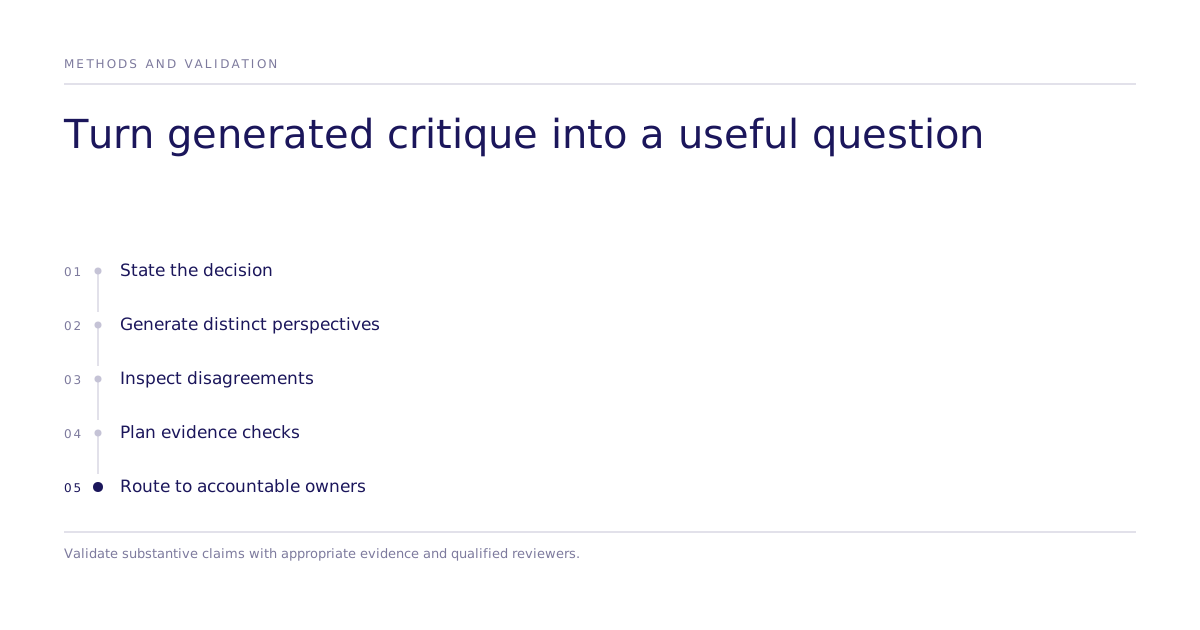
- Define the perspectives with enough detail to make their incentives and constraints distinct.
- State the decision, alternatives, constraints, and evidence already available.
- Ask all perspectives the same first question.
- Probe disagreements and request the reasoning behind each objection.
- Share the transcript with the people who own the decision.
The follow-up is more useful than the first response. Ask which assumption drives the concern, what evidence would change the assessment, and what failure mode deserves a test.
Where do panels help?
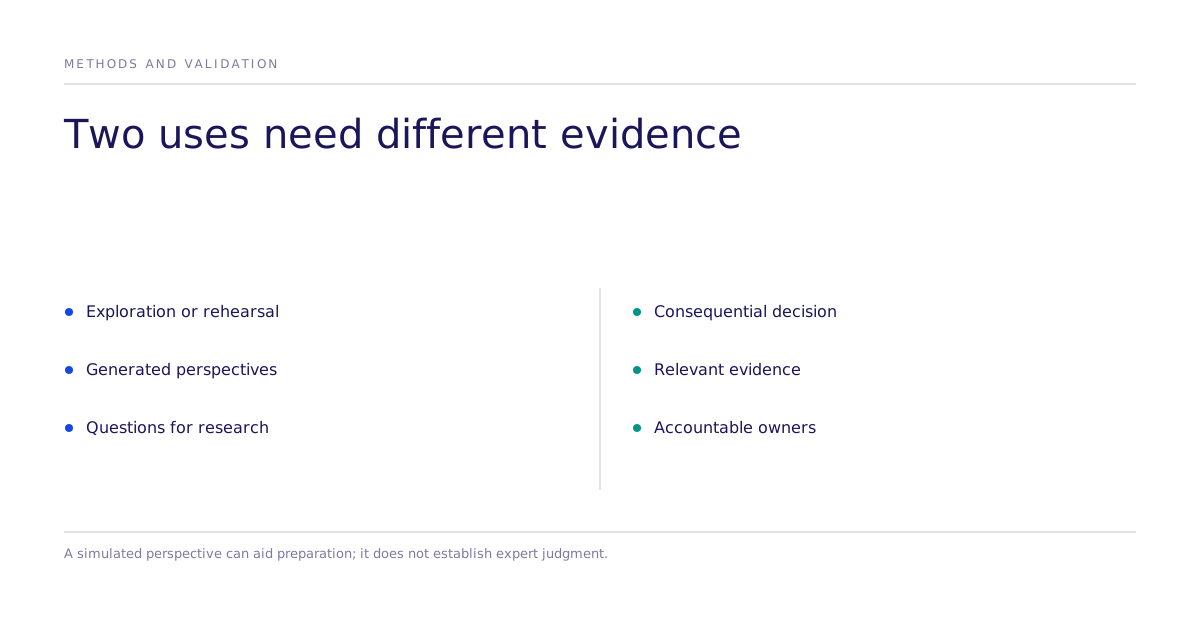
The method works best when a team needs multiple perspectives, is still exploring the problem, and wants to identify questions before spending more resources. It can turn one person's private preparation into a shared critique artifact.
A consequential deal, regulatory question, or architecture decision needs real people with relevant evidence and responsibility.
AI panels also lack current private social context. They cannot know what happened in a portfolio last week unless that evidence is supplied appropriately. They do not make introductions or accept responsibility for a result.
Turn critique into an experiment
The most valuable output is not an answer. It is a set of competing claims that can be tested.
For a product, pricing, messaging, or go-to-market decision, define the target audience, alternatives, and outcome. Compare the actions in a decision-specific experiment. Use the panel to improve the questions and expose assumptions. Use evidence from the experiment and accountable experts to make the decision, and talk to the team to scope a specific test.
An AI expert panel is a thinking aid. The decision remains yours.