AI Legal Triage: Prepare for Counsel Without Mistaking It for Advice
For hypothetical budgeting, a lawyer billing $400 per hour for three hours would charge $1,200 before other fees. That arithmetic is not a market-rate estimate.[^bls] AI may help organize facts and questions, but qualified counsel provides legal judgment and representation.
This article gives general guidance for preparing a counsel briefing. Qualified counsel should assess the facts, applicable law and legal consequences. A choice-study benchmark does not establish legal competence or validate advice on a particular matter.
[^bls]: The BLS occupational profile reports employment and wages. Employee pay is distinct from the hourly rate a client is billed.
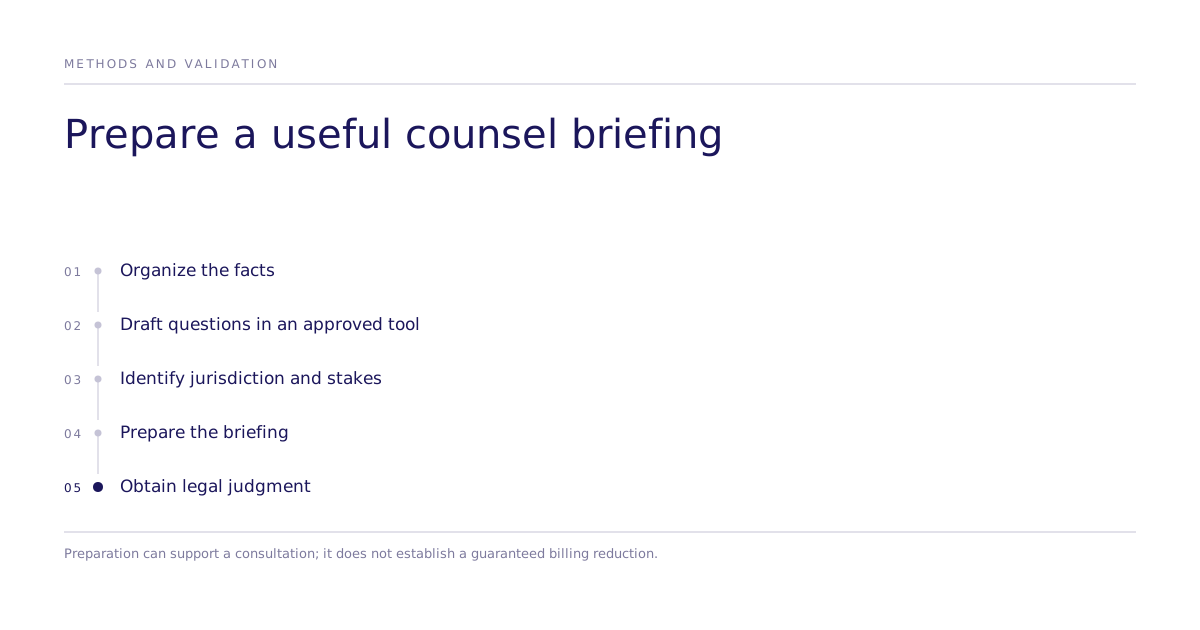
What useful legal triage looks like
Before a consultation, write down:
- the decision and deadline;
- the parties, jurisdiction, and relevant documents;
- what has already happened;
- the financial or operational exposure;
- the questions only counsel can answer.
An AI assistant may help explain general terms or turn notes into a question list. Do not give it confidential material unless its handling, retention, and access rules have been approved.
Which legal questions require careful routing?
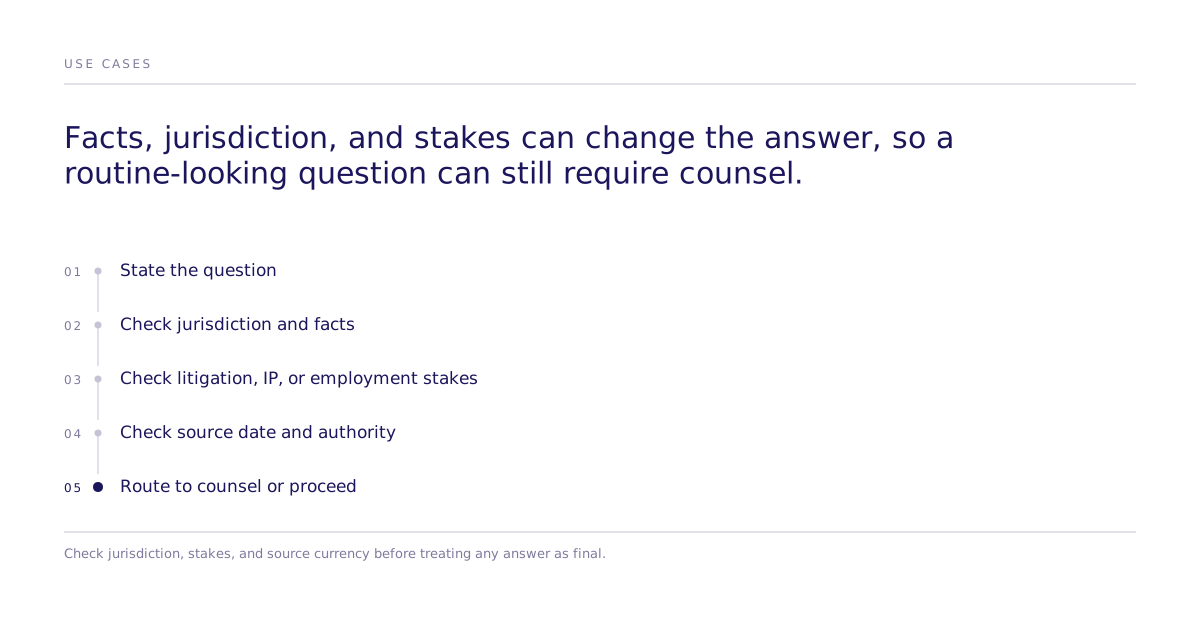
Common topics include entity structure, contracts, intellectual property, and employment. Examples range from choosing an LLC or C-Corp with two co-founders to understanding the difference between 1099 contractors and W-2 employees. The facts and jurisdiction can change the answer, so an apparently routine question may still need a lawyer.
A blog post from 2019 is not reliable evidence that current law is unchanged. Check the date, jurisdiction, and authority behind any legal information.
How much do legal consultations cost?
For a hypothetical quarterly budget, assume three to five consultations, $400 per hour, and a one-hour minimum each. The arithmetic is $1,200 to $2,000. Actual rates, minimums, complexity, and fees vary; obtain the engagement terms from counsel.
Organize the question, identify the right lawyer, and bring the facts and documents to the consultation. Legal interpretation and consequential rights or obligations need qualified counsel. For a separate product, pricing, messaging or GTM experiment, discuss the business decision and study scope.