What Agent-Run Market Research Changes, and Where It Still Needs a Human
An AI agent can now take a research brief, choose an audience, run a synthetic panel against that audience, and hand back a summary of findings, with no person touching any step in between. That capability puts a decision in front of marketing and product leaders: let the agent run the whole loop unattended, or hold a checkpoint inside it. The right answer depends on what the finding is about to pay for, not on how much of the loop the agent handles.
How the loop compresses
Conventional research moves through separate stages: someone writes the brief, recruits respondents, fields the questions, analyzes the responses, and writes up a report. Each stage waits on the one before it, with its own lead time.
An agent-run version folds those stages into a single pass. It takes the brief, selects an audience it judges to match the request, asks the questions of a synthetic panel, and returns clustered themes, tensions, and a recommendation.
Participant scheduling, response coding, and repeated analysis are possible targets for automation. Measure the actual workflow, errors, and review burden before concluding that an agent removes those costs.
Removing those frictions turns research from a scheduled project into a check a team can run as often as a decision comes up.
What breaks when nobody checks the result?
Compressing the loop does not make a bad read less risky; it removes the pause that might have caught it before anyone acted. A pricing, launch, or messaging call made off an ungrounded synthetic-panel finding does not fail in the research report. It fails downstream, in the campaign spend, the sales pitch, or the product build that decision funded. By the time the gap between the panel's answer and how real buyers respond shows up, the budget behind it is already spent.
The layers underneath an agent-run study
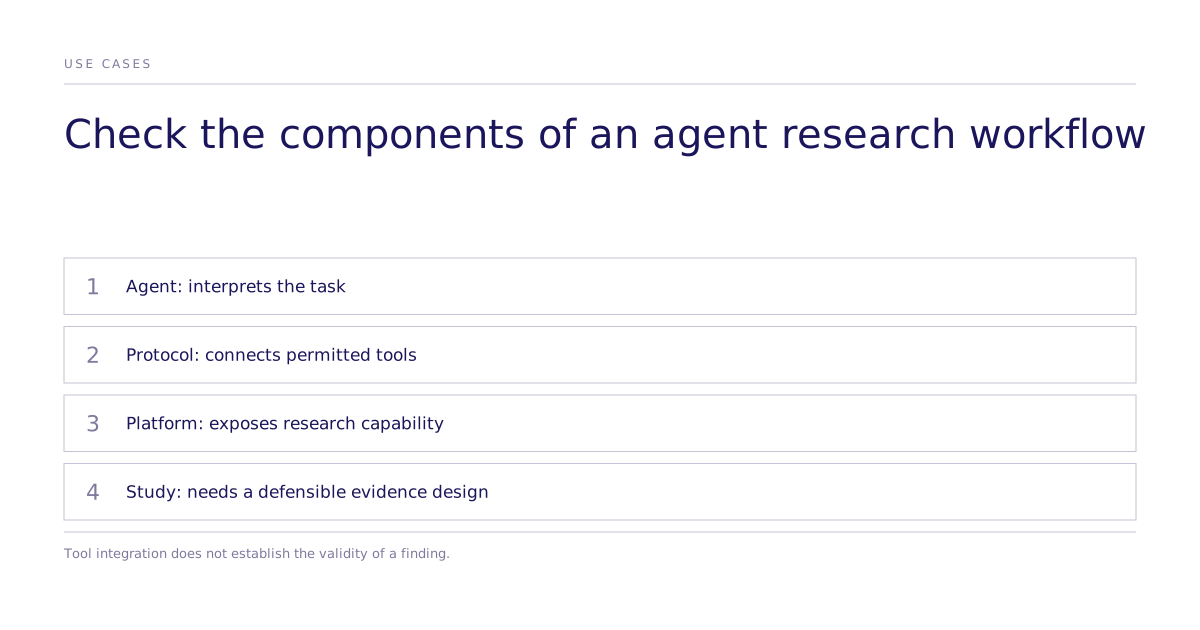
An agent receives the brief and calls research tools. The Model Context Protocol is an open protocol for connecting applications with tools and data; whether a research platform supports it is an integration question to confirm. Tool access does not establish the validity of the study design or result.
Check the actual tool workflow: which tasks it can execute, which sources it retains, and which decisions require researcher review. Automation does not establish that a returned finding is safe to use.
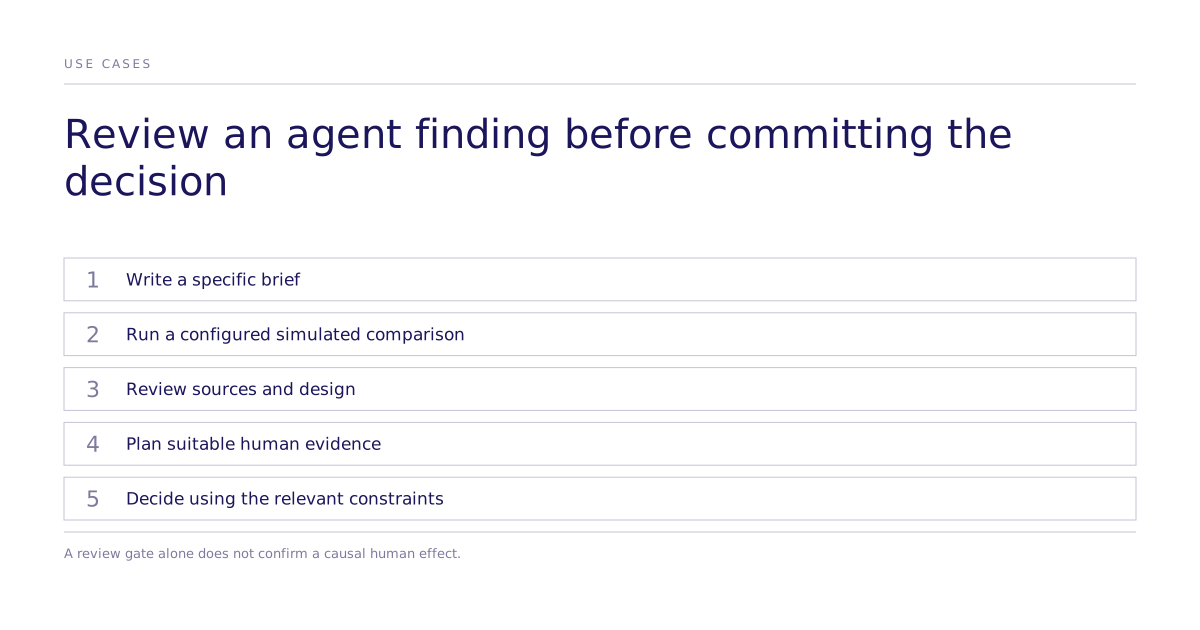
Where does the checkpoint have to sit?
The checkpoint does not need to slow down every study an agent runs. It needs to sit between a synthetic-panel finding and the point where that finding starts spending budget: a launch date, an ad flight, a pricing change, a positioning line.
Subconscious can compare defined actions on generated choices, with uncertainty where the configured design supports it. That estimates a modeled contrast. Agree an aligned human check and its delivery when the decision requires transfer evidence. Review the aggregate replication record and study approach.
What an agent cannot shortcut
Three constraints hold regardless of how much of the loop an agent owns. The brief still has to be specific: a vague question produces a vague answer no matter how the panel is run. A synthetic read still has to be checked against something real before it carries weight, on a cadence the team sets on purpose, not skips because the study got easy to repeat. And strategy still needs a person: an agent can run the experiment, but deciding what the business does with the result is not a step to hand off.
Next step
Teams adopting agent-run research get more value from deciding up front which decision classes require a human checkpoint than from trying to bolt one on after a launch goes wrong. Review a few case studies of decisions taken through that process, or book a walkthrough to map where a checkpoint belongs in your own research loop.