What AI Can Draft in Market Research, and What a Researcher Still Owns
A VP of Insights does not have to decide whether AI belongs in the research pipeline. It is already there, drafting guides, coding verbatims, and producing first-pass synthesis before anyone asks for it. The decision that remains is narrower: which of those outputs a researcher can hand to a stakeholder unreviewed, and which ones still need a person who can defend the method behind the number.
Get that split wrong and the cost shows up later. A team that lets AI own framing and interpretation, not just drafting, ships a launch or pricing call built on an unvalidated read of open-ended text. When the result does not hold in market, there is no defensible chain of reasoning to point to, only a plausible-sounding summary.
What Parts of Market Research Actually Got Faster With AI?
AI can assist discussion-guide drafts, verbatim coding, and first-pass synthesis. The current BLS outlook projects employment growth over 2025–2035; it does not attribute that growth to AI or establish which tasks retain value.
Drafting and summarization tools can broaden access to a first pass. Measure processing and review time against the same quality target. A change in task value remains a judgment about the team’s workflow, separate from the BLS employment projection.
What Research Judgment Stays With a Person, Not AI?
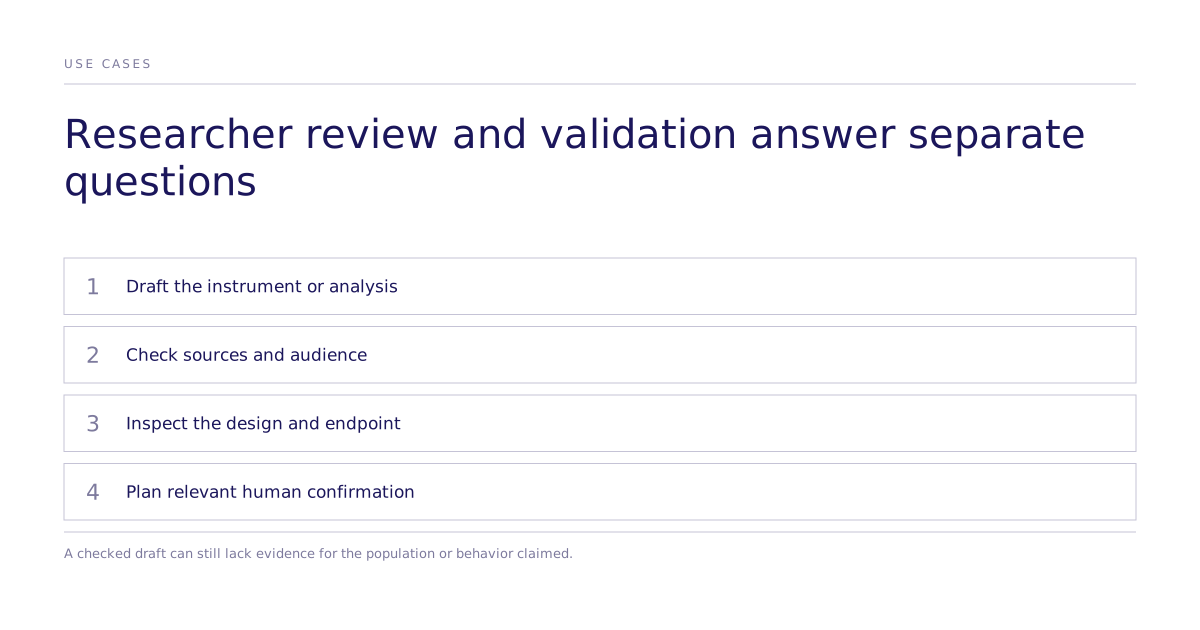
Four decisions stay with a person regardless of which tool drafts the first pass:
- Problem framing. What decision is actually being made, and what evidence would change it.
- Audience definition. Who the tested population is, and whether that population maps to the real buyer.
- Methodology judgment. Which comparisons are valid, and which conclusions the design cannot support.
- Validation routing. Which findings can stay directional, and which ones are expensive or public enough to require confirmation against real behavior.
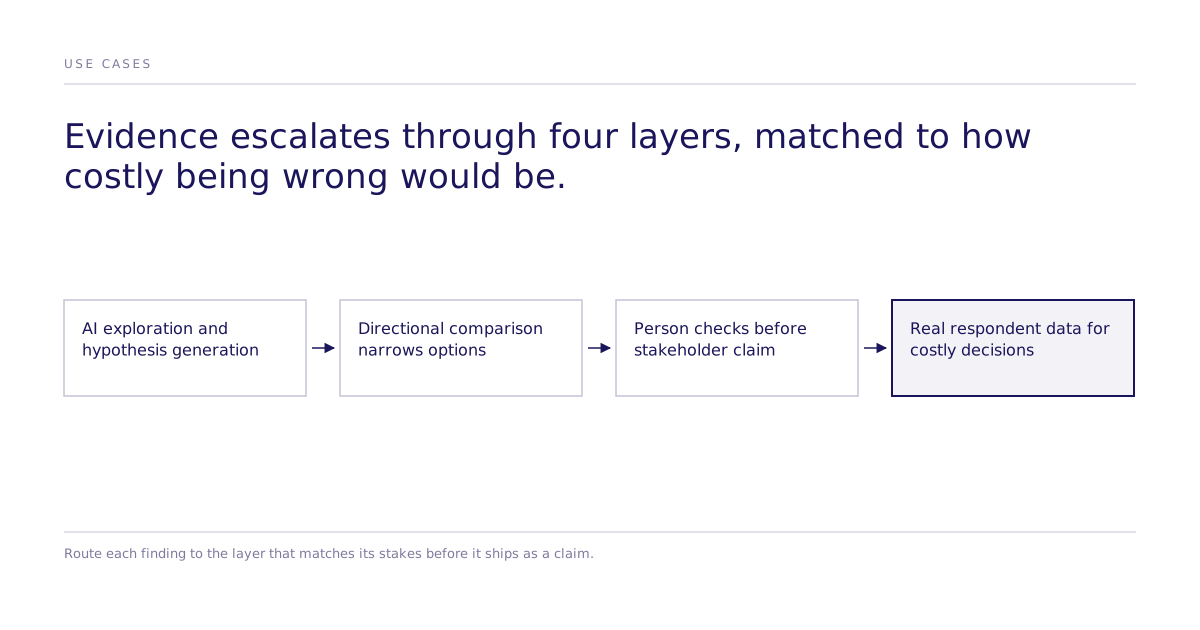
A useful discipline for keeping the split honest is a four-layer evidence system: use AI for exploration and hypothesis generation, use a directional comparison to narrow options quickly, put a person between that comparison and any stakeholder-facing claim, and reserve real respondent or behavioral data for decisions where being wrong is costly. The output of the fast layer becomes evidence only once someone checks the audience definition, the framing, and the source grounding behind it.
Where a causal test fits this split
A controlled discrete-choice comparison fits inside this division of responsibility. A team defines the alternatives and population, then interprets modeled choices separately from recruited stated choices or observed purchases. Subconscious can support a matched human study when warranted. The researcher still frames the question and explains uncertainty and fidelity limits before presenting the result.
A designed comparison can estimate differences on its measured endpoint; document analysis summarizes source material. An interval describes uncertainty under the stated model or sampling design. It does not make generated choices observed human behavior or establish that an untested market outcome will occur.
See how this comparison-to-validation path has played out across other decisions; the workflow for structuring the comparison is in how Subconscious runs a study.
What Does a Causal Experiment Not Replace?
A causal experiment does not replace the researcher work: framing the business question, defending the method to an executive, and deciding when a directional read is not enough. It makes no speed or cost claim against any other research tool, and a simulated comparison is not a substitute for observed customer behavior once a decision is expensive or public. The audience graph is a population to test against, not a panel of recruited participants standing in for fielded research.
A concrete next step
Before running a comparison, put the business decision into a single sentence, name who it affects, and set how much risk is on the table, then decide in advance which outputs from the fast layer are allowed to reach a stakeholder unreviewed. Keep the framing, the audience definition, and the read of the research with the person who has to answer for it.