What to Automate First in an Insights Team
A VP or Head of Insights facing pressure to "just use AI" is really facing a sequencing decision: which research work should move to AI-assisted exploration first, and which decisions still need real-human validation before they reach a stakeholder or an external audience. Get the order wrong and a team ships a synthetic-only finding as validated evidence, with a launch, pricing, or claims decision resting on an output nobody checked.
The bottleneck AI actually exposes
The current BLS outlook for market research analysts projects employment growth over 2025–2035. It does not establish the share of tasks AI will automate. Choose a first workflow by its actual error cost and review burden.
The real risk is narrower: spending adoption energy on the most visible workflow instead of the safest high-volume one. When automation takes over a job's mechanical parts, whoever held that job needs to sit nearer the actual decision. That means sharper questions, better evidence choices, clearer caveats, and more influence over what a stakeholder does next.
What does the role stop rewarding?
The old advantage in insights leadership was partly about access: knowing how to field a study, clean the responses, and package the finding. AI narrows that advantage. More people can now draft a survey, summarize a transcript, or ask a synthetic audience for a first reaction.
That does not make research expertise less valuable, but it does make that expertise easier to verify. Once anyone can generate an answer, the worth shifts to whoever can tell a trustworthy one from a merely fluent one, and can flag when an output is generic, badly grounded, or beside the point for the decision on the table.
Build a sequencing rule, not an AI habit
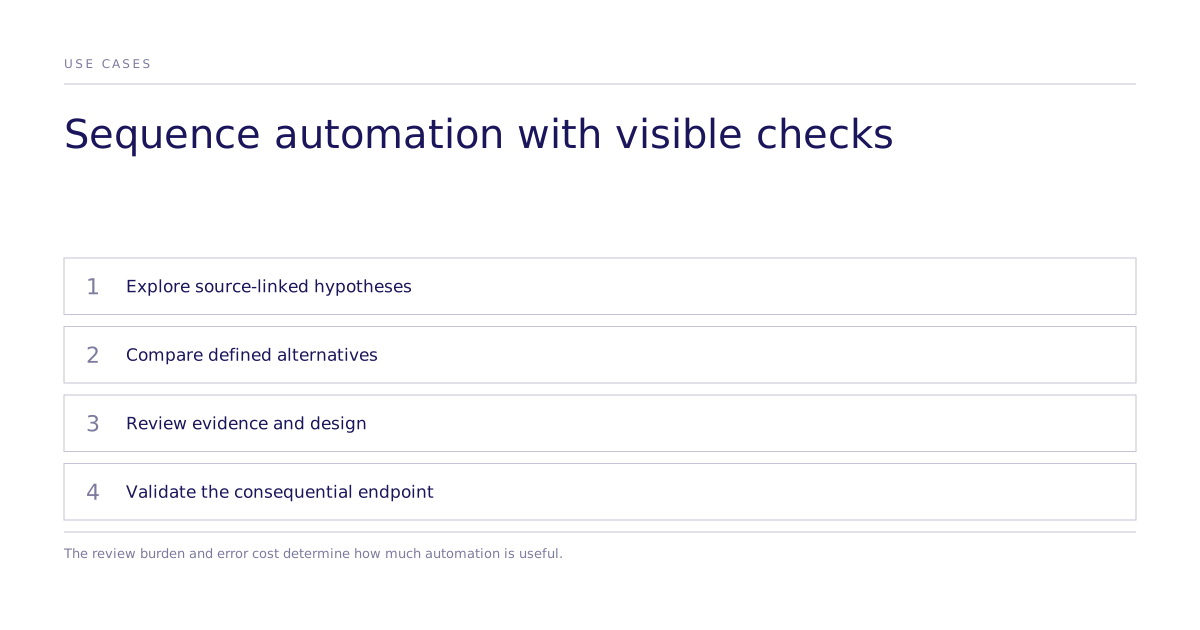
A workable rule has four layers: what AI is allowed to touch first, what a synthetic pass can compare directionally, what still requires a human check, and what still requires real validation.
- Exploration. Use AI or a synthetic panel to generate hypotheses, objections, and alternative framings before committing research budget.
- Directional testing. Compare concepts, messages, pricing stories, or journey moments quickly, across defined audience segments.
- Human review. Before anyone treats an output as a finding, confirm the audience was defined correctly, the prompts stayed neutral, sources are traceable, and the business context holds up.
- Validation. Move to real respondent data, behavioral data, or fielded research once the decision is expensive or the result will reach an external audience.
Subconscious can compare modeled choices for a specified decision. Define the audience, check its calibration, and agree a matched human study where required; a modeled population does not imply recruited participants. The evidence record reports aggregate replication results and limits rather than validation of this workflow.
Where do teams get this wrong?
Teams often default to whichever workflow draws the most internal attention, when the safer choice is the one with the highest volume and the lowest stakes. That default usually traces back to pressure: a deck needs a conclusion and a fluent AI answer is sitting right there. A useful draft is not automatically a valid answer to the decision facing a stakeholder.
The fix is to make the limit part of the deliverable: spell out where the AI-assisted work applied, where it stopped, and which validation step still has to happen before anyone repeats it outside the team. That framing reads as more disciplined, not less confident.
A sequencing checklist for one workflow
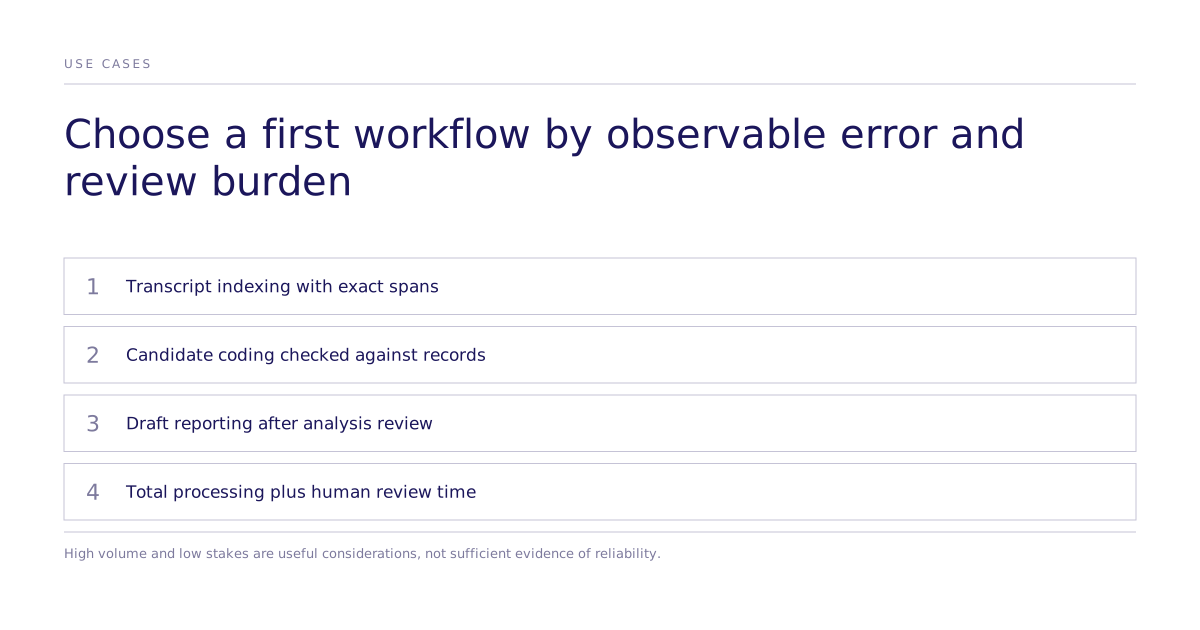
Start with a task whose errors a reviewer can inspect: source-linked transcript indexing before interpretive coding, and draft reporting after the analysis is checked. For one transcript, request candidate themes with exact source spans, have a researcher verify those spans and omissions, then measure total processing plus review time against a manual pass. This tests both review burden and useful time saved.
- Write the business decision in one sentence.
- Define the audience and how much is riding on the answer.
- Limit AI or a synthetic panel to the exploratory and directional stages, nothing further.
- Go through the output by hand and flag what holds up, what's shaky, and what shouldn't be repeated.
- Present the answer with a clear caveat and a named next validation step.
Repeat that once a week for a month on the same workflow before adding a second one. The repetition builds a working system, not just a list of tools, and shows speed, judgment, and where the evidence still needs to catch up. Teams weighing where this kind of experiment-then-validate approach fits their own stack can review how Subconscious's process works end to end.
What limit is worth stating plainly?
This exploratory pass proposes hypotheses and comparisons. Scope any recommendation or financial analysis to its actual inputs, assumptions, and evidence with the team. Researcher review remains necessary before using a modeled result to support the decision.