Checking a simulated vaccine-allocation study against Duch et al. 2021
A consumer-insights team weighing a simulated discrete-choice result against a real human study needs a published study to check the simulation against. This entry compares a Subconscious-simulated discrete-choice run to a real, peer-reviewed study on COVID-19 vaccine allocation preferences.
The published study behind the comparison
Duch et al. ran a real conjoint experiment asking residents of 13 countries to rank vaccine-allocation priorities, meaning who should get a vaccine first and on what basis (Citizens from 13 countries share similar preferences for COVID-19 vaccine allocation priorities, PNAS). Subconscious ran a simulated version of the same discrete-choice question, restricted to U.S. residents, and compared the ordering of preferences against the published human result.
What does the correlation say?
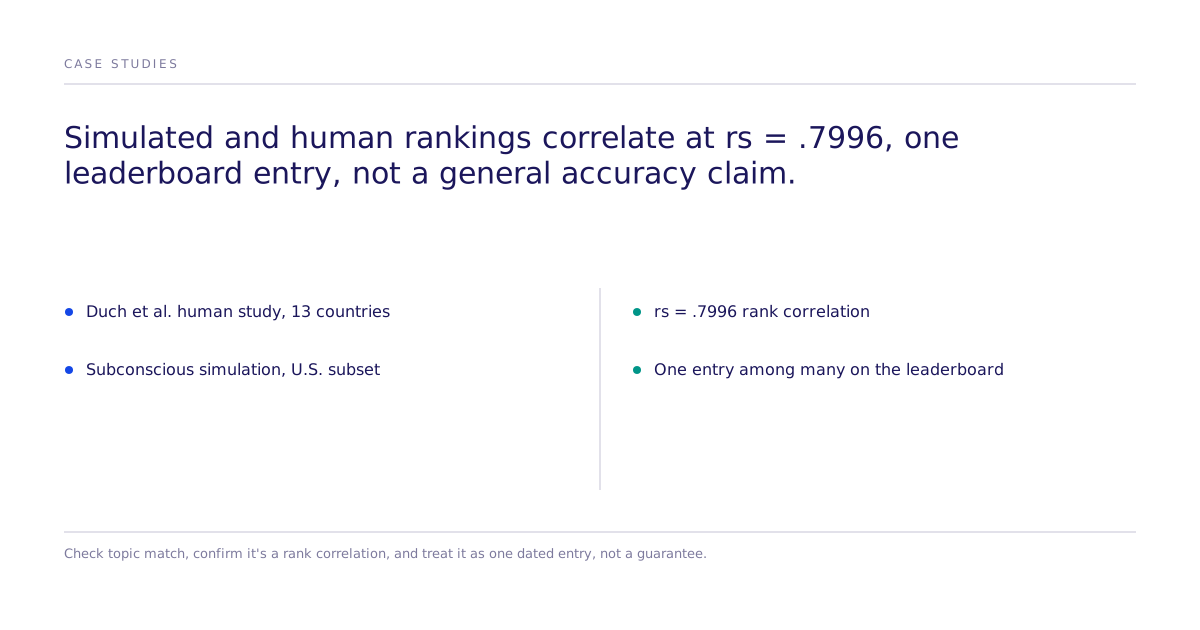
The simulated and human orderings correlated at rs = .7996, p < .001. That is a Spearman rank correlation between how the simulation ranked allocation priorities and how the real study's U.S. respondents ranked them: a measure of whether the two agree on relative ordering, not a percentage-accuracy score.
This single comparison is one entry in a public leaderboard, not a standalone accuracy claim. The leaderboard's point is to publish mid-range and weak results alongside strong ones, so a rs = .7996 entry sits next to others that score higher and lower.
What does this comparison not establish?
One correlation on one topic, vaccine allocation preference, does not establish accuracy for a different topic, a different country set, or a different decision. Do not round rs = .7996 up.
This entry compares a simulation to a prior published study's results, not to a freshly recruited panel of respondents. When a decision genuinely turns on live respondent behavior rather than a published benchmark, Subconscious can test or validate studies with real human participants.
| Duch et al. 2021 (human) | Subconscious simulation | |
|---|---|---|
| Method | Real conjoint experiment, 13 countries | Simulated discrete-choice run, U.S. subset |
| Question | Vaccine-allocation priority ordering | Same ordering, run on the simulated population |
| Result compared | Published preference ranking | rs = .7996, p < .001 correlation to the published ranking |
Reading a leaderboard entry before trusting it for a decision
Before treating any single comparison as sufficient grounds for a health-messaging, allocation, or policy-preference decision, check three things: the topic match between the comparison and the decision at hand, whether the correlation is a ranking measure or something else, and whether the source is one dated leaderboard entry or a claim of general accuracy. See the full leaderboard for how this entry sits alongside other published comparisons, and research for the underlying replication method.
A team deciding whether to trust a simulated result for its own vaccine-communication or allocation question should look for the closest topic match on the case studies page or the leaderboard itself, then confirm the comparison method matches the decision it's meant to inform.