Replicating a published rural job-preference study with a causal discrete choice experiment
The decision: trust a new method, or field a traditional study first
A research or insights leader weighing a workforce or job-preference study faces a real choice: commission a traditional fielded study, or trust a causal discrete choice experiment to answer the same question faster and at lower cost. Committing budget to an unvalidated method wastes the study. Rejecting a method that already reproduces known findings delays a real workforce or incentive-design decision a team needs to make.
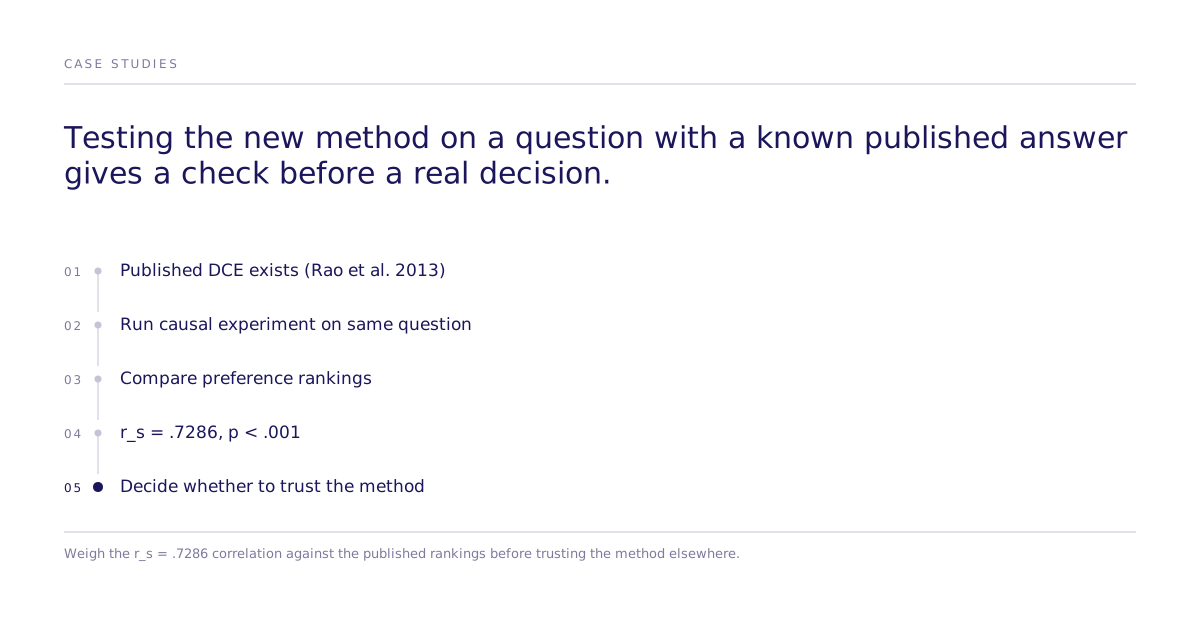
One way to test a causal discrete-choice method before committing to it: check whether it reproduces a discrete choice experiment already published and peer-reviewed.
What published study did Subconscious replicate?
Rao et al. ran a discrete choice experiment to assess rural physician and nurse job acceptance and scarcity in India, published as Rural Clinician Scarcity and Job Preferences of Doctors and Nurses in India: A Discrete Choice Experiment in PLOS ONE. The paper measured how job attributes such as location and incentives shaped the stated job preferences of doctors and nurses choosing between rural and urban postings.
"At five times current salary levels, 13% (31%) of medical students (doctors) were willing to accept rural jobs. At half this level, 61% (52%) of nursing students (nurses) accepted a rural job."
Rao and colleagues, PLOS ONE (source)
What did Subconscious compare in this study?
Subconscious ran its own discrete-choice-style causal experiment, on a synthetic population, on the same rural clinician job-preference question and compared the resulting preference ordering against the published Rao et al. findings. A correlation by itself is marketing copy. Publishing it next to its limits is what lets a buyer check it: the comparison produced a Spearman rank correlation of r_s = .7286 between the two sets of results; the underlying sample size was not archived, so no significance level can be verified for this figure.
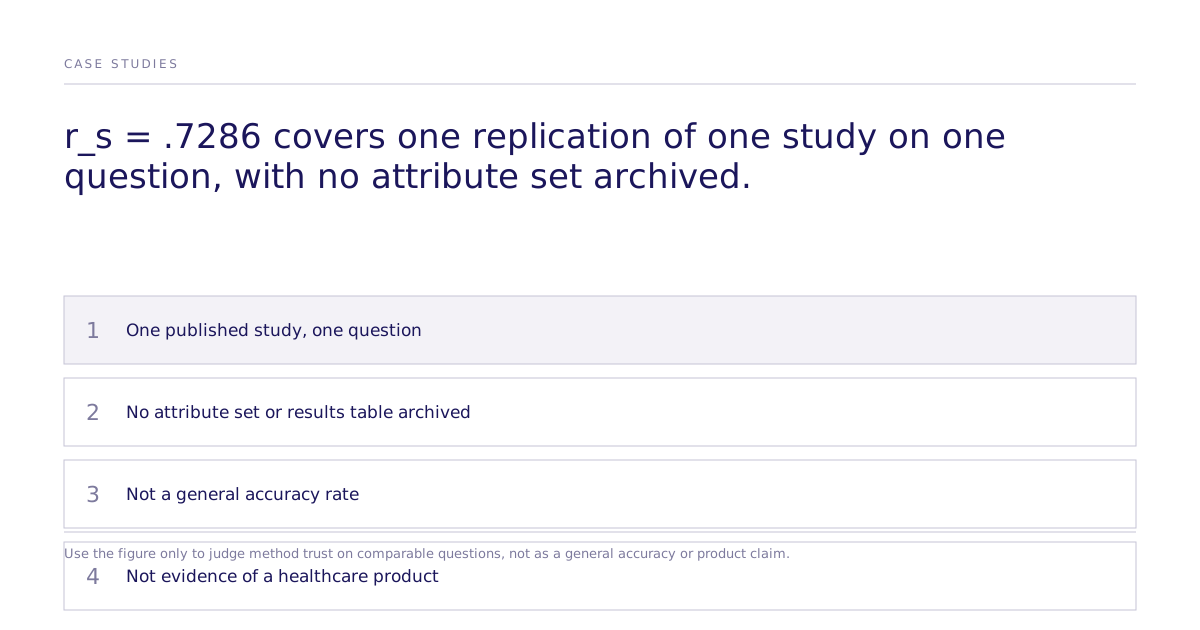
Stating exactly what a result covers is what lets a buyer weigh it against their own case. That correlation is the only figure this comparison supports: agreement between one replication and one published study on one job-preference question. It is not a general accuracy claim, and it does not extend to other studies, domains, or experiment designs.
What this comparison does not show
Naming what the record does not contain is part of publishing the result straight. The archived record lists no attribute set and no full results table alongside the correlation figure, so this page does not reconstruct one. It does not claim a general accuracy rate for the underlying method, and it is not evidence of a healthcare-workforce product or a domain-specific service. It documents a single replication comparison, not a customer engagement.
Why does this comparison matter for a workforce study decision?
A published, peer-reviewed discrete choice experiment gives a known answer to check a new method against before applying it to a real decision. A correlation this strong between an independent replication and the original published rankings is a reasonable basis for trusting the experiment design on a comparable job-preference question, not a guarantee that any new causal study will match every published result this closely.
Teams evaluating a workforce, incentive-design, or job-preference question can review Subconscious's research and other case studies to see how the same methodology has been applied elsewhere, or book time to discuss whether a causal discrete choice experiment fits a specific workforce decision.