Checking a Simulated Car-Feature Study Against the Wu Conjoint
A simulated car-feature study needs a matched human comparison before an automotive team uses its ranking to allocate engineering or marketing budget. The Wu conjoint provides a historical task to inspect. A publicly reproducible Subconscious comparison is needed before reporting a replication score for that task.
What did the human study ask?
Wu, Liao and Chatwuthikrai's 2014 study asked 201 respondents in Thailand to rank eight subcompact-car profiles. The profiles combined six attributes: appearance, fuel efficiency, price, safety, power and gadgets. Ranking complete profiles differs from choosing one alternative in a choice-based experiment; a replication must preserve the task or explain the change.
The paper provides evidence for its sampled population and product context. It cannot establish current preferences in another country, preferences for new features or actual vehicle sales.
What must a replication make inspectable?
| Check | Evidence an automotive buyer should receive |
|---|---|
| Task | Original profiles, attribute levels, ranking instructions and assignment |
| Population | Human sample definition and simulated coverage |
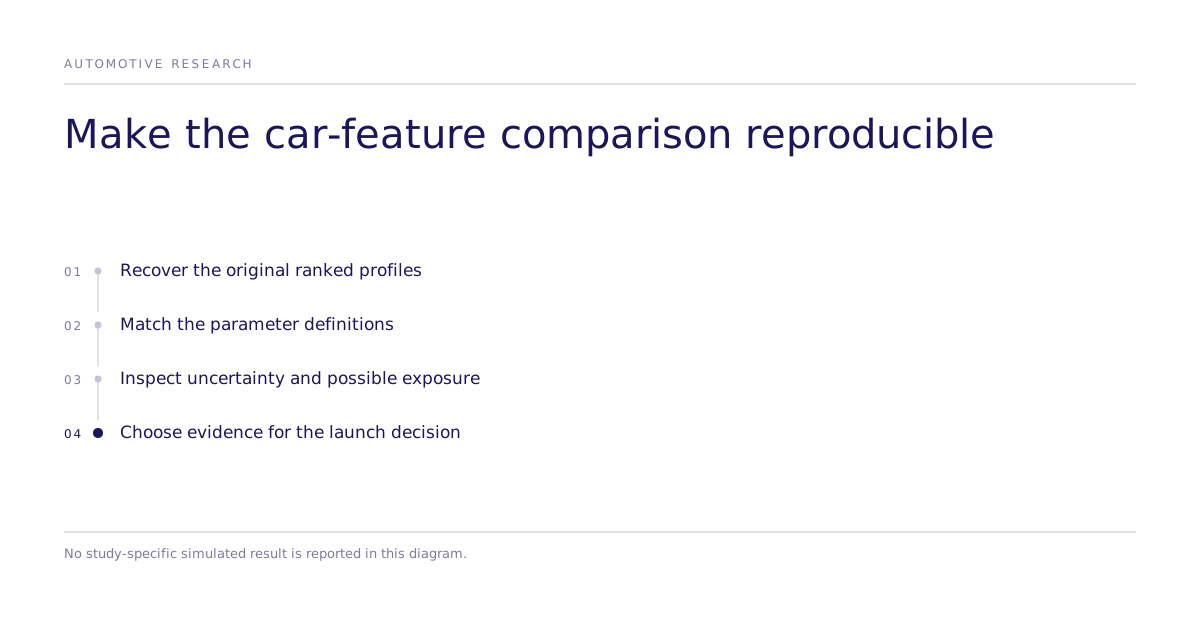
| Estimates | Comparable part-worth or importance estimates, coding and uncertainty |
| Provenance | Run date, model configuration, repeated runs and possible paper exposure |
| Scoring | Matched rank table, handling of ties and the exact agreement calculation |
This page reports no study-specific score because no public matched estimate table exists. The aggregate causal-fidelity working paper does not supply one. A numerical Wu-replication claim needs its own dated public record.
How could a disagreement affect a feature decision?
Suppose an automotive team is choosing between a fuel-efficiency improvement and a new gadget package. A model could preserve the broad attribute order while misestimating the tradeoff with price. That mismatch can change the recommended specification even when a summary rank score looks encouraging.
Inspect the parameter-level comparison and the uncertainty relevant to those two options. Distinguish historical stated preferences from competitive demand for the new model. A new market, attribute set or price range needs its own evidence.
What is the next useful step?
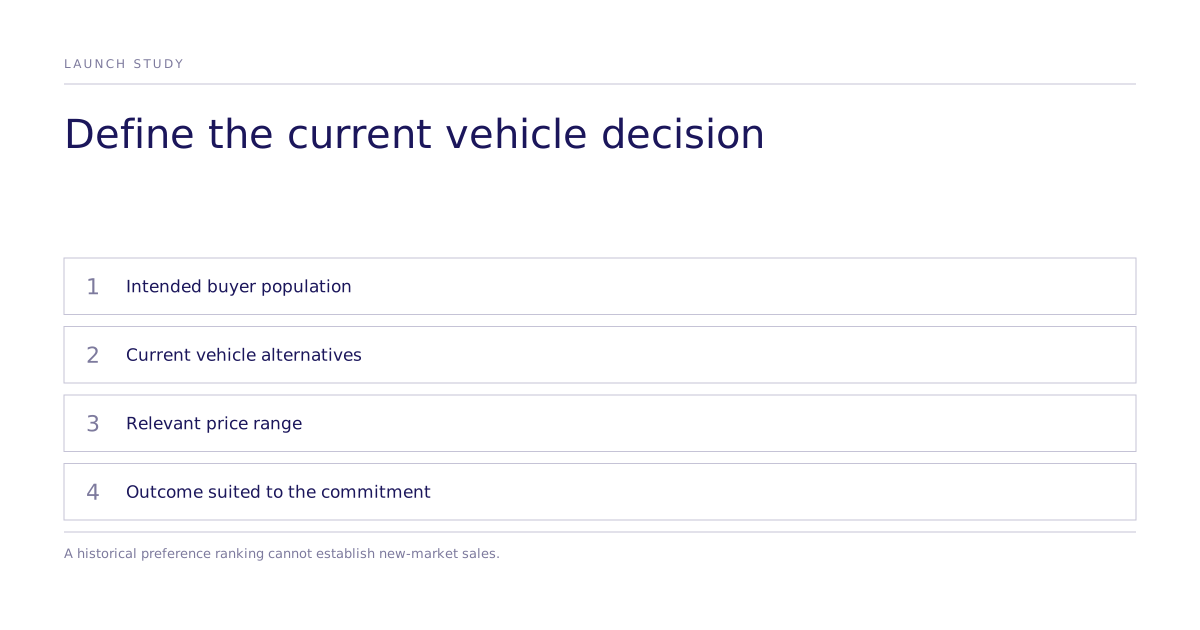
Use a historical replication to investigate whether a simulation preserves the defined task. For a current launch, define the actual alternatives, target buyers and outcome first. Select a human conjoint or market test appropriate to the uncertainty and commitment at stake.
Read the public methodology to understand the aggregate parameter-rank benchmark. Book a decision review to scope a vehicle-feature comparison and its human validation boundary.