When to Rerun a Causal Experiment Before You Act on It
A research or insights lead who already ran a causal experiment eventually asks the same question: is the finding still good, or does the budget and strategy riding on it need a second look? A number without its limits is marketing, so this finding ships with the conditions that could break it. A single run is not proof of stability. Outside research on the psychology replication crisis found only a 36% replication rate for original findings, reason enough not to treat one experiment as a permanent answer (Nature, Communications Psychology).
"Out of 100 independently performed replications, only 39% were subjectively labelled as successful replications, and on average, the effects were roughly half the original size."
Open Science Collaboration replication study, cited in Korbmacher and colleagues, Communications Psychology (source)
What does treating one experiment run as final cost you?
A finding that was never checked for stability can quietly go stale while budget and strategy still ride on it. Market conditions shift, the audience changes, or the inputs that produced the original result stop holding. A rerun doesn't replace the first study; it checks whether the original answer still applies before more budget moves on it.
Three triggers that justify a rerun
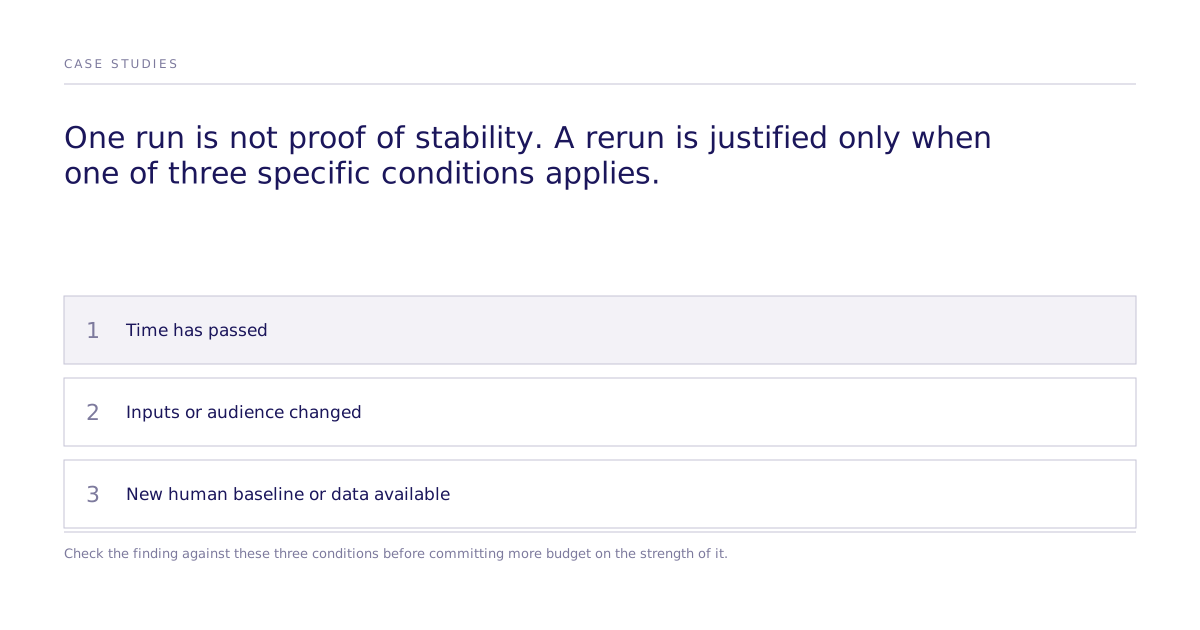
Not every finding needs a repeat test. Three conditions do:
Do results stay stable over time?
Consumer preferences and market conditions move. Rerunning the same experiment design after time has passed checks whether the original result still holds.
What happens when the target audience or inputs change?
When the target demographic, product attributes, or pricing strategy shift from what the original study tested, a rerun with those adjusted variables shows how the outcome moves with them.
Benchmark against a human baseline or new data
Moving from a simulated experiment to real-human validation, without changing the causal question, is a direct way to check a finding. When new real-world data becomes available, rerunning the original experiment against it confirms whether the earlier causal insight still holds.
What a rerun looks like in practice
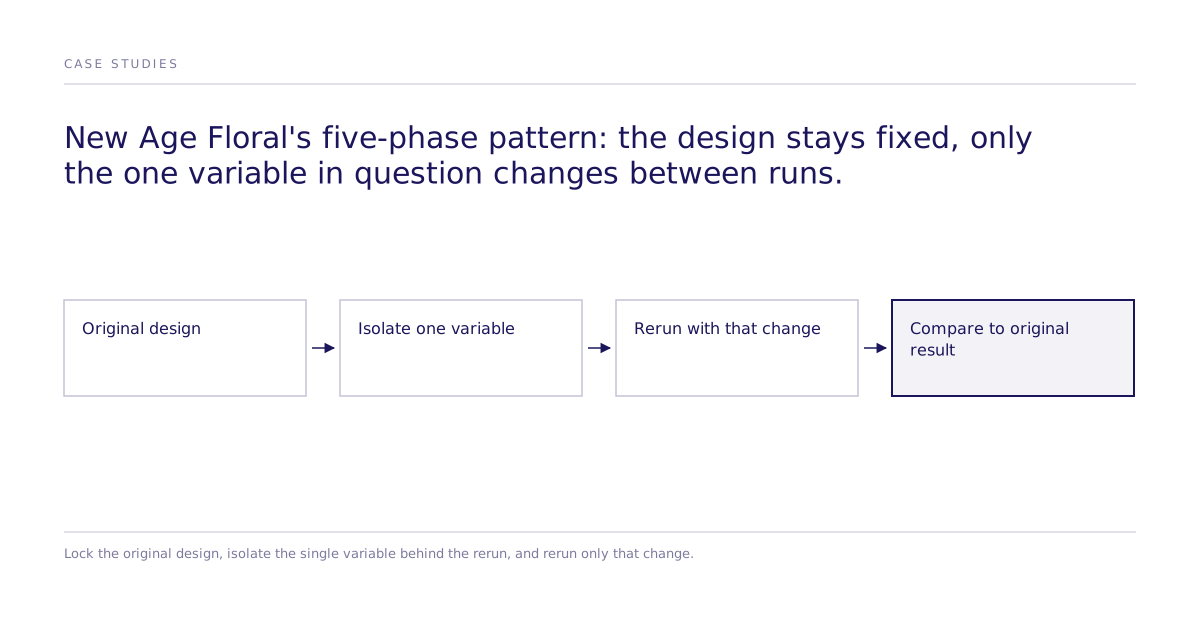
New Age Floral's engagement ran five iterative experiments across phases before arriving at its pricing recommendation, adjusting the question at each phase rather than accepting the first pass (case study). That pattern, rerun, adjust, check again, is what a replication check does for a causal action test: it holds the design constant while changing one variable, keeping the comparison clean.
Limitations
Naming where a rerun stops proving something is what lets a buyer check it against their own decision. A rerun checks a specific study's inputs and timeframe. It does not guarantee an outcome, and confidence-interval or uncertainty language only applies where the original study design supports it. Real-human validation confirms a simulated finding against real participants; it does not turn a causal action test into a usability session or a clinical trial, and it does not prove market performance.
Next step
If a finding is old, or the inputs behind it have changed, the fastest way to know whether it still holds is to rerun the study against the new condition. See how a causal experiment is structured, or book time to scope a rerun against your original design.